- Customer group: Guest
-


- Home

- Details
- More images
Products description
Here we offer you a tooth of the Triassic amphibian Mastodonsaurus gigantaeus.
The fossil comes from the Lower Keuper strata (geologically: Lettenkeuper, Erfurt Formation) of Vellberg-Eschenau in Germany. These strata date back to the Ladinian stage (Middle Triassic), approximately 240 million years ago.
Significant fossils of Mastodonsaurus, one of the largest amphibians in Earth's history, have been found in Vellberg-Eschenau (Baden-Württemberg).
Lifespan: Mastodonsaurus lived approximately 240 million years ago during the Middle Triassic (Lettenkeuper).
Gigantism: It reached a length of up to 6 meters. Its flat, massive skull alone could grow up to 1.5 meters long.
Lifestyle: Mastodonsaurus was an aquatic apex predator that hunted in lakes and rivers. It seized its prey with fangs so large they protruded through openings in its upper jaw.
Significance of the Vellberg-Eschenau Site
The region around Vellberg is considered a globally important site for Triassic vertebrate fossils.
Swampland: The area now known as Hohenlohe was then a vast swamp and river landscape. In the rock strata (bonebeds) of Vellberg, massive amounts of bones from Mastodonsaurus and other reptiles, such as the crocodile ancestor Batrachotomus, have been discovered. Significant scientific investigations of the fossils found in Vellberg-Eschenau continue to be conducted. The circumstances of the discovery are unique due to the region's specific geology.
Scientific Analysis: Currently, the focus is increasingly on isotope analyses of the teeth of Mastodonsaurus giganteus. Researchers are using these analyses to investigate the seasonal migrations and ecological conditions in the Triassic lakes 240 million years ago.
Ontogeny Studies: Vellberg-Eschenau is one of the few places worldwide where the entire development (ontogeny) of Mastodonsaurus can be studied – from tiny larval stages just a few centimeters long to giants with skulls 1.5 meters long.
Fossil collecting in Vellberg has been prohibited for many years. The site is strictly protected. However, scientific excavations still take place there today. The two fossils offered here come from the dissolution of a collection belonging to a very elderly collector who discovered the specimen back in the 1970s.
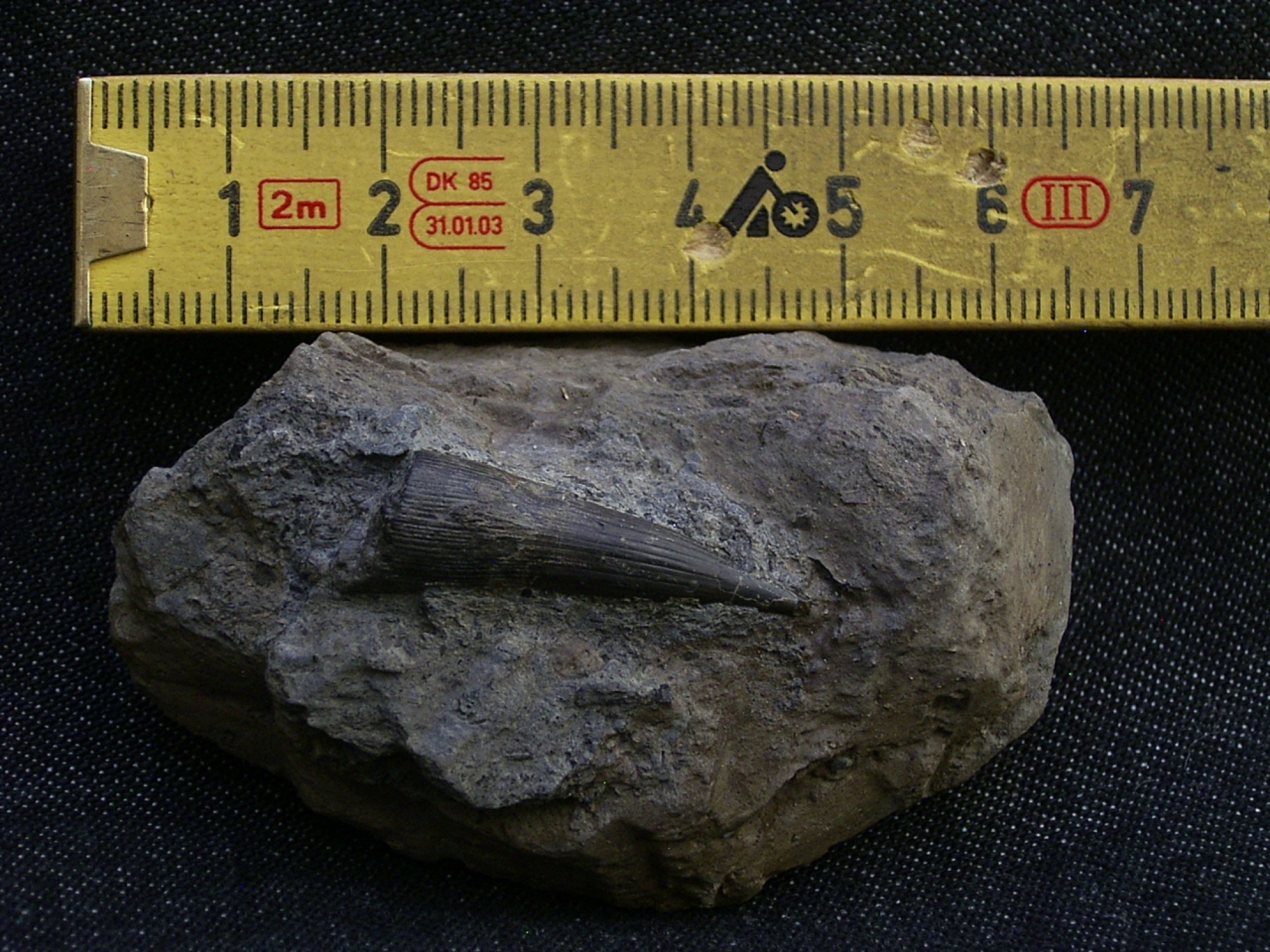
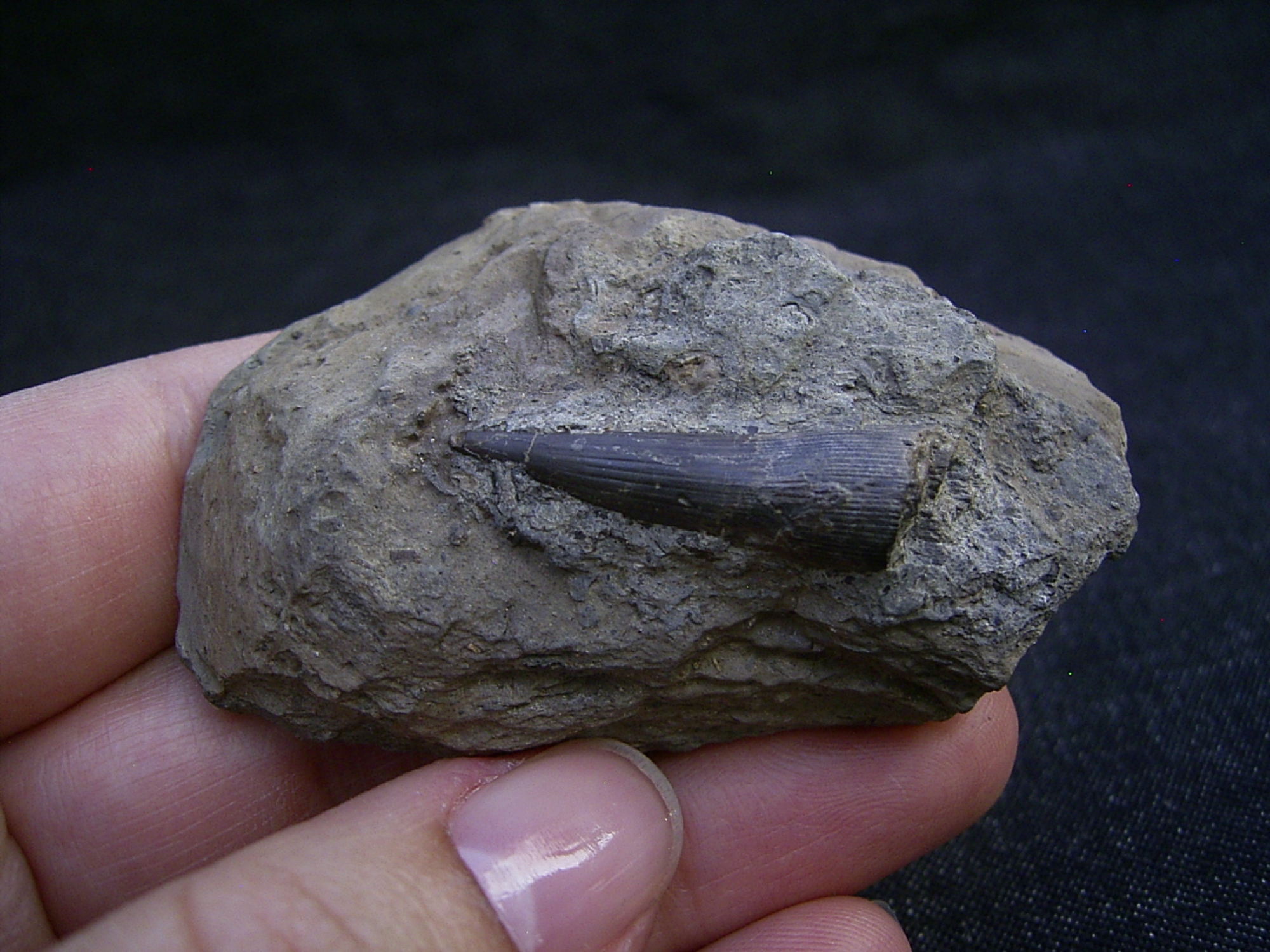
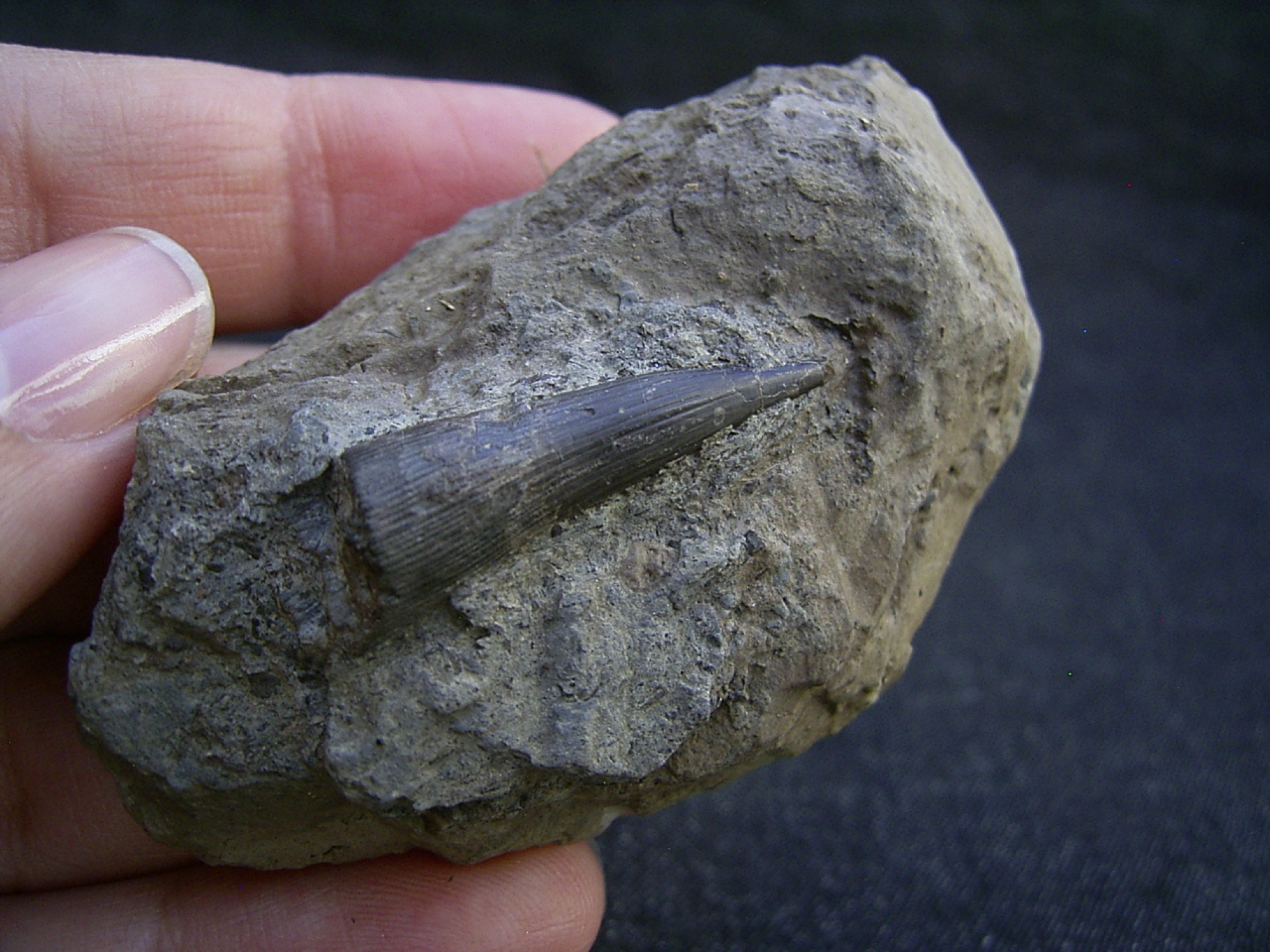
The tooth is in its original, unaltered condition and lies nicely centered in the original sediment. It measures approximately 3 cm and shows no signs of manipulation. The stone is unbroken, and its dimensions are approximately 6.5 x 4 x 2 cm.
Rarely offered!
SOLD
The fossil comes from the Lower Keuper strata (geologically: Lettenkeuper, Erfurt Formation) of Vellberg-Eschenau in Germany. These strata date back to the Ladinian stage (Middle Triassic), approximately 240 million years ago.
Significant fossils of Mastodonsaurus, one of the largest amphibians in Earth's history, have been found in Vellberg-Eschenau (Baden-Württemberg).
Lifespan: Mastodonsaurus lived approximately 240 million years ago during the Middle Triassic (Lettenkeuper).
Gigantism: It reached a length of up to 6 meters. Its flat, massive skull alone could grow up to 1.5 meters long.
Lifestyle: Mastodonsaurus was an aquatic apex predator that hunted in lakes and rivers. It seized its prey with fangs so large they protruded through openings in its upper jaw.
Significance of the Vellberg-Eschenau Site
The region around Vellberg is considered a globally important site for Triassic vertebrate fossils.
Swampland: The area now known as Hohenlohe was then a vast swamp and river landscape. In the rock strata (bonebeds) of Vellberg, massive amounts of bones from Mastodonsaurus and other reptiles, such as the crocodile ancestor Batrachotomus, have been discovered. Significant scientific investigations of the fossils found in Vellberg-Eschenau continue to be conducted. The circumstances of the discovery are unique due to the region's specific geology.
Scientific Analysis: Currently, the focus is increasingly on isotope analyses of the teeth of Mastodonsaurus giganteus. Researchers are using these analyses to investigate the seasonal migrations and ecological conditions in the Triassic lakes 240 million years ago.
Ontogeny Studies: Vellberg-Eschenau is one of the few places worldwide where the entire development (ontogeny) of Mastodonsaurus can be studied – from tiny larval stages just a few centimeters long to giants with skulls 1.5 meters long.
Fossil collecting in Vellberg has been prohibited for many years. The site is strictly protected. However, scientific excavations still take place there today. The two fossils offered here come from the dissolution of a collection belonging to a very elderly collector who discovered the specimen back in the 1970s.
The tooth is in its original, unaltered condition and lies nicely centered in the original sediment. It measures approximately 3 cm and shows no signs of manipulation. The stone is unbroken, and its dimensions are approximately 6.5 x 4 x 2 cm.
Rarely offered!
SOLD
Categories
Last viewed:
