- Customer group: Guest
-


- Home

- Details
- More images
Products description
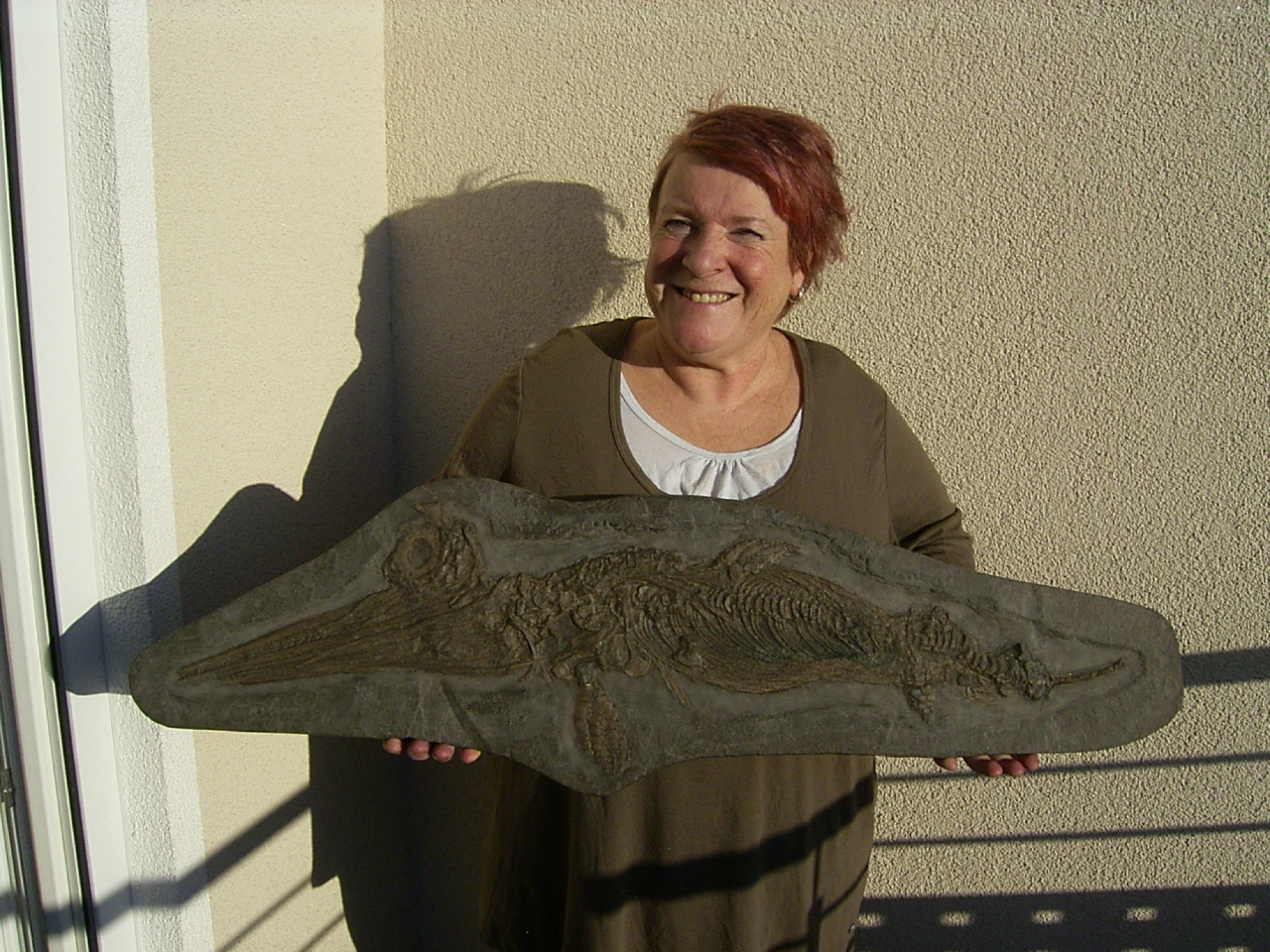
We are pleased to offer you another top museum exhibit: a fossilized skeleton of a baby ichthyosaur.The fossil was found in the famous
deposits of Dotternhausen in Germany.
In Dotternhausen significant fossils, including ichthyosaurs, were discovered in the local oil shale. These finds are of
outstanding scientific and educational importance, as they provide a precise window into the Jurassic Sea.
The rock strata in which the ichthyosaurs are found date from the Early Jurassic (Lower Jurassic), more precisely from the Toarcian.
Details regarding the age and geological classification are:
Absolute age: The strata are approximately 180 to 185 million years old.
Geological designation: This is the so-called Posidonia Shale (also known as Oil Shale).
Stratigraphic classification: In the classic South German stratigraphic system, this layer is designated as Lias epsilon.
This epoch was characterized by a warm, shallow sea that covered large parts of southern Germany. Due to the lack of oxygen on
the seabed, dead animals decomposed very slowly, which enabled the exceptionally good preservation of the skeletons visible today
(even with soft tissue outlines or unborn embryos).
Central scientific significance of the Dotternhausen fossils:
Excellent preservation (conservation site): The finds originate from the Posidonia Shale, a world-renowned fossil site. Due to the
oxygen-poor environment of the ancient seabed, skeletons are often preserved complete and intact.
Diversity of marine fauna: Over 1,000 significant specimens have been documented in Dotternhausen, including ichthyosaurs,
marine crocodiles, pterosaurs, fish, crinoids, and ammonites.
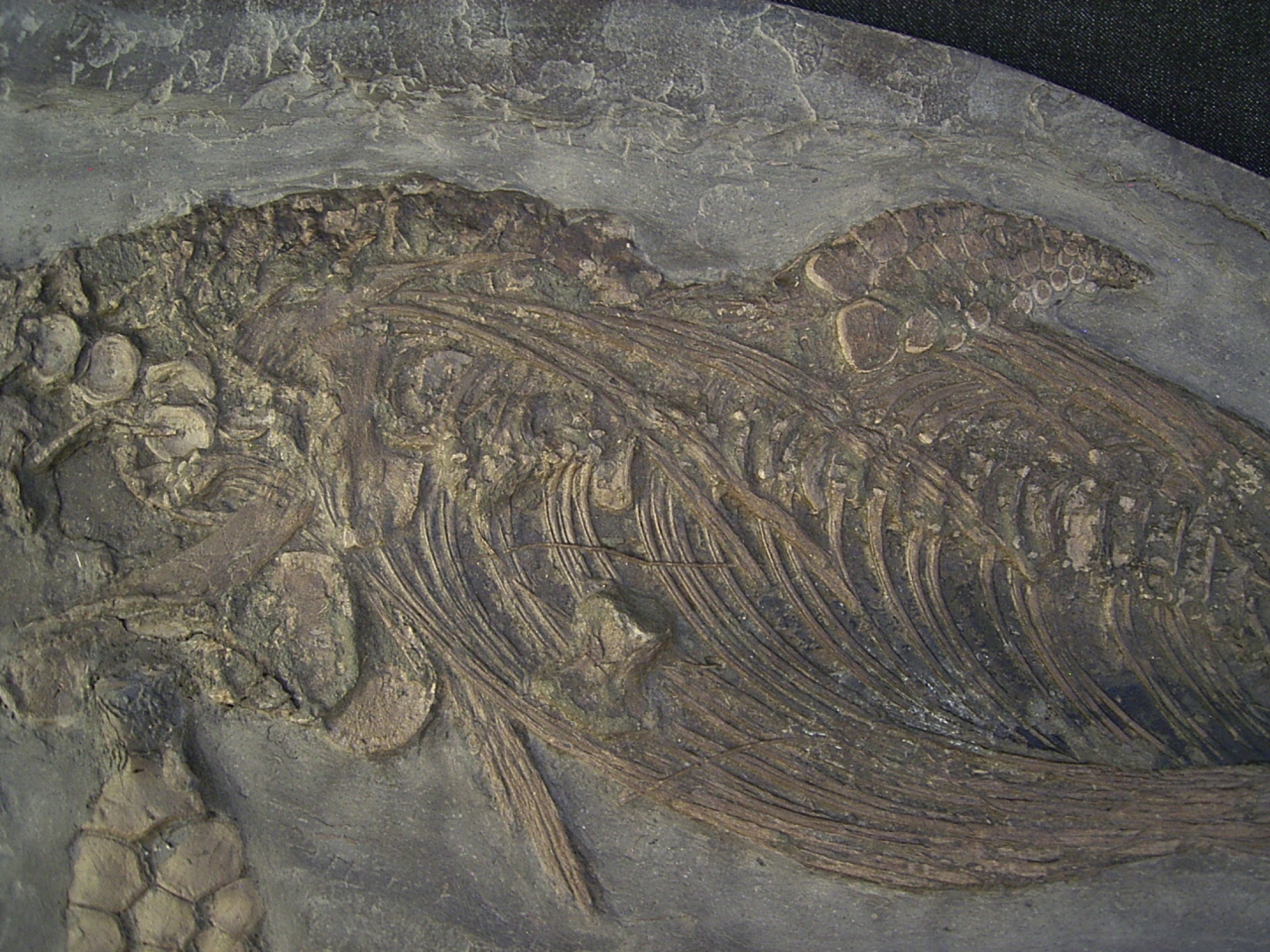
The fossil offered here is a juvenile specimen of an ichthyosaur. Its precise identification is still pending. The most common species
is Stenopterygius quadrisscisus. It is considered a classic example of the perfect adaptation of reptiles to a permanent life in the sea.
Biological characteristics & appearance:
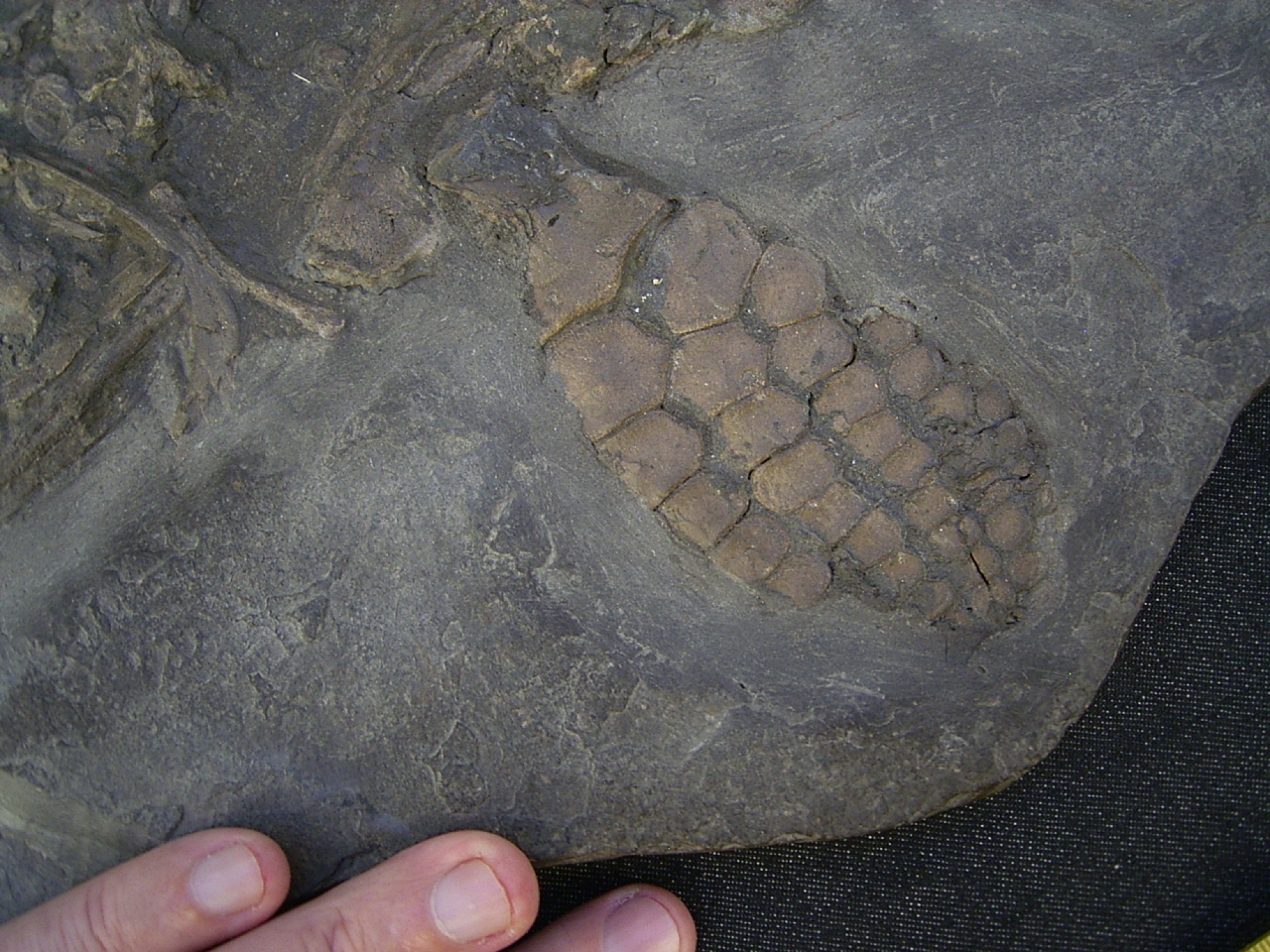
Body structure: It possessed a streamlined body strongly reminiscent of modern dolphins or tuna. Its limbs were modified into four
paddle-like flippers.
Size: Adult specimens reached a length of approximately 2.0 to 3.5 meters.
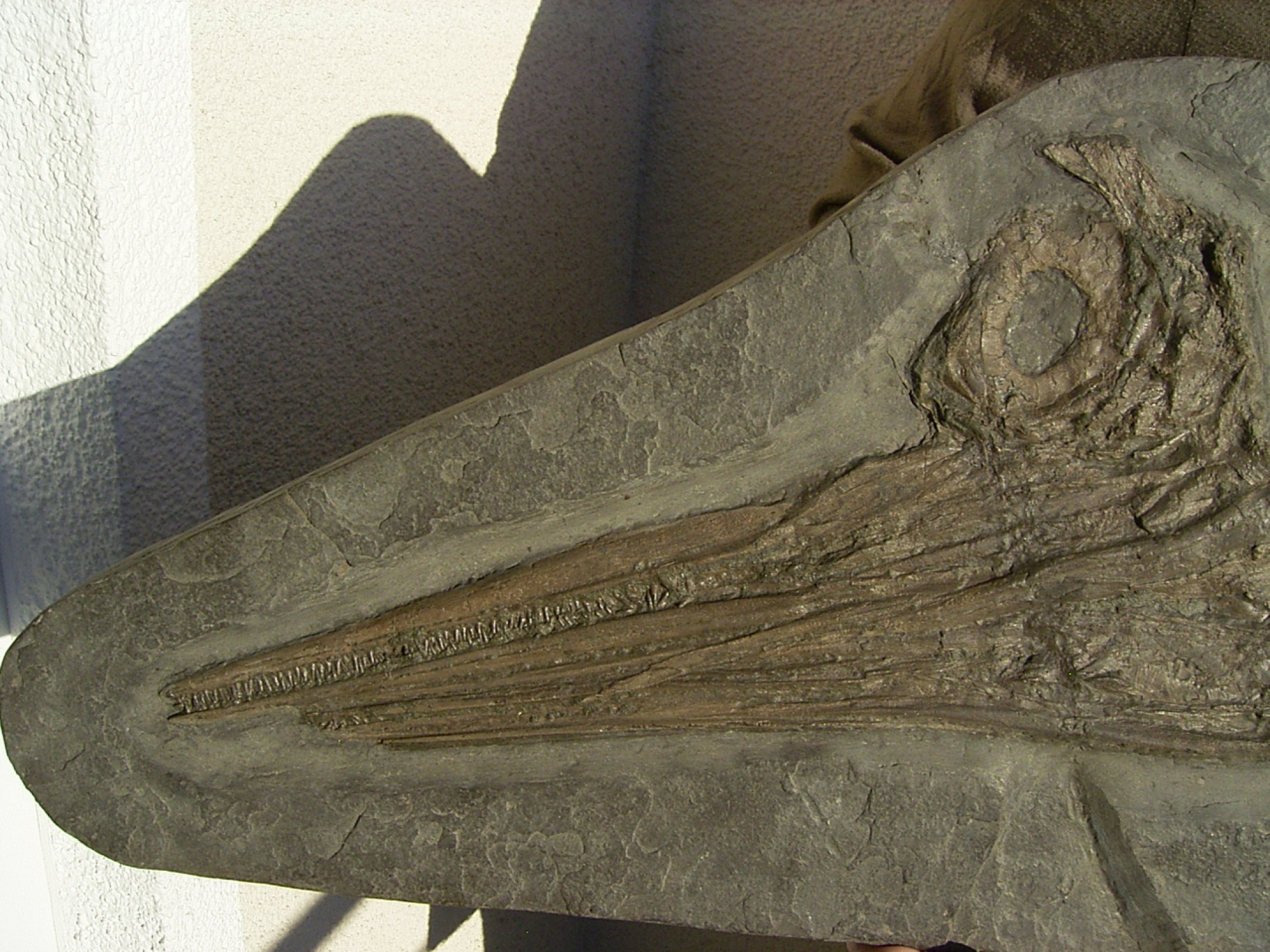
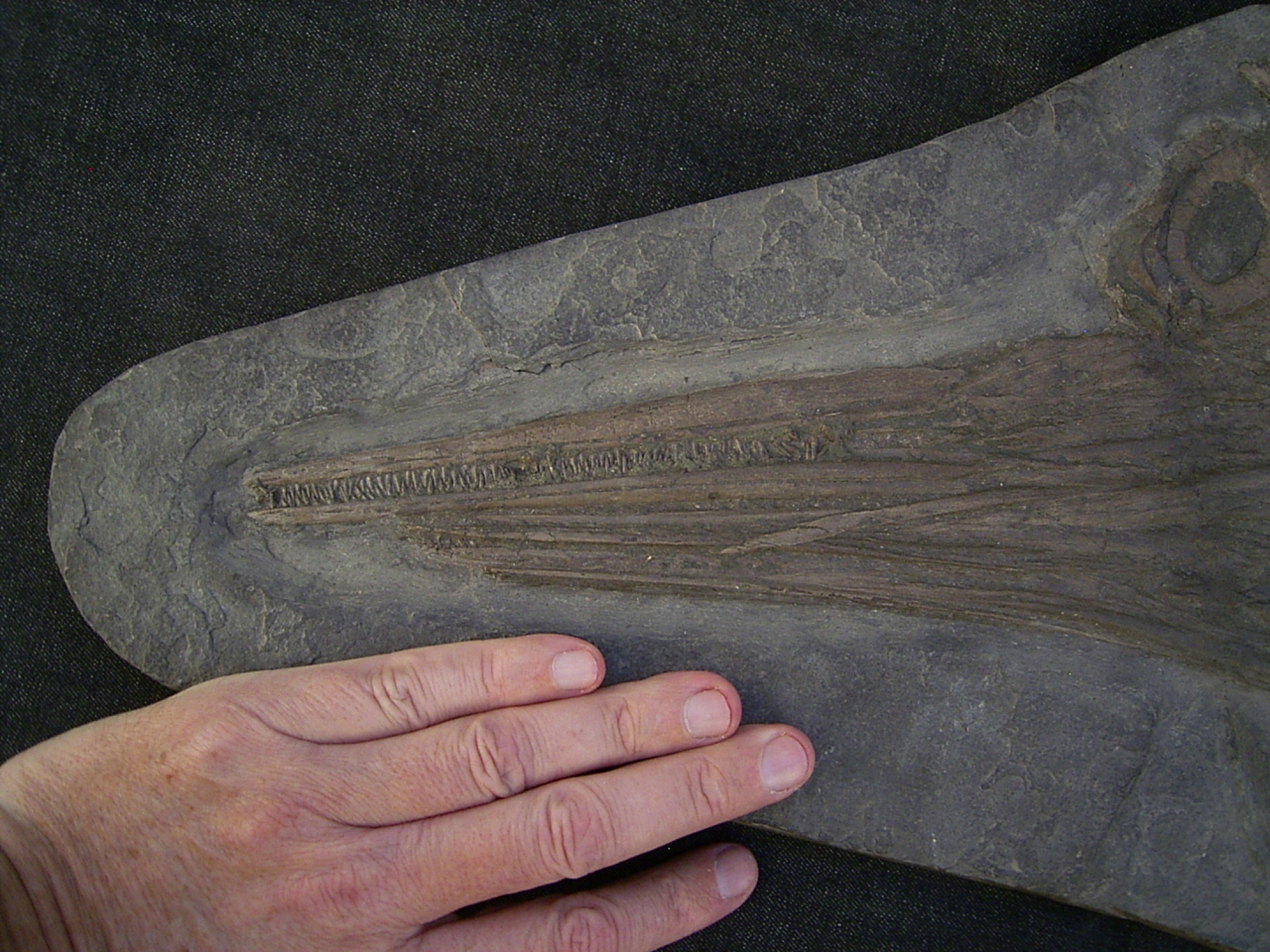
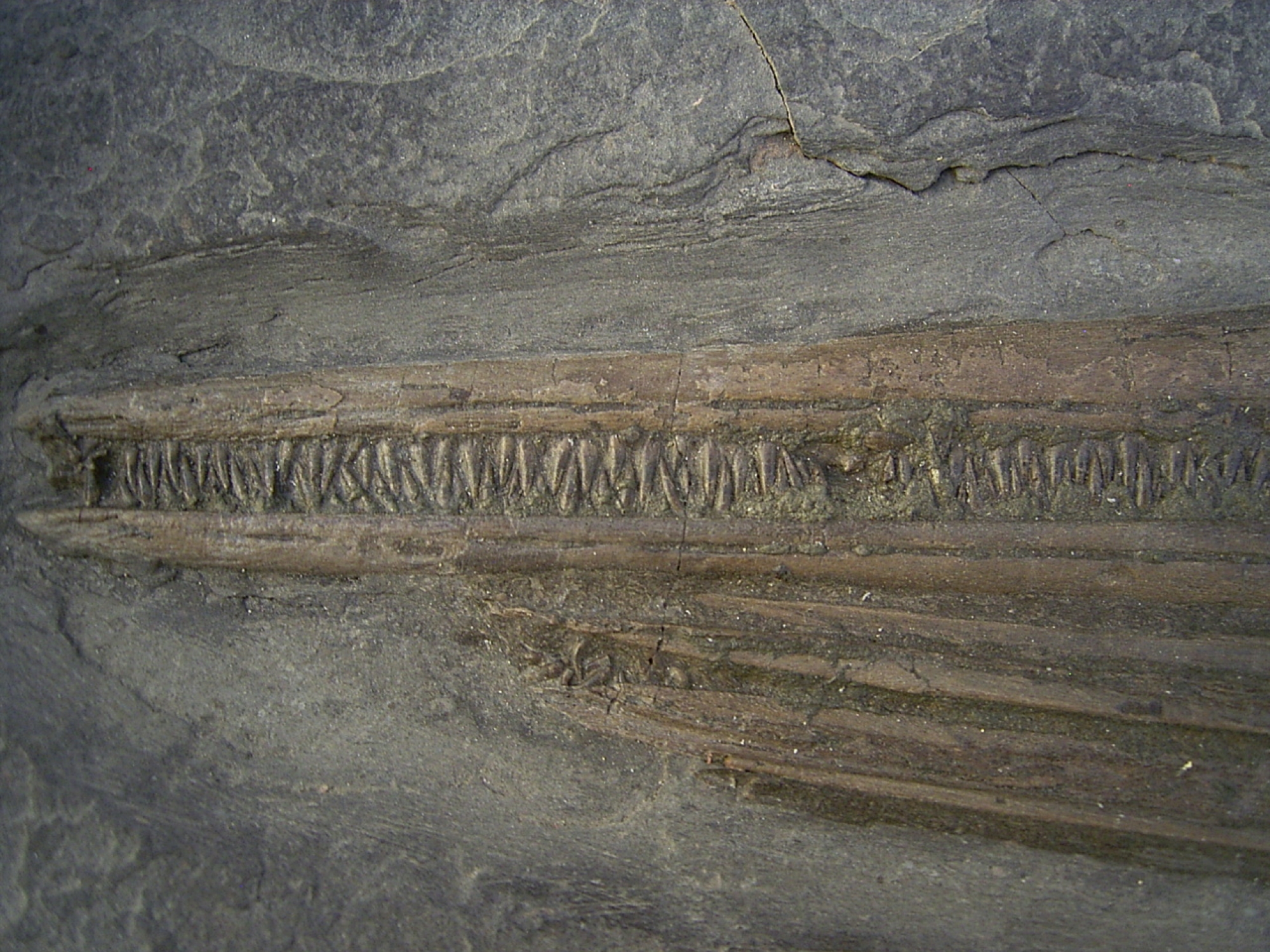
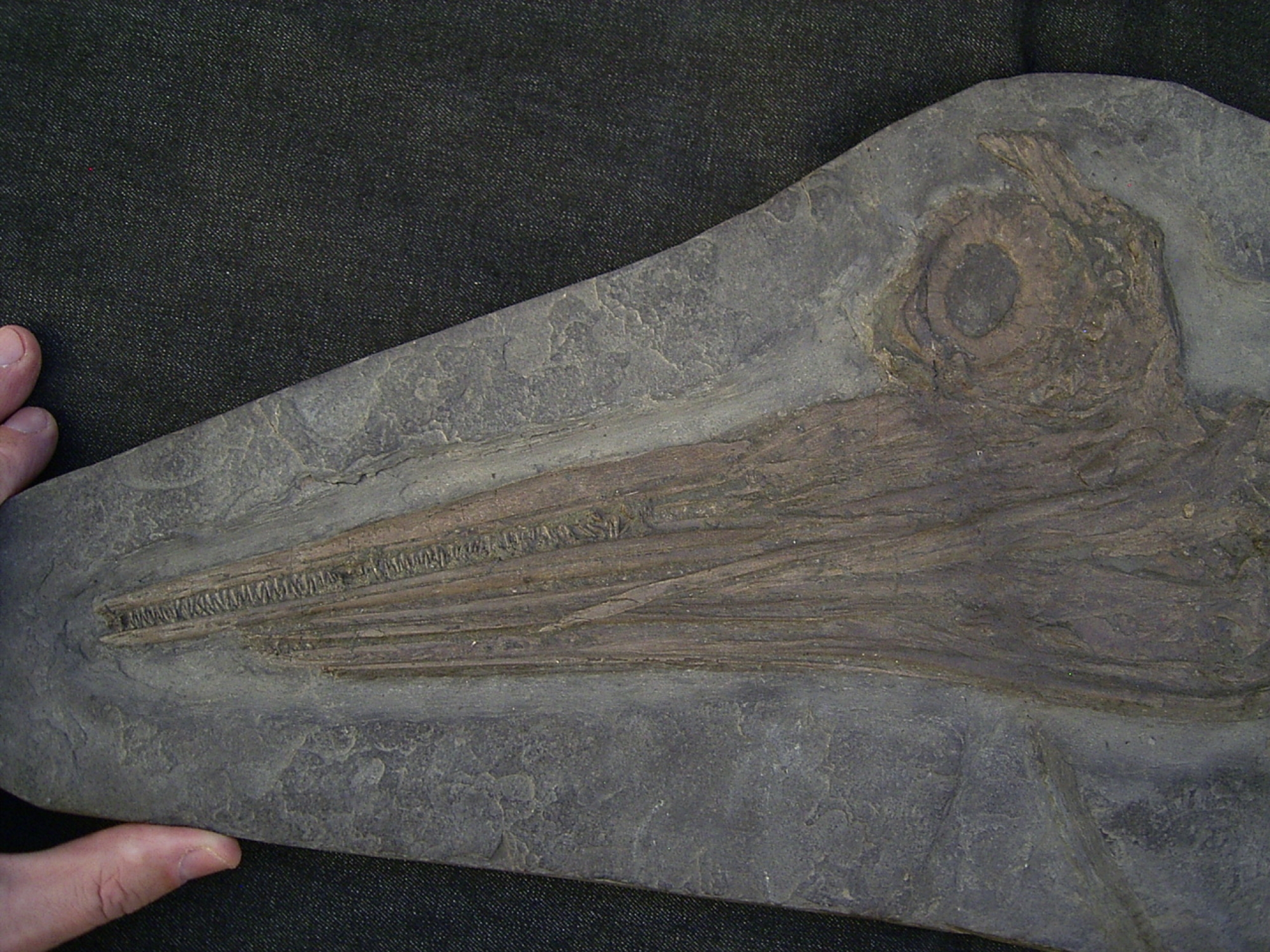
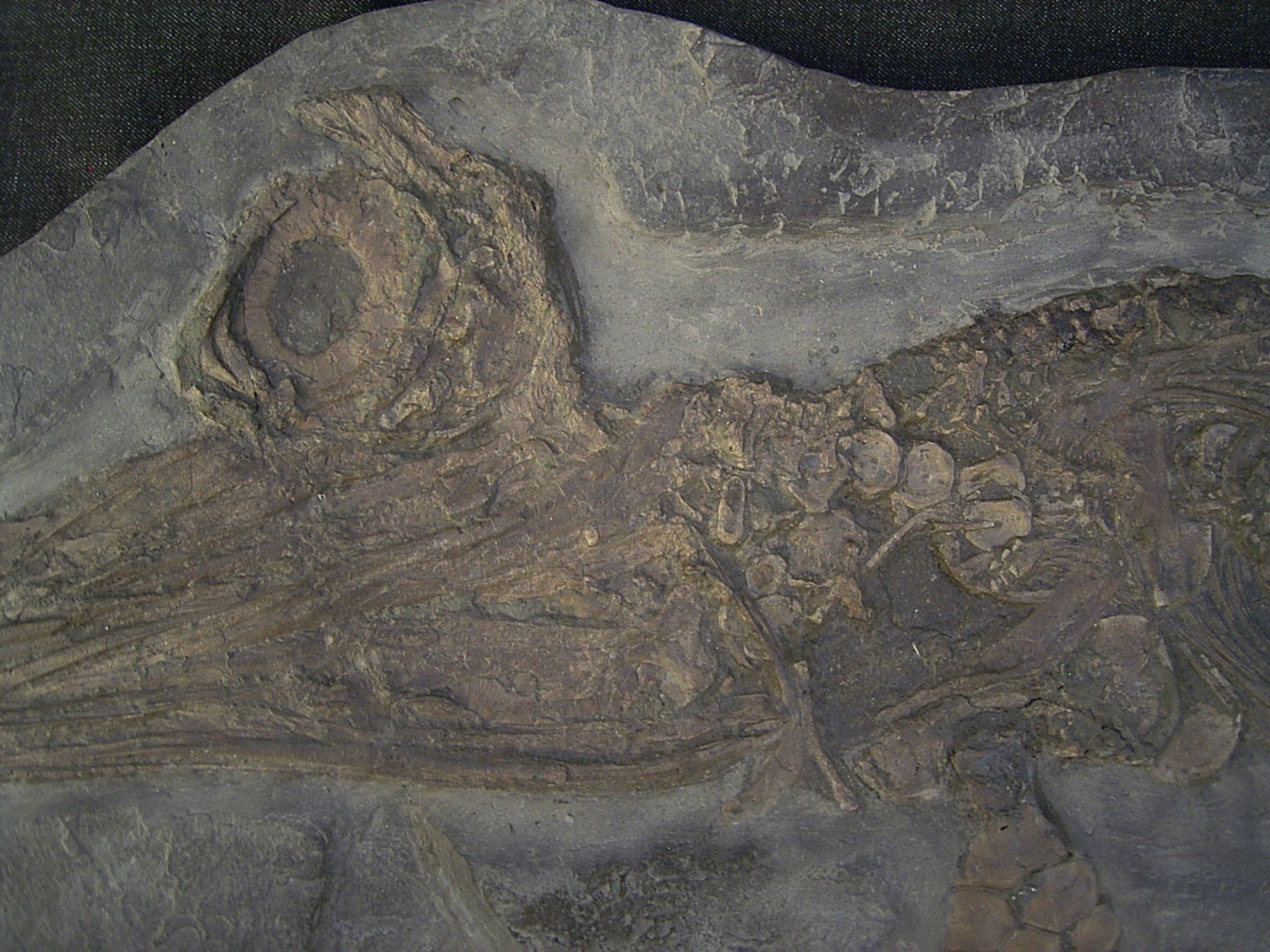
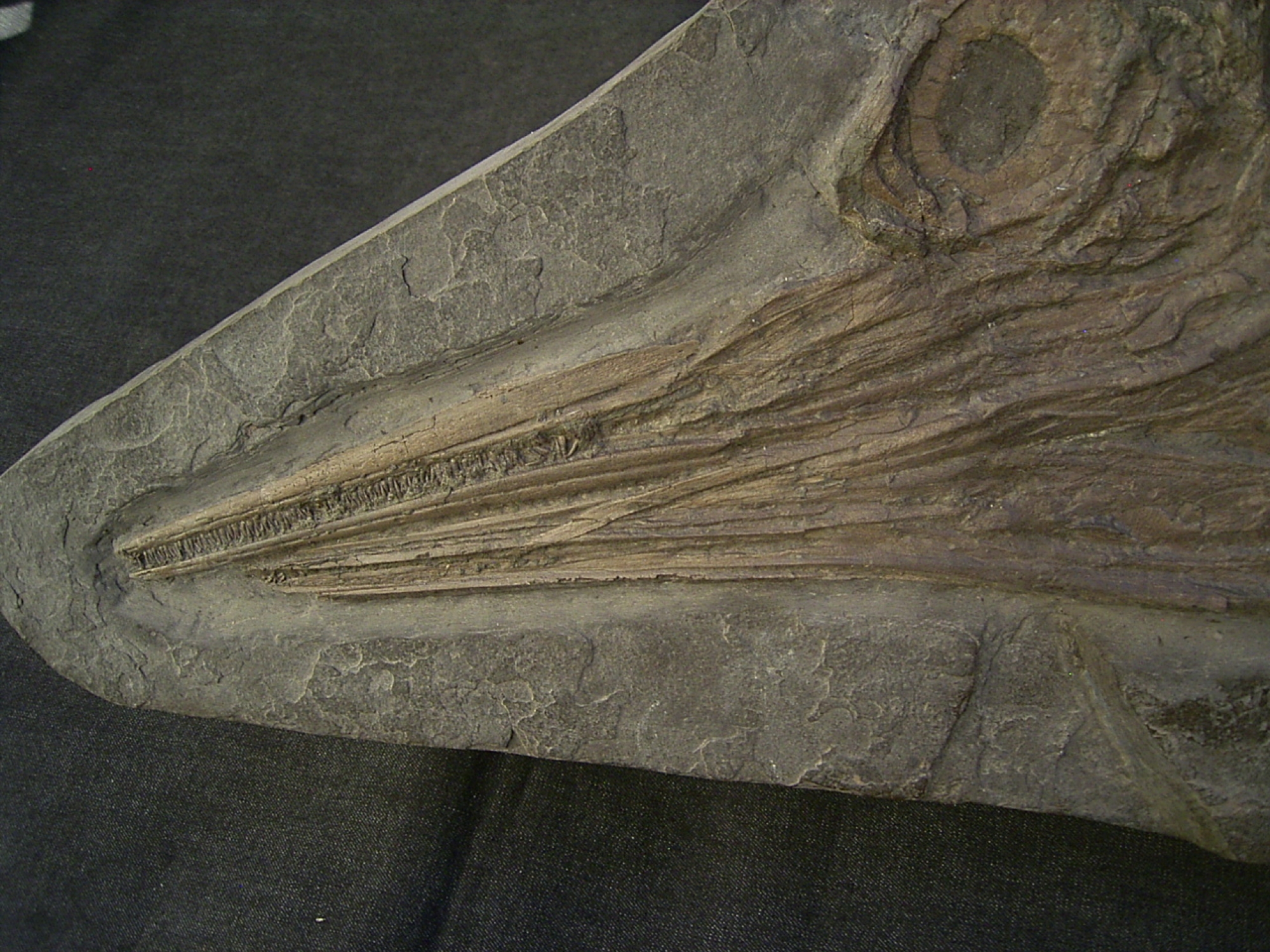
Head: Its skull was elongated and covered with numerous sharp teeth. Particularly striking were its very large eye sockets,
indicating excellent eyesight for hunting at greater depths.
Meaning of the name: The genus name is derived from the Greek words stenos (narrow) and pteryx (fin).
Lifestyle and diet:
Diet: Stenopterygius quadriscissus was a specialized predator that fed primarily on fish and squid (belemnites).
Reproduction: Like many ichthyosaurs, this species was viviparous. Fossils from sites such as Dotternhausen or Holzmaden often
show mothers with unborn young still inside their body cavities or who were fossilized during birth.
Speed: Estimates based on its tuna-like body structure suggest that it was a very fast swimmer.
Informations about the fossil offered here:
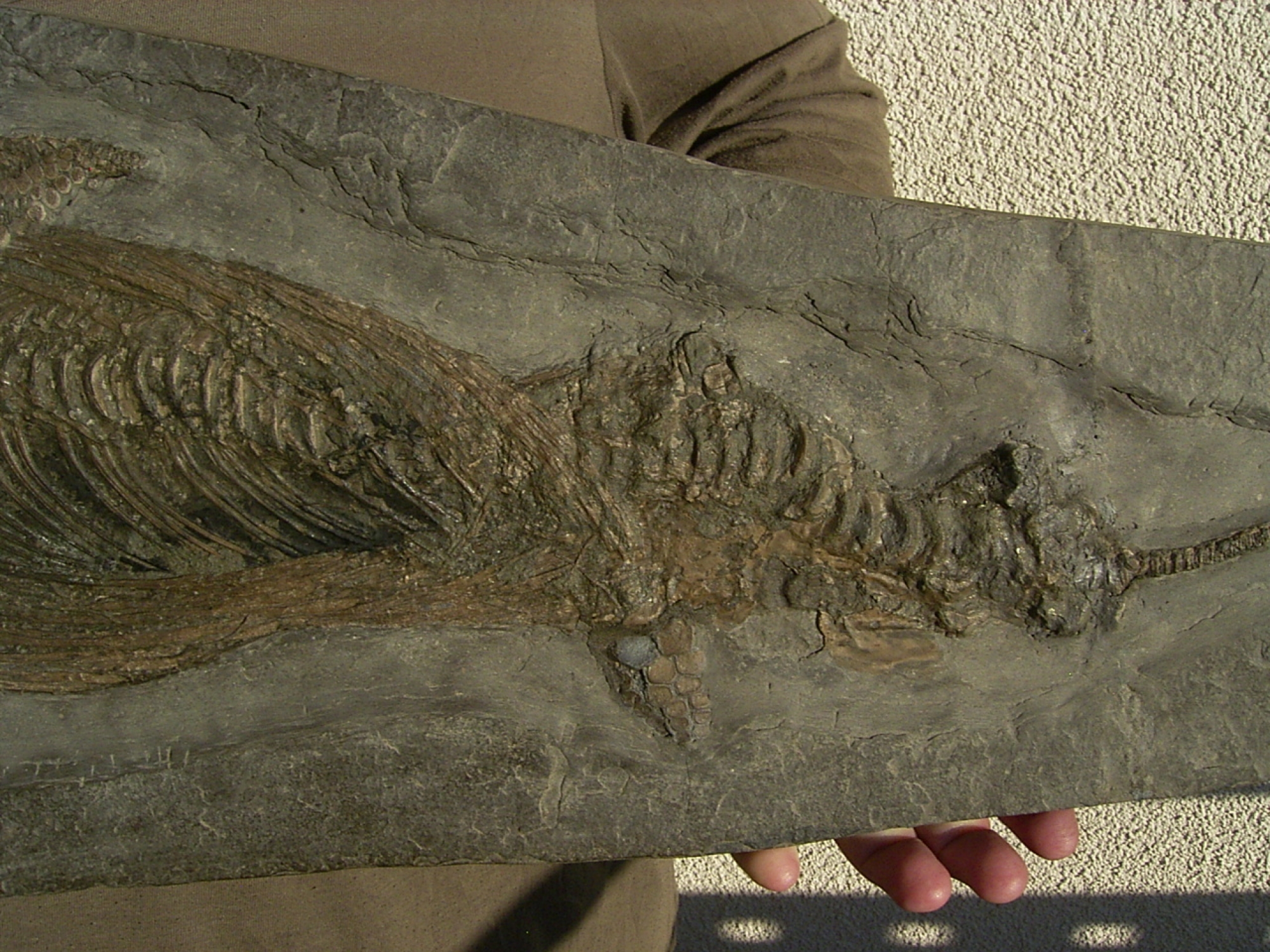
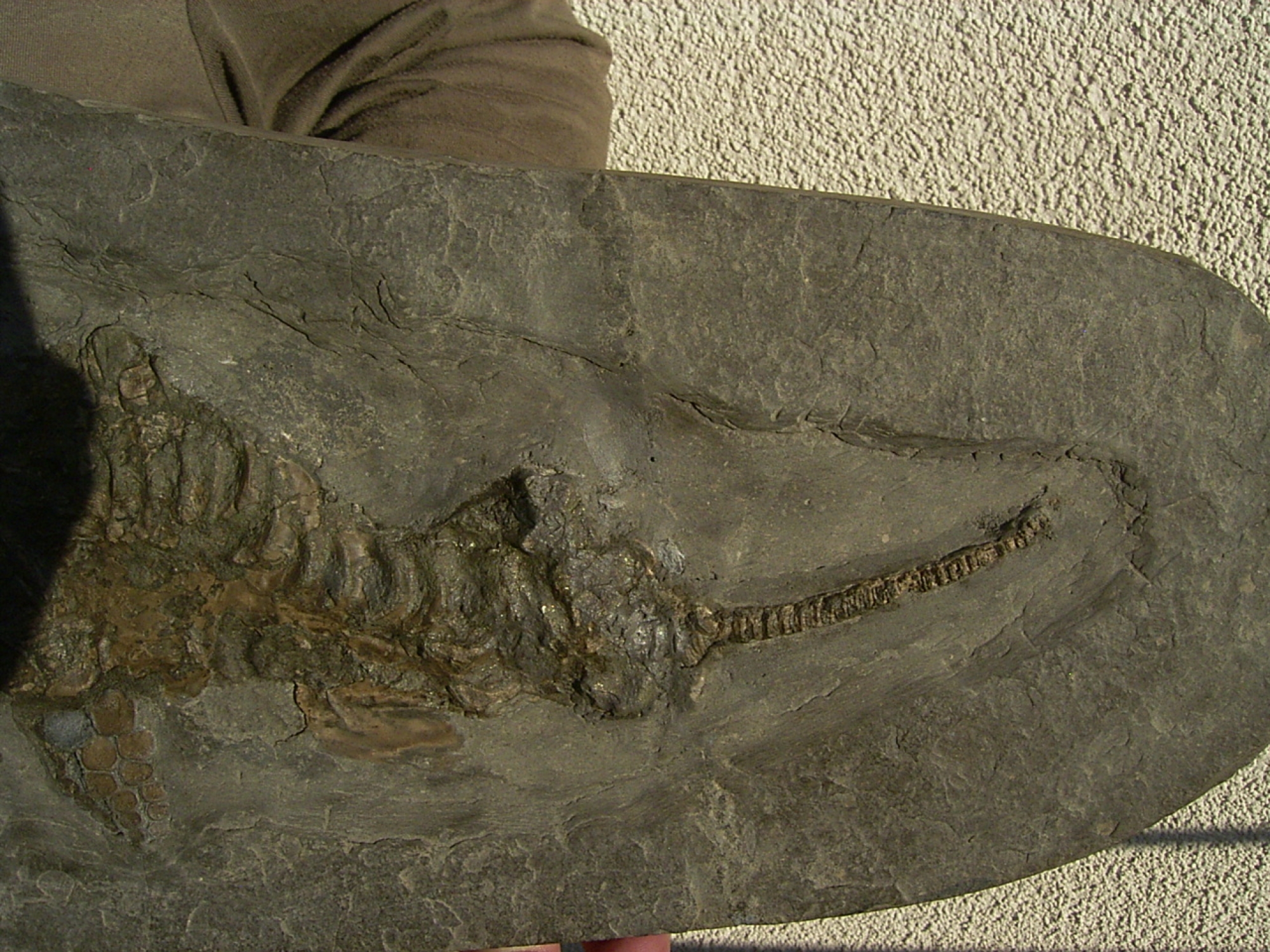
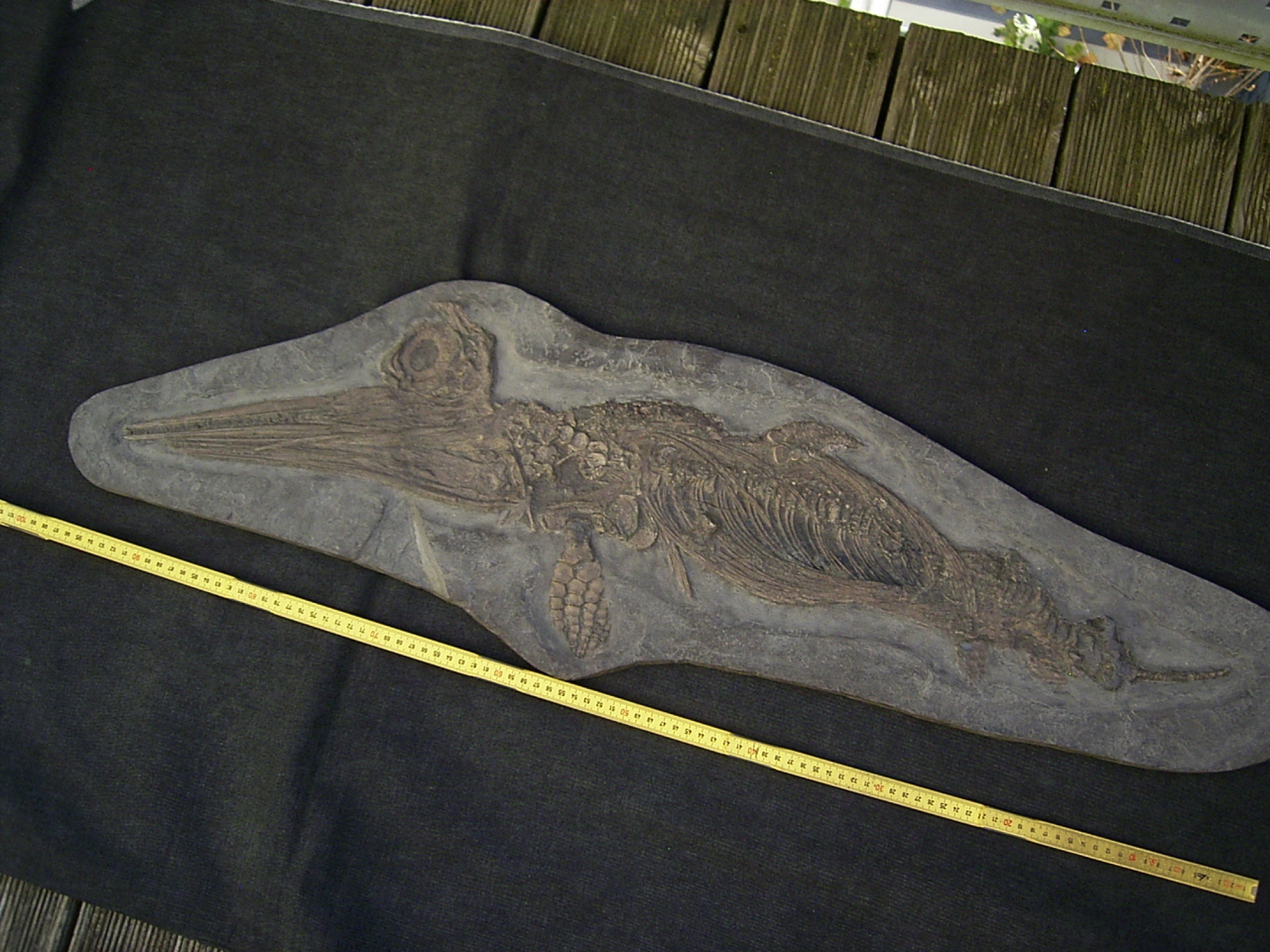
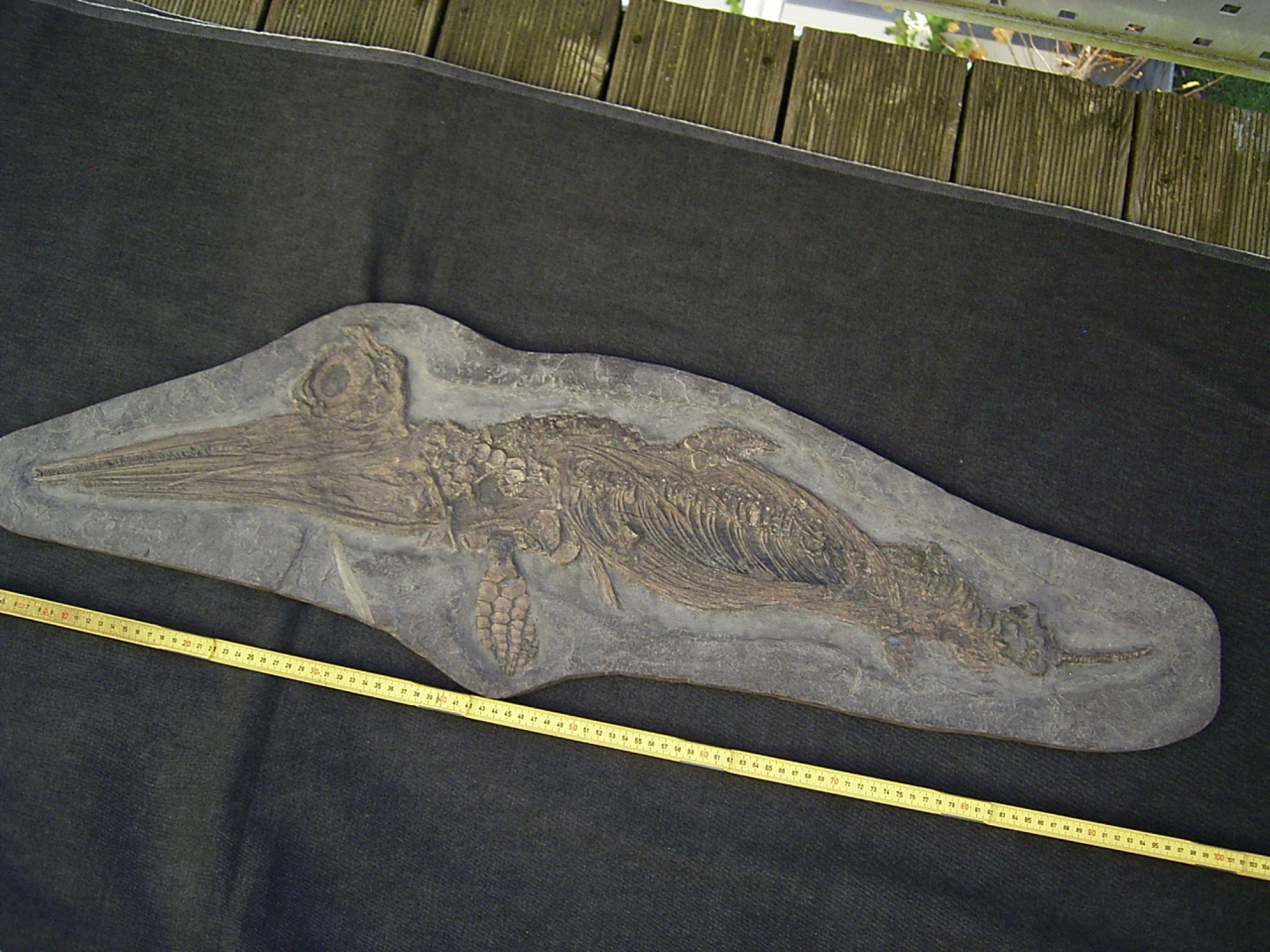
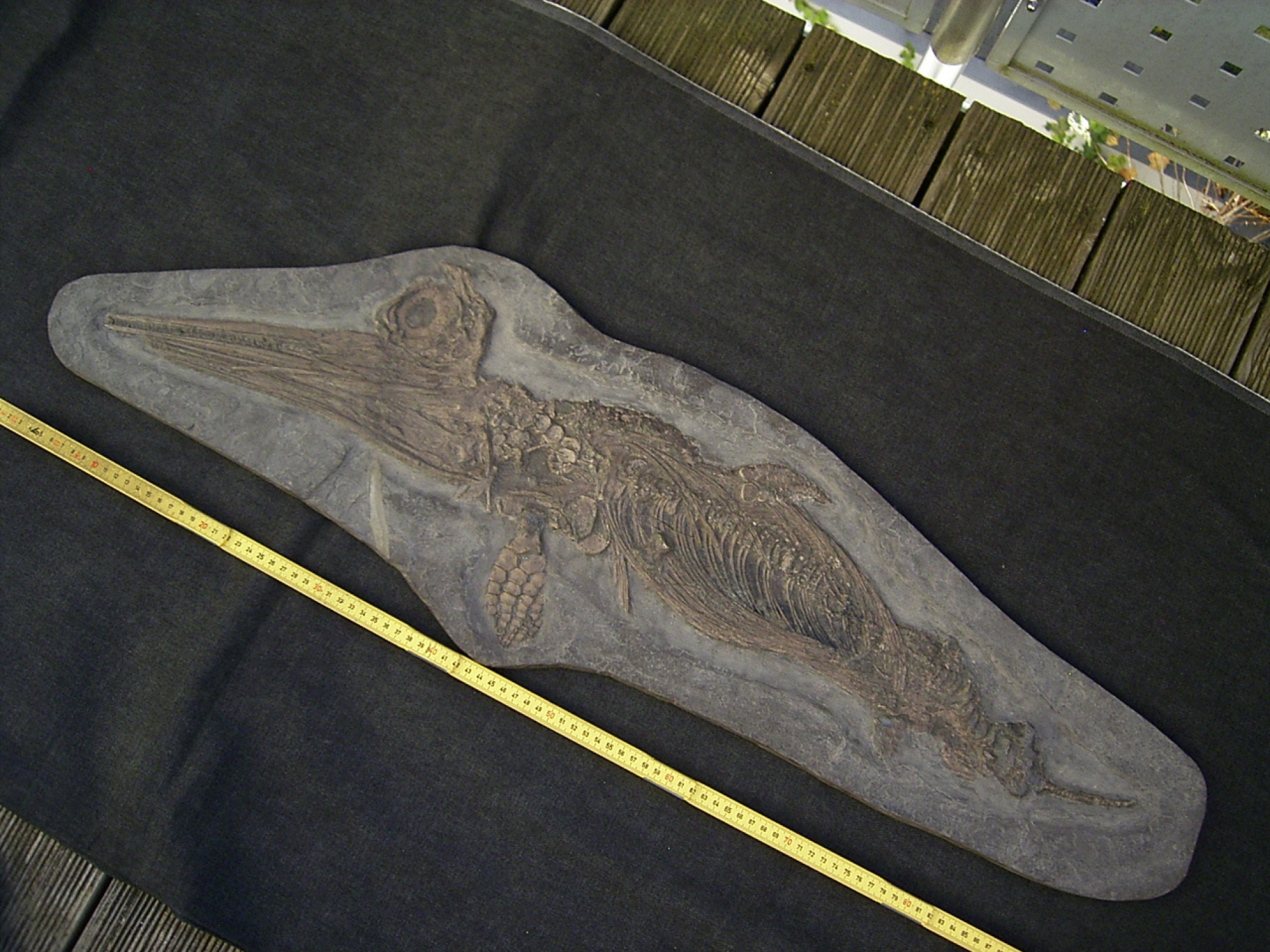
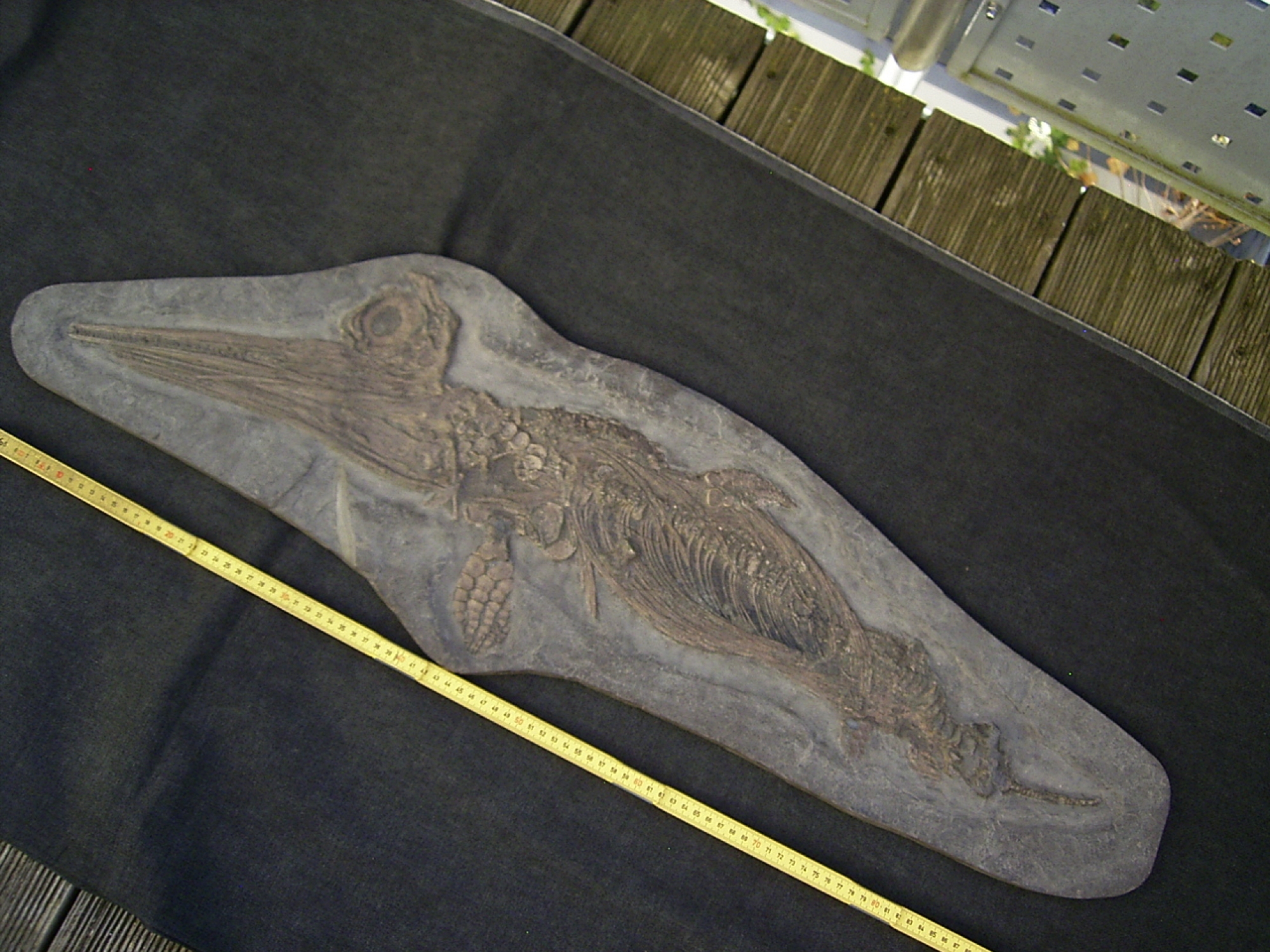
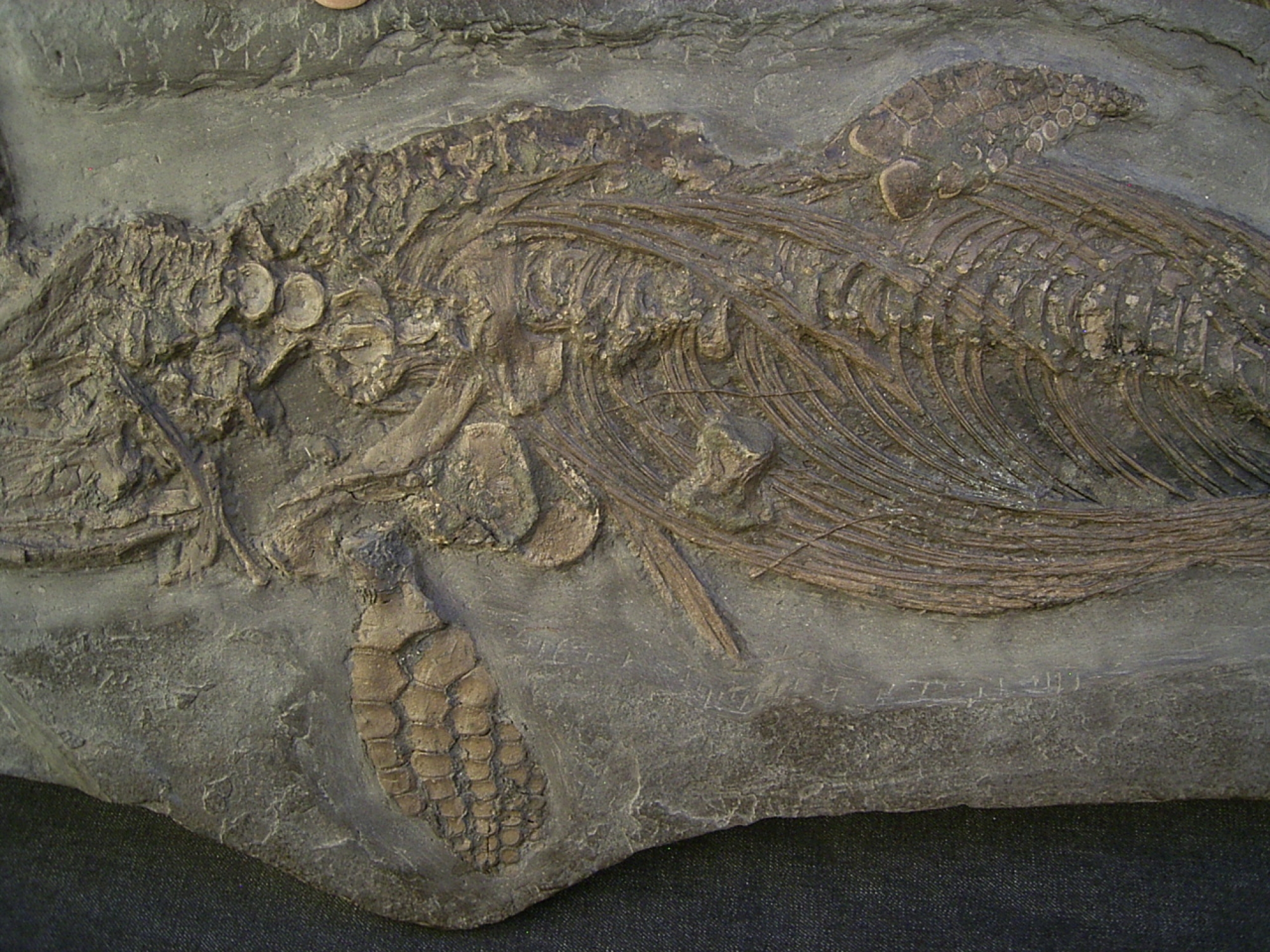
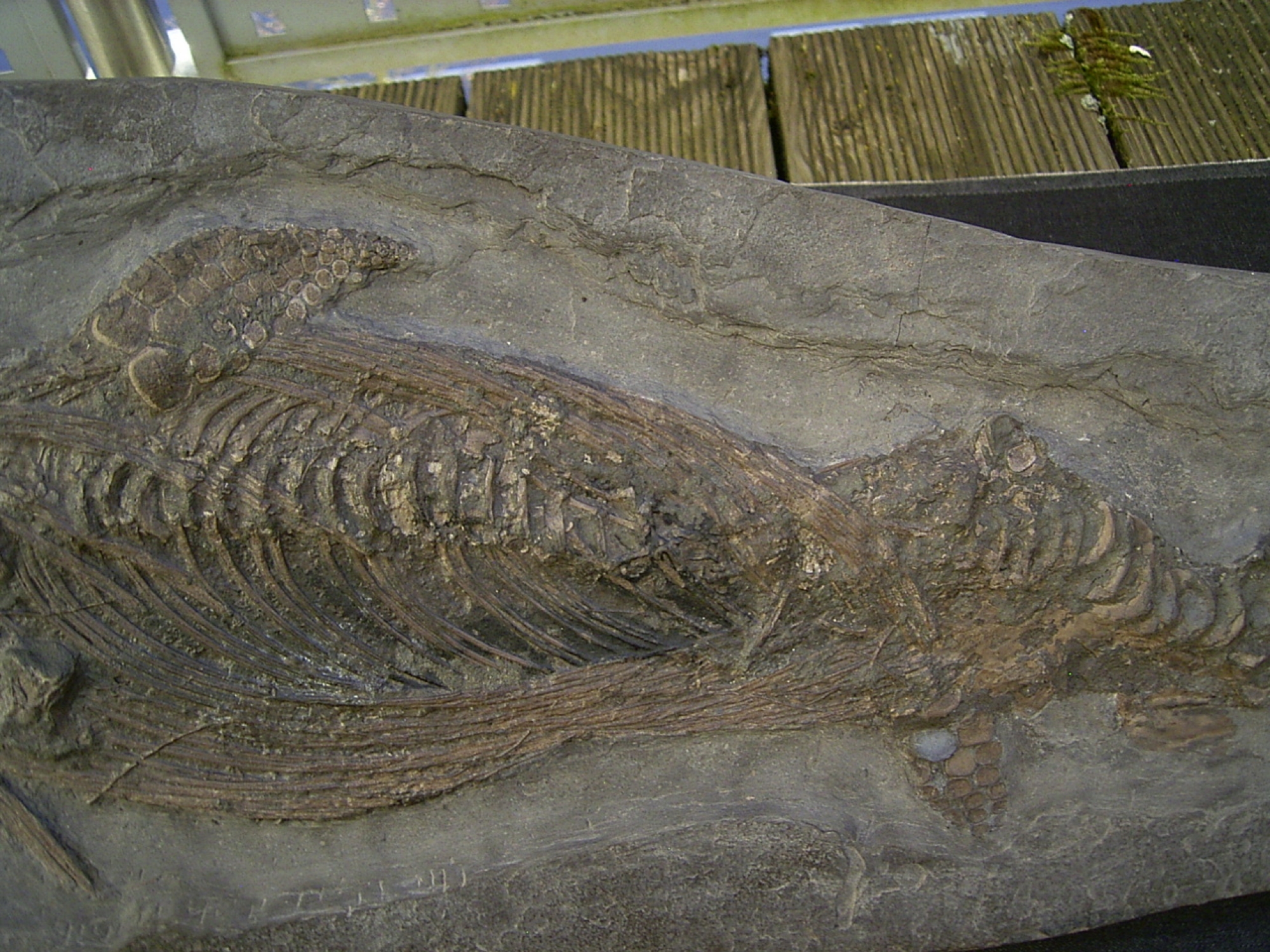
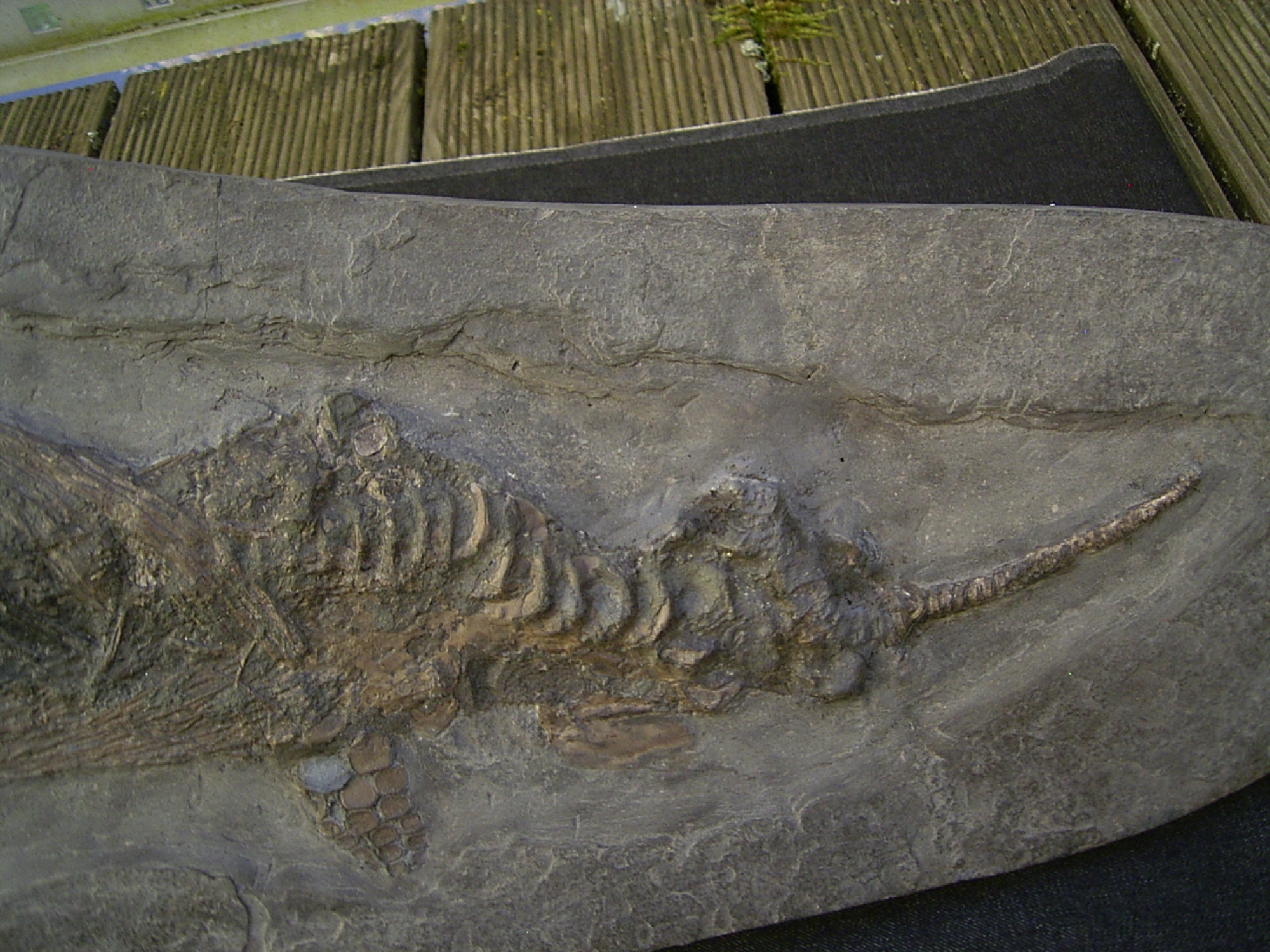
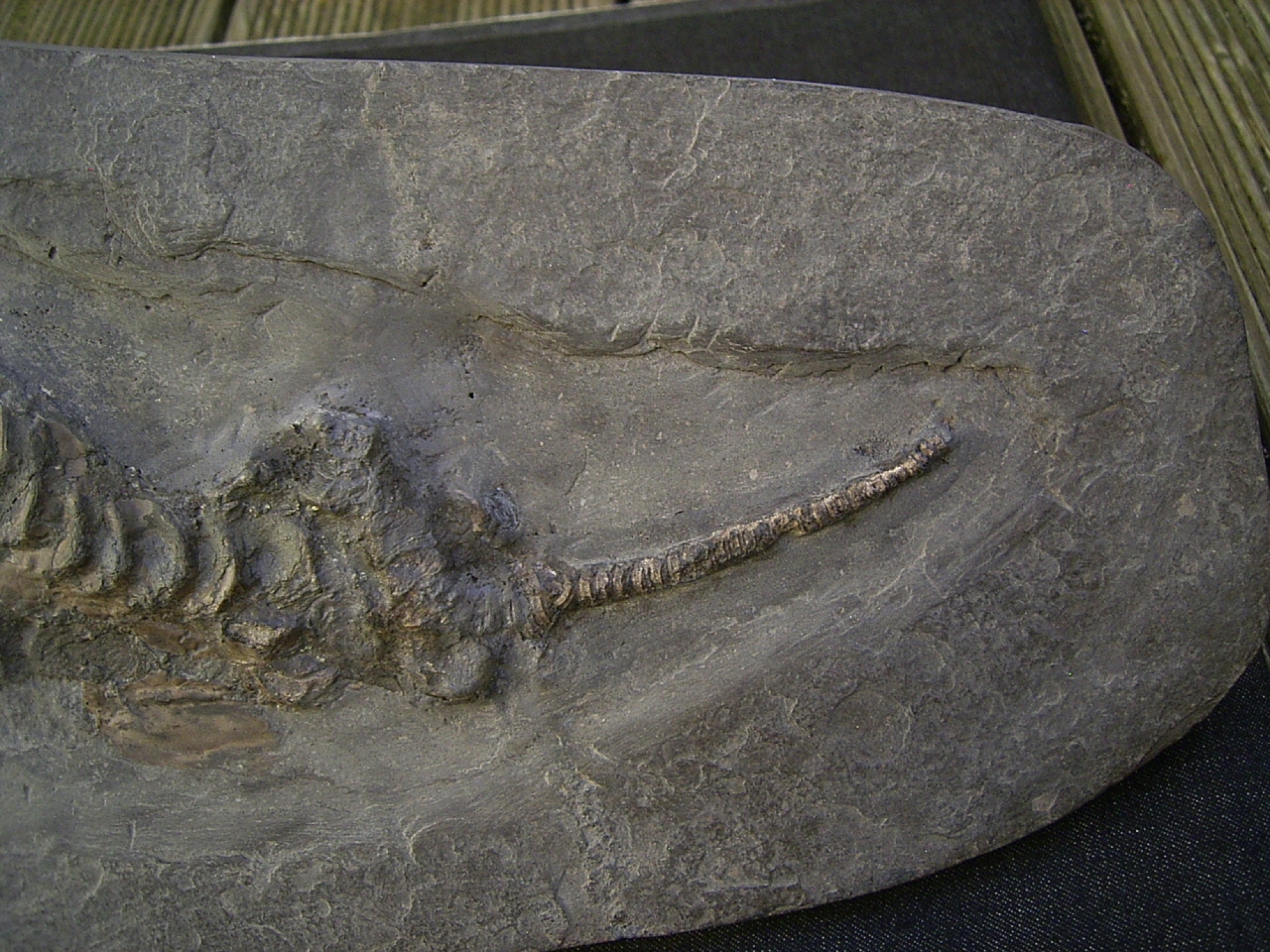
This is a baby ichthyosaur. Such small ichthyosaurs are very rare and highly sought after by collectors and museums. Most such
skeletons are two or three meters long and can hardly be moved without a forklift. This specimen measures approximately
98 x 27 x 2 cm. The rock was broken and glued back together. The back of the specimen was reinforced with fiberglass mat for stability.
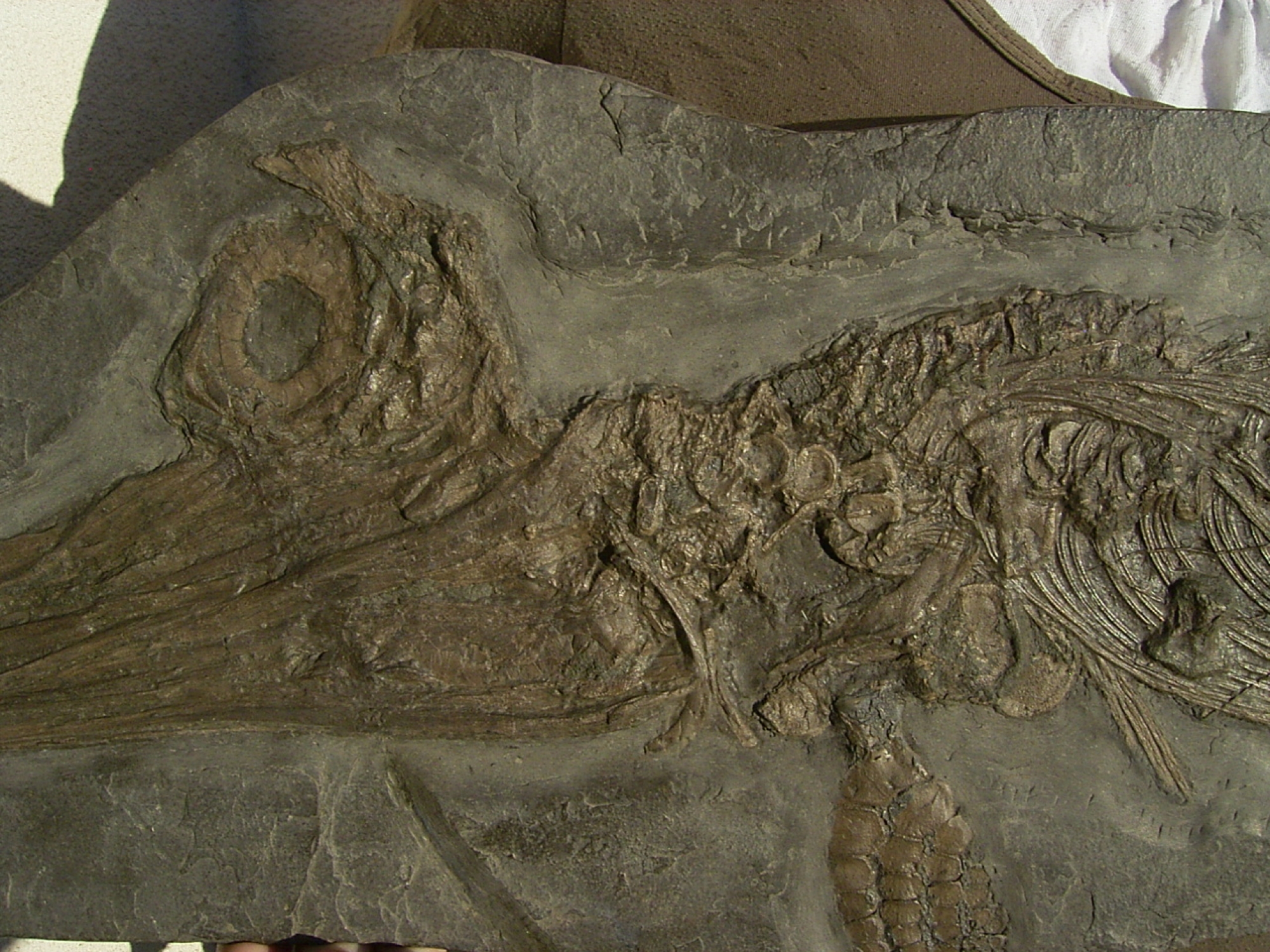
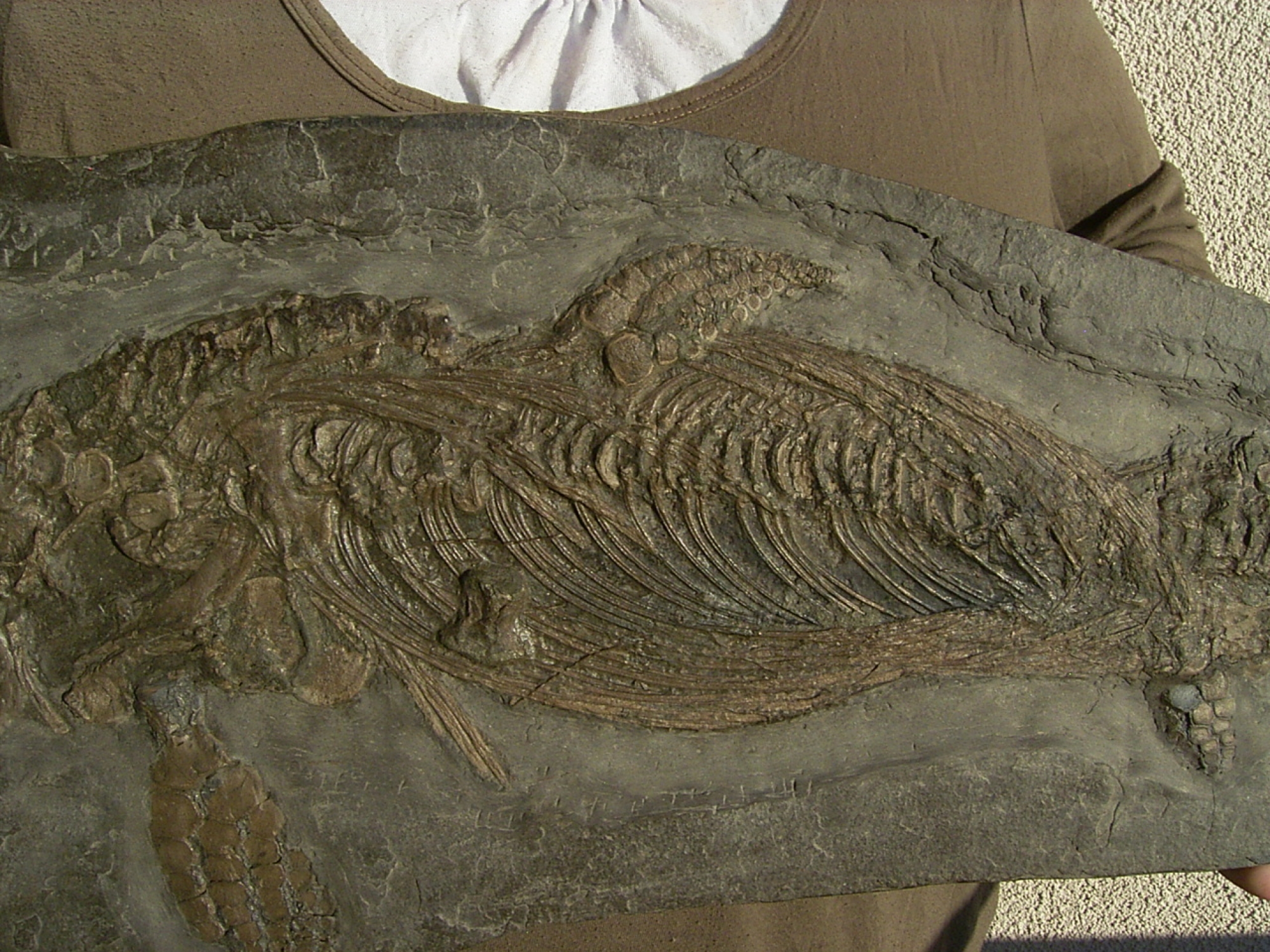
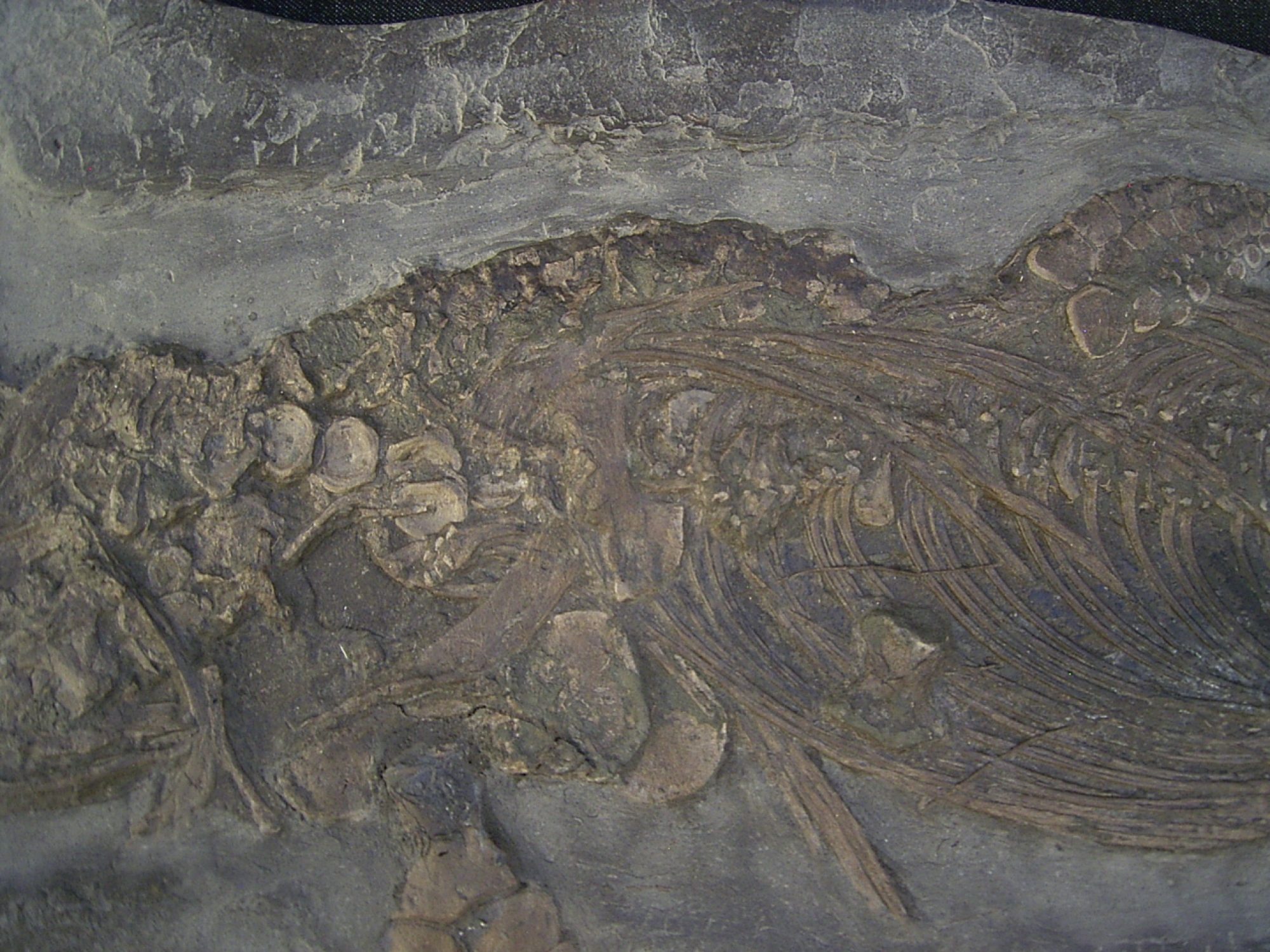
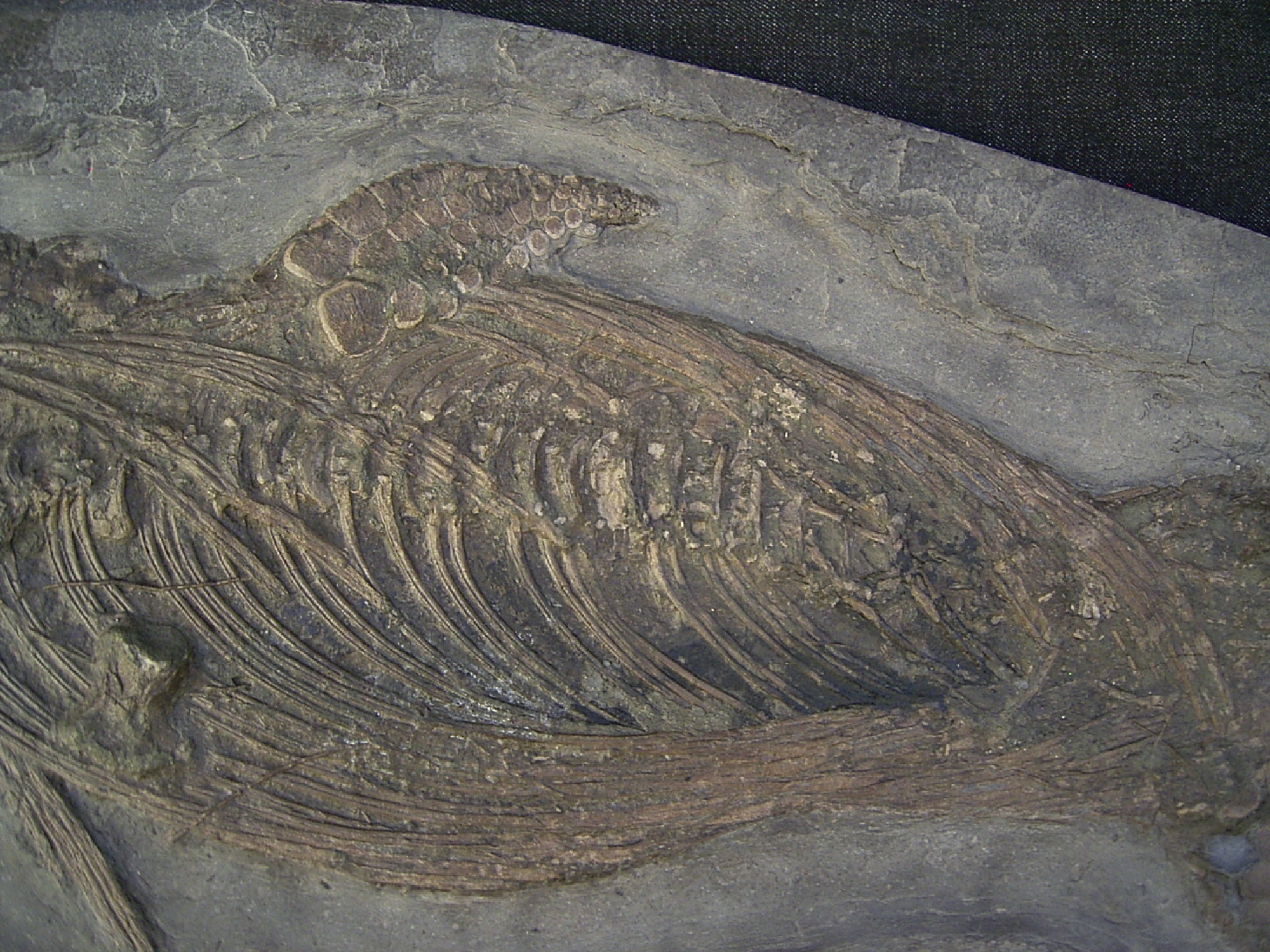
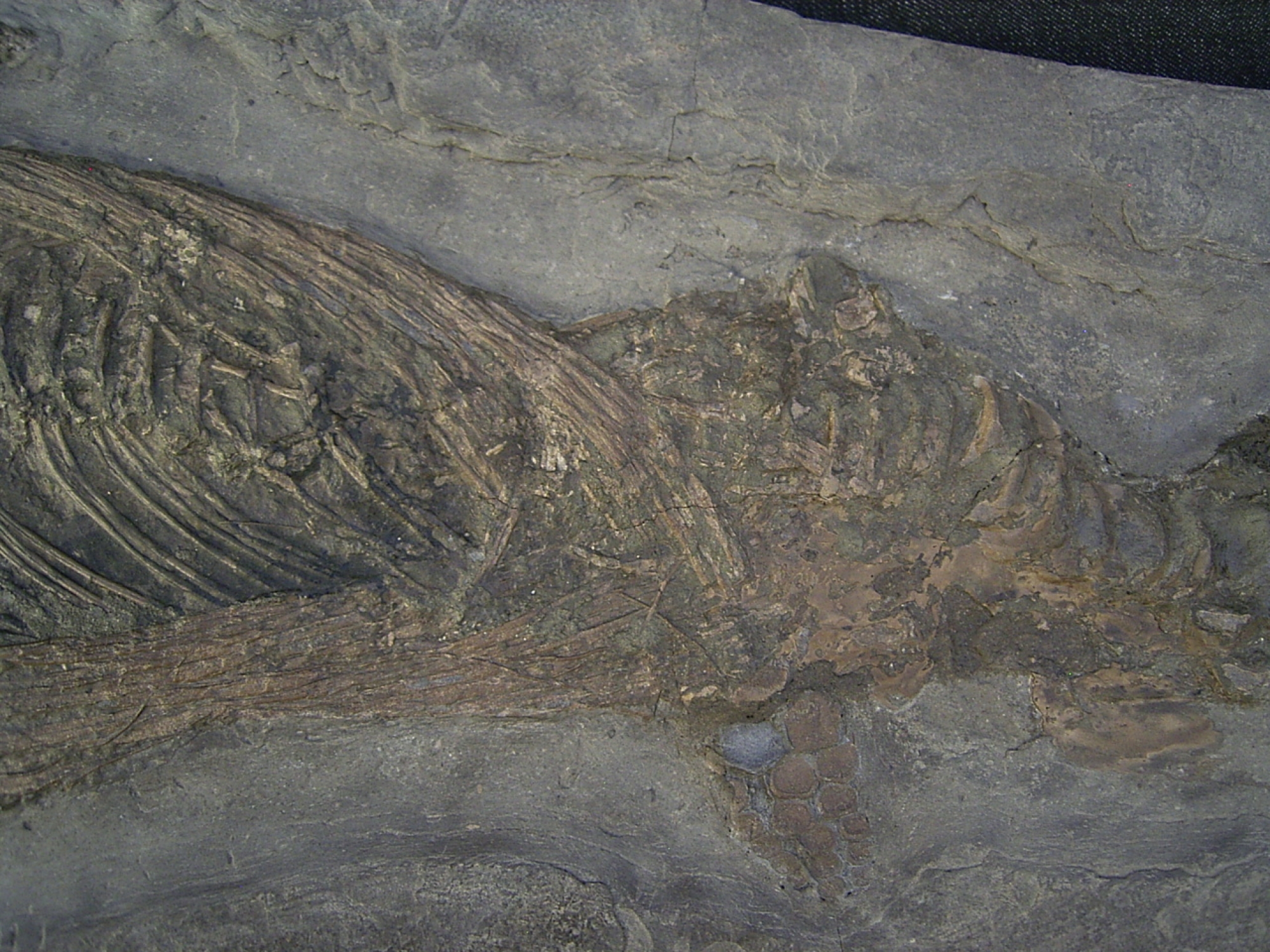
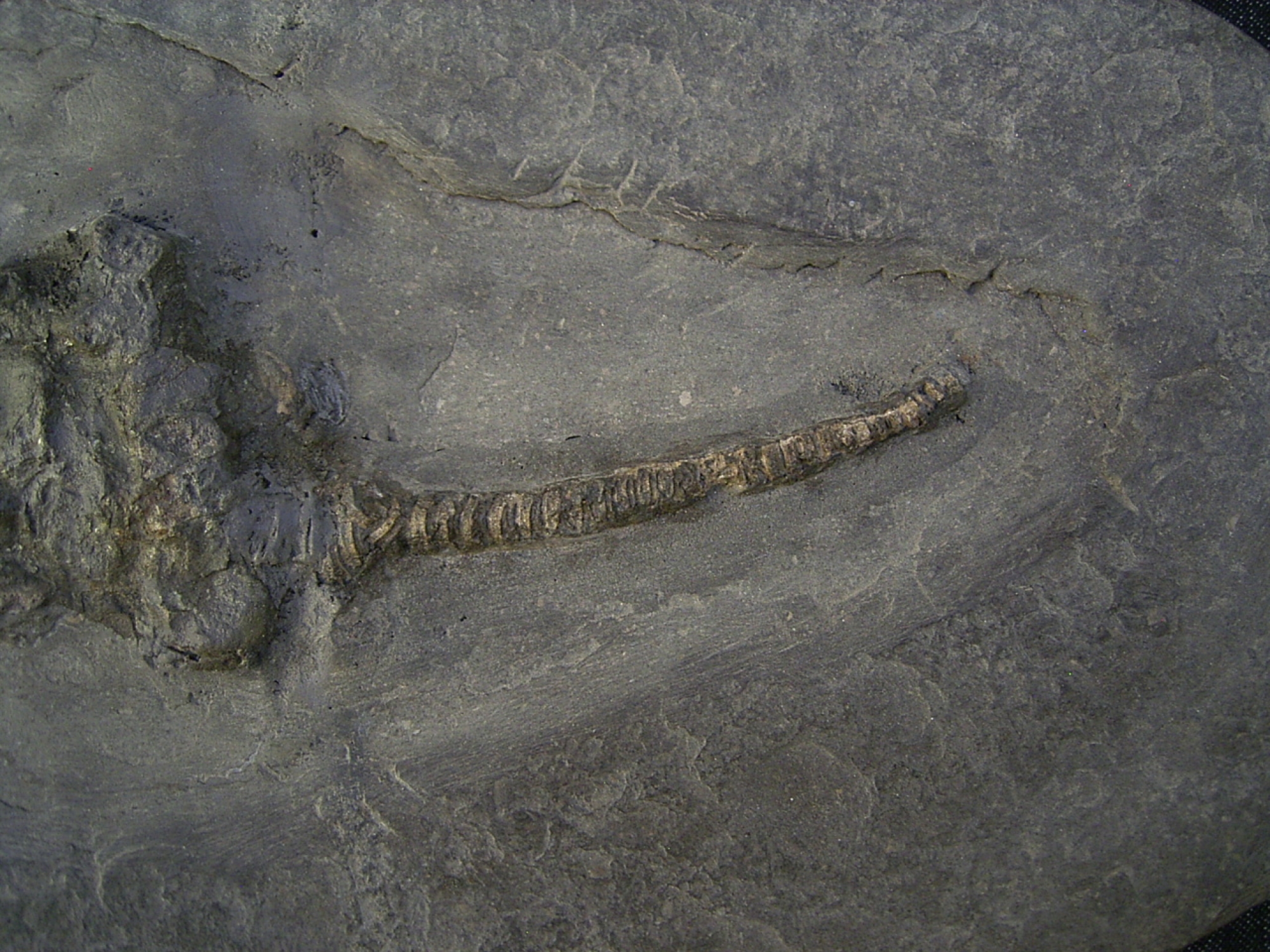
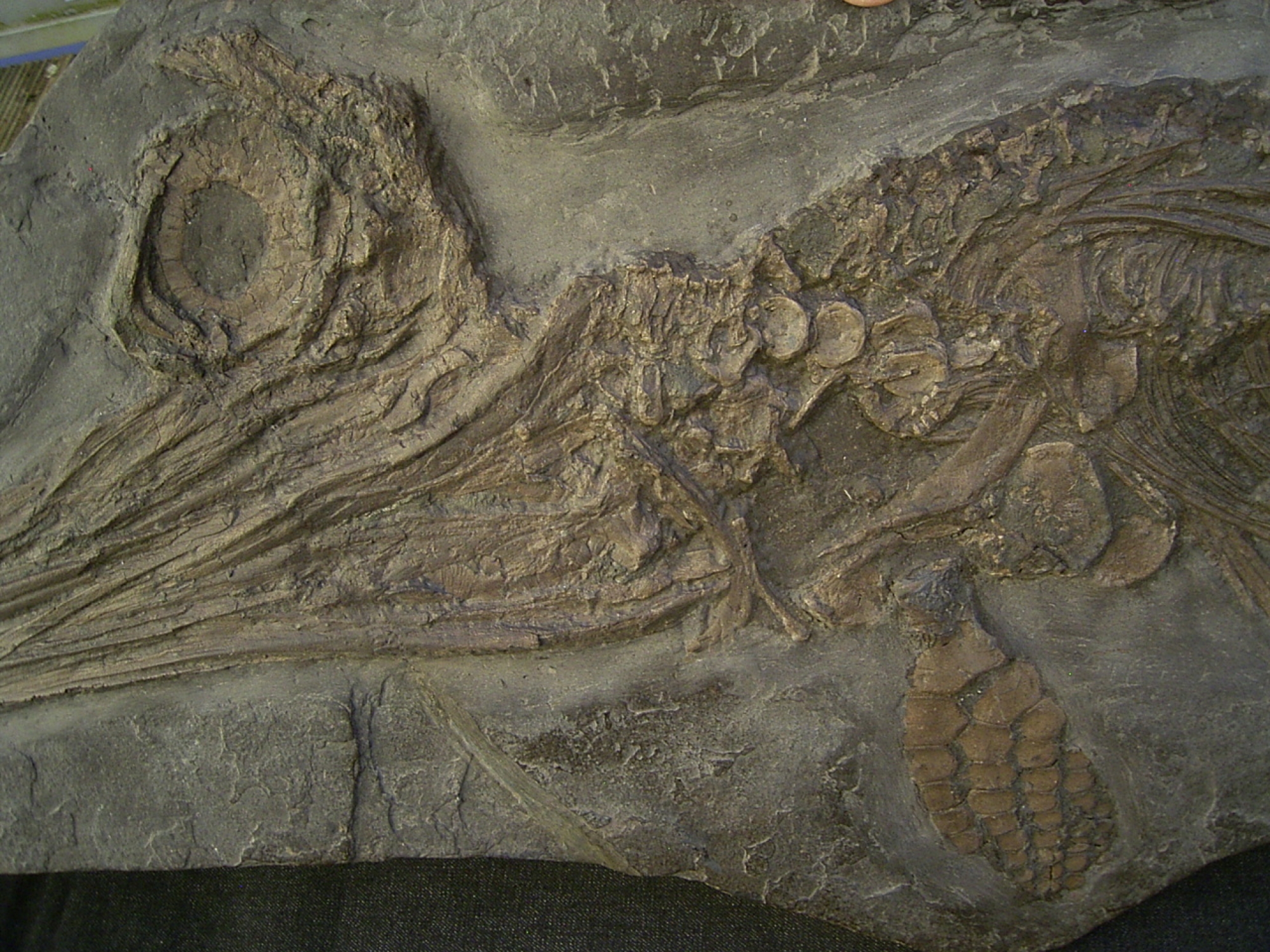
The ichthyosaur is complete and very well preserved in great detail. It was meticulously prepared using modern sandblasting techniques.
Previous fossils were scraped, resulting in the loss of many interesting details. The dentition is clearly visible, and even soft tissues such as
the stomach contents (black areas) were preserved thanks to the careful preparation.
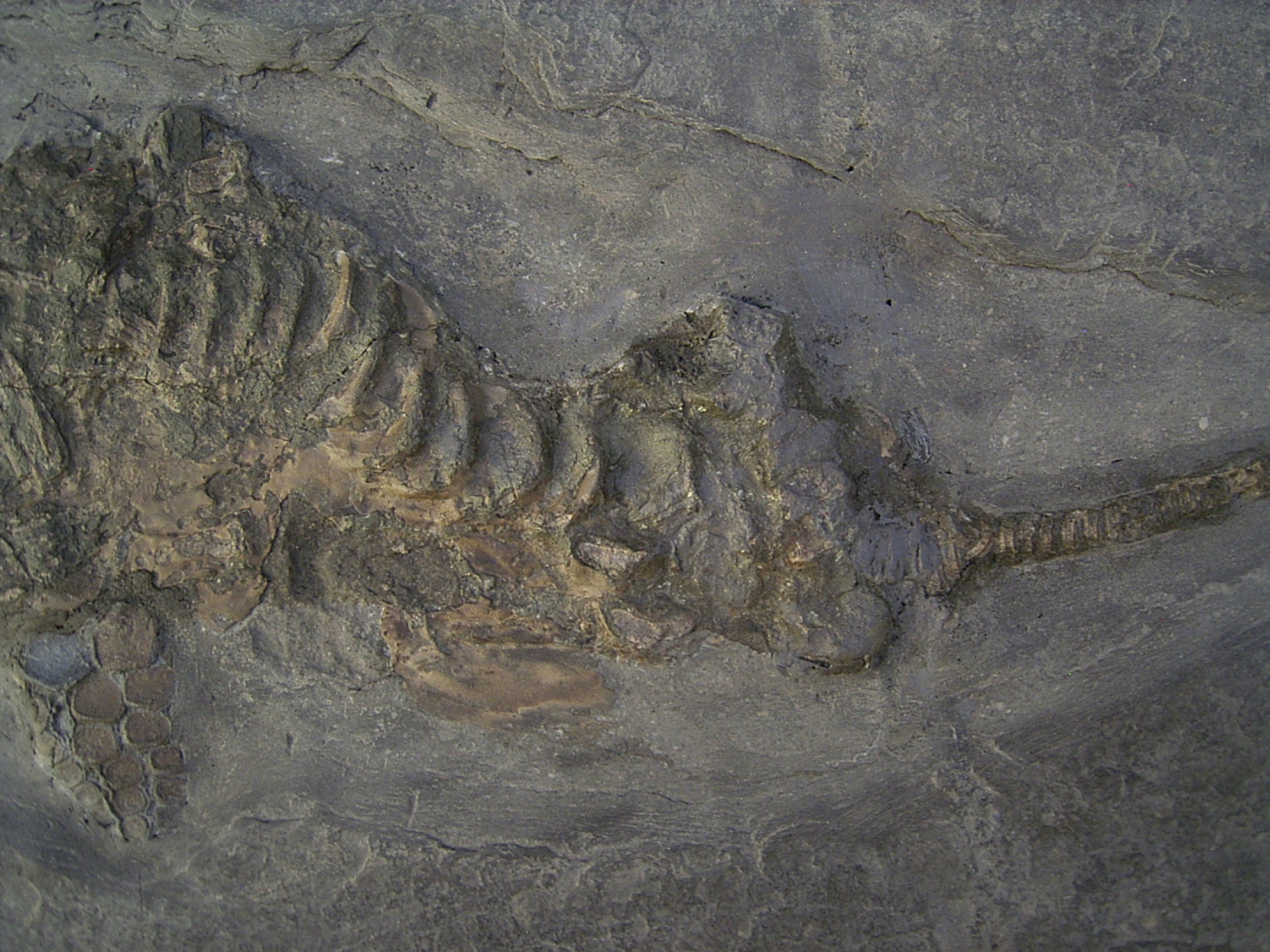
Interestingly, this is a single individual fossil, not a composite. Often, such dinosaurs are pieced together from several individuals to create
the impression of a complete animal. For example, dislodged paddle bones are put back in place, and displaced vertebrae are reassembled.
Missing parts are then taken from other individuals and glued in to give the appearance of a complete animal. Such exhibits all look very similar;
hile they may look visually appealing on the rock, their scientific value is completely lost.
We made sure that no alterations were made and that the fossil remained in its original state.
Current conditions at the site:
The rocks from the Dotternhausen quarry are extracted mechanically to produce cement. They are ground into small pieces, thereby irretrievably
destroying all fossils contained within. Entering the quarry independently is strictly prohibited. Previously, after prior arrangement and under certain
conditions, and only after the quarry workers' shifts had ended, it was possible to search for fossils. At that time, the rock was blasted, and if one
was lucky, fragments of fossils broken by the blast could be found. Today, the extraction method has changed. The exposed rock is scraped off
with an excavator bucket and then placed directly into the crusher. Therefore, there are no longer any opportunities to find fossils. Unfortunately,
nother interesting fossil site can now be considered lost.
Interesting not only for collectors: High-quality fossils like the ichthyosaur skeleton offered here can also be considered an attractive investment
with a good outlook for rising prices.
We only have this one piece available - don't miss this rare opportunity.
deposits of Dotternhausen in Germany.
In Dotternhausen significant fossils, including ichthyosaurs, were discovered in the local oil shale. These finds are of
outstanding scientific and educational importance, as they provide a precise window into the Jurassic Sea.
The rock strata in which the ichthyosaurs are found date from the Early Jurassic (Lower Jurassic), more precisely from the Toarcian.
Details regarding the age and geological classification are:
Absolute age: The strata are approximately 180 to 185 million years old.
Geological designation: This is the so-called Posidonia Shale (also known as Oil Shale).
Stratigraphic classification: In the classic South German stratigraphic system, this layer is designated as Lias epsilon.
This epoch was characterized by a warm, shallow sea that covered large parts of southern Germany. Due to the lack of oxygen on
the seabed, dead animals decomposed very slowly, which enabled the exceptionally good preservation of the skeletons visible today
(even with soft tissue outlines or unborn embryos).
Central scientific significance of the Dotternhausen fossils:
Excellent preservation (conservation site): The finds originate from the Posidonia Shale, a world-renowned fossil site. Due to the
oxygen-poor environment of the ancient seabed, skeletons are often preserved complete and intact.
Diversity of marine fauna: Over 1,000 significant specimens have been documented in Dotternhausen, including ichthyosaurs,
marine crocodiles, pterosaurs, fish, crinoids, and ammonites.
The fossil offered here is a juvenile specimen of an ichthyosaur. Its precise identification is still pending. The most common species
is Stenopterygius quadrisscisus. It is considered a classic example of the perfect adaptation of reptiles to a permanent life in the sea.
Biological characteristics & appearance:
Body structure: It possessed a streamlined body strongly reminiscent of modern dolphins or tuna. Its limbs were modified into four
paddle-like flippers.
Size: Adult specimens reached a length of approximately 2.0 to 3.5 meters.
Head: Its skull was elongated and covered with numerous sharp teeth. Particularly striking were its very large eye sockets,
indicating excellent eyesight for hunting at greater depths.
Meaning of the name: The genus name is derived from the Greek words stenos (narrow) and pteryx (fin).
Lifestyle and diet:
Diet: Stenopterygius quadriscissus was a specialized predator that fed primarily on fish and squid (belemnites).
Reproduction: Like many ichthyosaurs, this species was viviparous. Fossils from sites such as Dotternhausen or Holzmaden often
show mothers with unborn young still inside their body cavities or who were fossilized during birth.
Speed: Estimates based on its tuna-like body structure suggest that it was a very fast swimmer.
Informations about the fossil offered here:
This is a baby ichthyosaur. Such small ichthyosaurs are very rare and highly sought after by collectors and museums. Most such
skeletons are two or three meters long and can hardly be moved without a forklift. This specimen measures approximately
98 x 27 x 2 cm. The rock was broken and glued back together. The back of the specimen was reinforced with fiberglass mat for stability.
The ichthyosaur is complete and very well preserved in great detail. It was meticulously prepared using modern sandblasting techniques.
Previous fossils were scraped, resulting in the loss of many interesting details. The dentition is clearly visible, and even soft tissues such as
the stomach contents (black areas) were preserved thanks to the careful preparation.
Interestingly, this is a single individual fossil, not a composite. Often, such dinosaurs are pieced together from several individuals to create
the impression of a complete animal. For example, dislodged paddle bones are put back in place, and displaced vertebrae are reassembled.
Missing parts are then taken from other individuals and glued in to give the appearance of a complete animal. Such exhibits all look very similar;
hile they may look visually appealing on the rock, their scientific value is completely lost.
We made sure that no alterations were made and that the fossil remained in its original state.
Current conditions at the site:
The rocks from the Dotternhausen quarry are extracted mechanically to produce cement. They are ground into small pieces, thereby irretrievably
destroying all fossils contained within. Entering the quarry independently is strictly prohibited. Previously, after prior arrangement and under certain
conditions, and only after the quarry workers' shifts had ended, it was possible to search for fossils. At that time, the rock was blasted, and if one
was lucky, fragments of fossils broken by the blast could be found. Today, the extraction method has changed. The exposed rock is scraped off
with an excavator bucket and then placed directly into the crusher. Therefore, there are no longer any opportunities to find fossils. Unfortunately,
nother interesting fossil site can now be considered lost.
Interesting not only for collectors: High-quality fossils like the ichthyosaur skeleton offered here can also be considered an attractive investment
with a good outlook for rising prices.
We only have this one piece available - don't miss this rare opportunity.
Categories