- Customer group: Guest
-


- Home

- Details
- More images
Products description
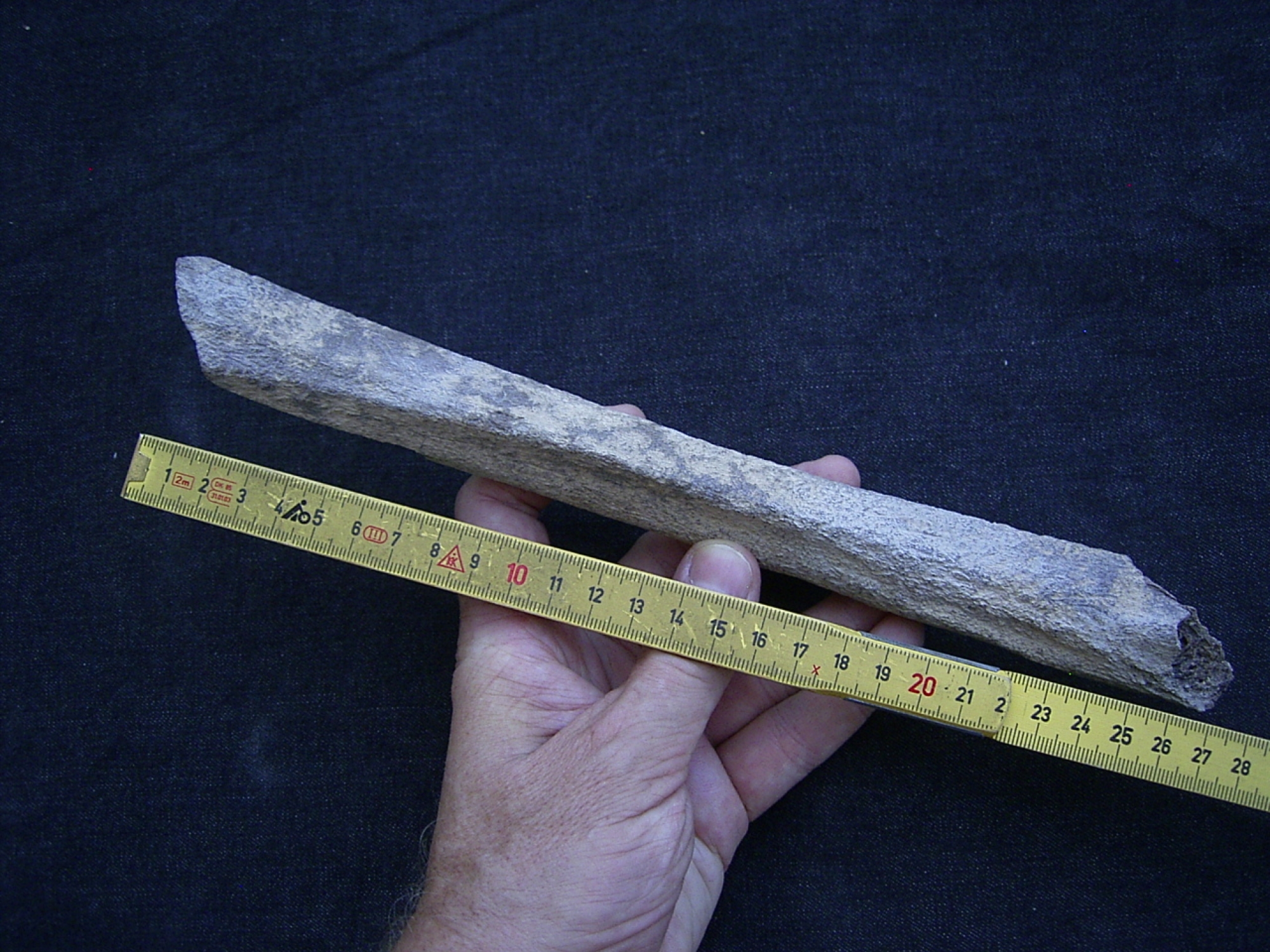
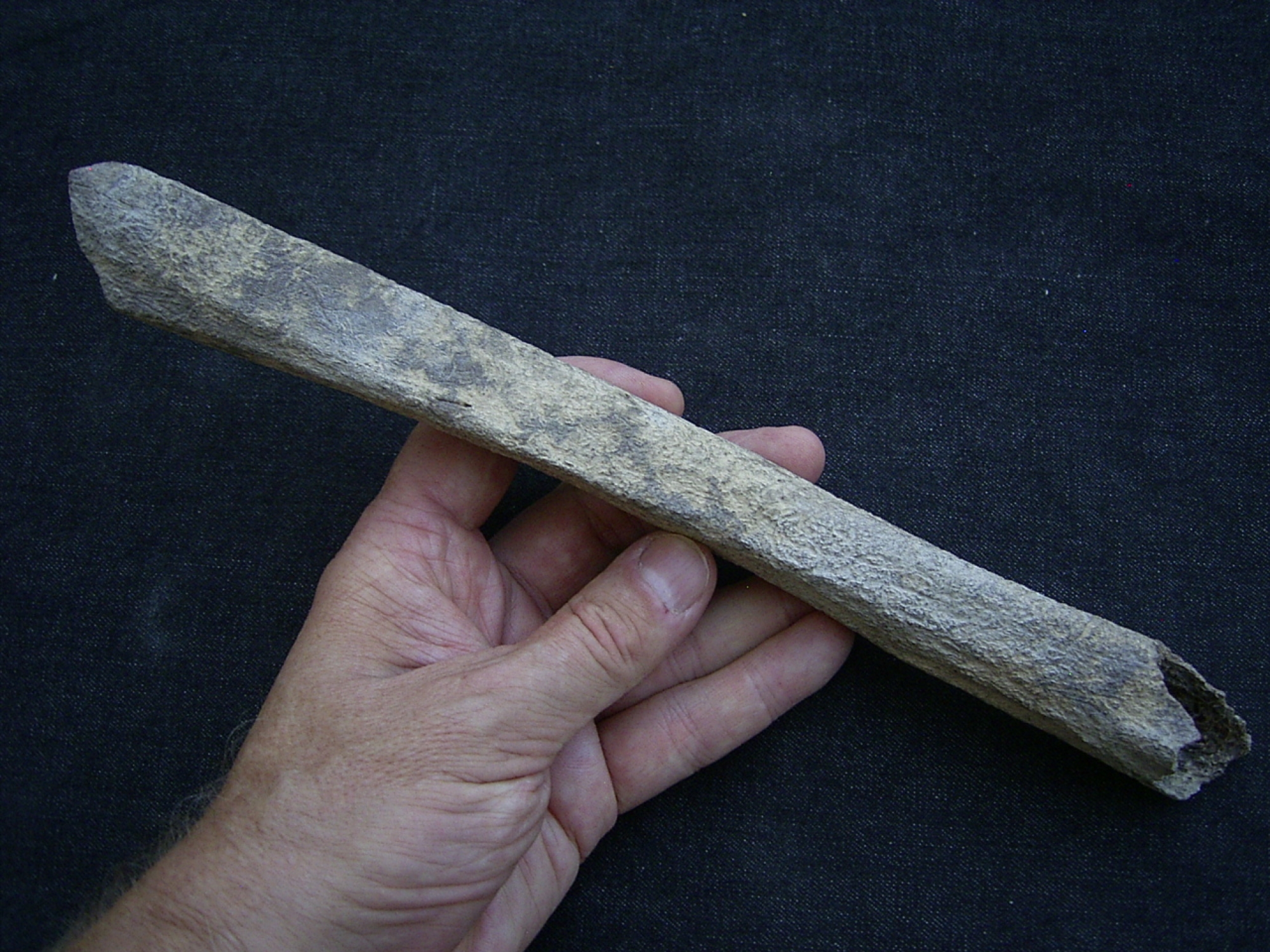
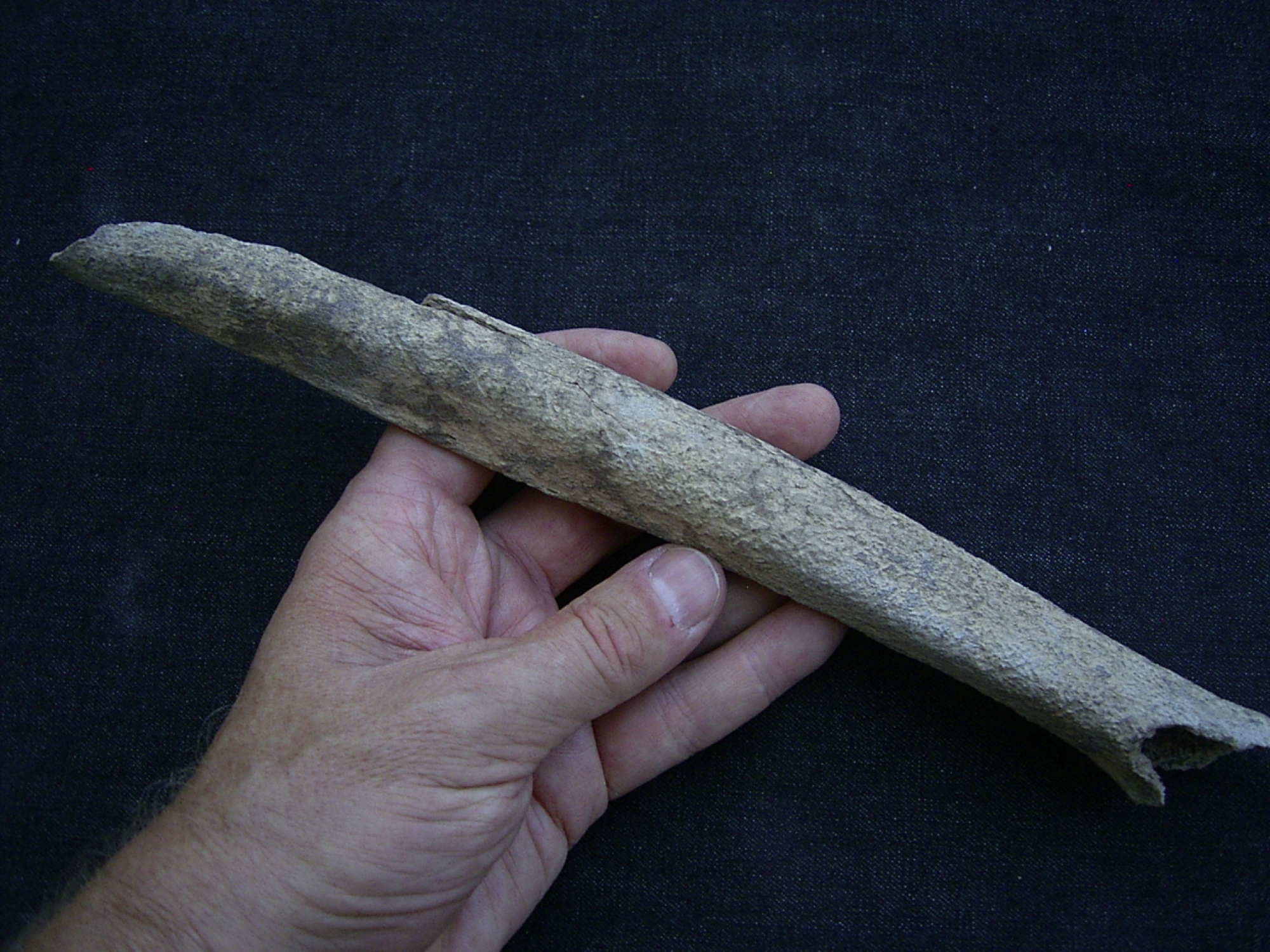
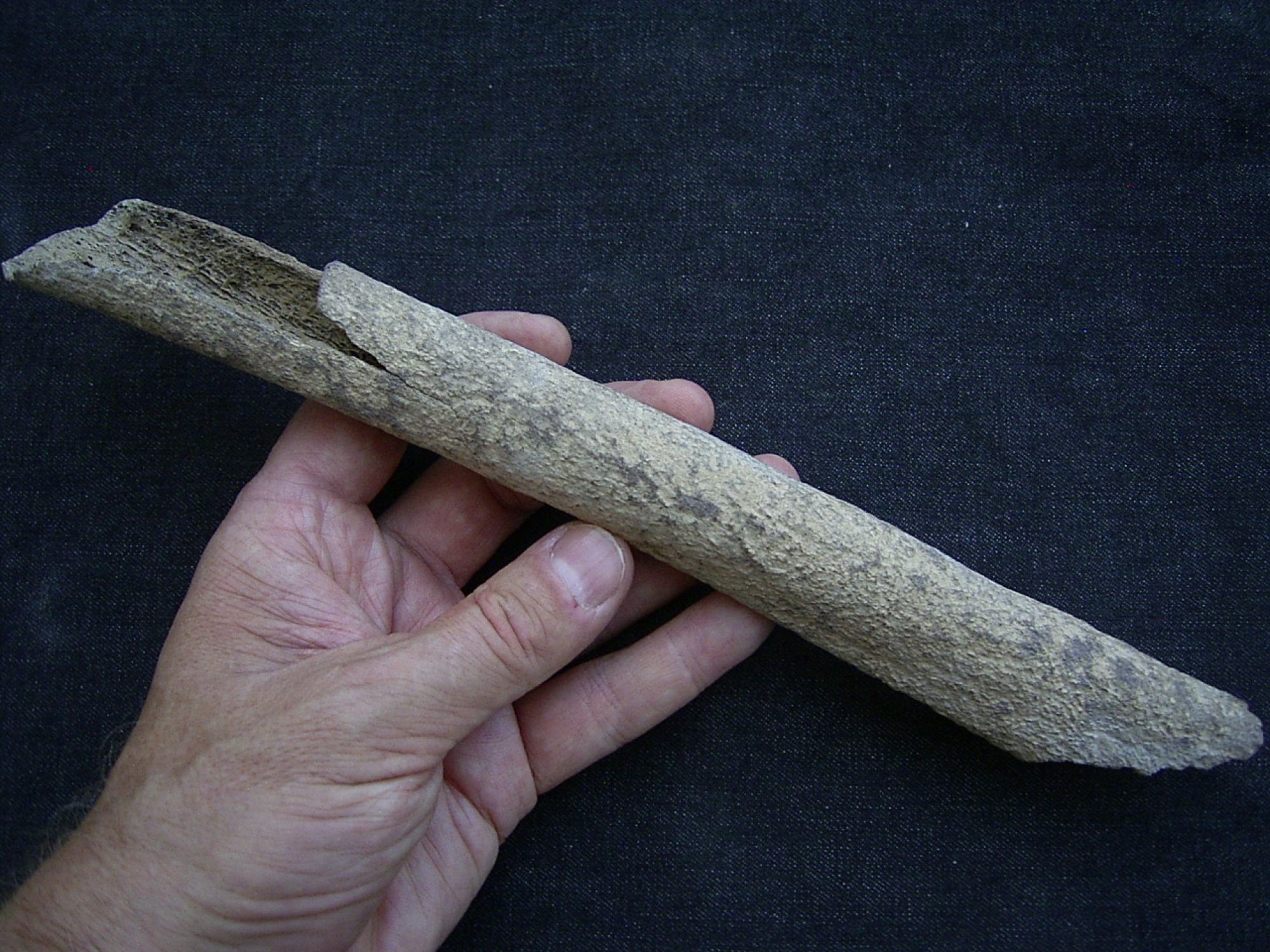
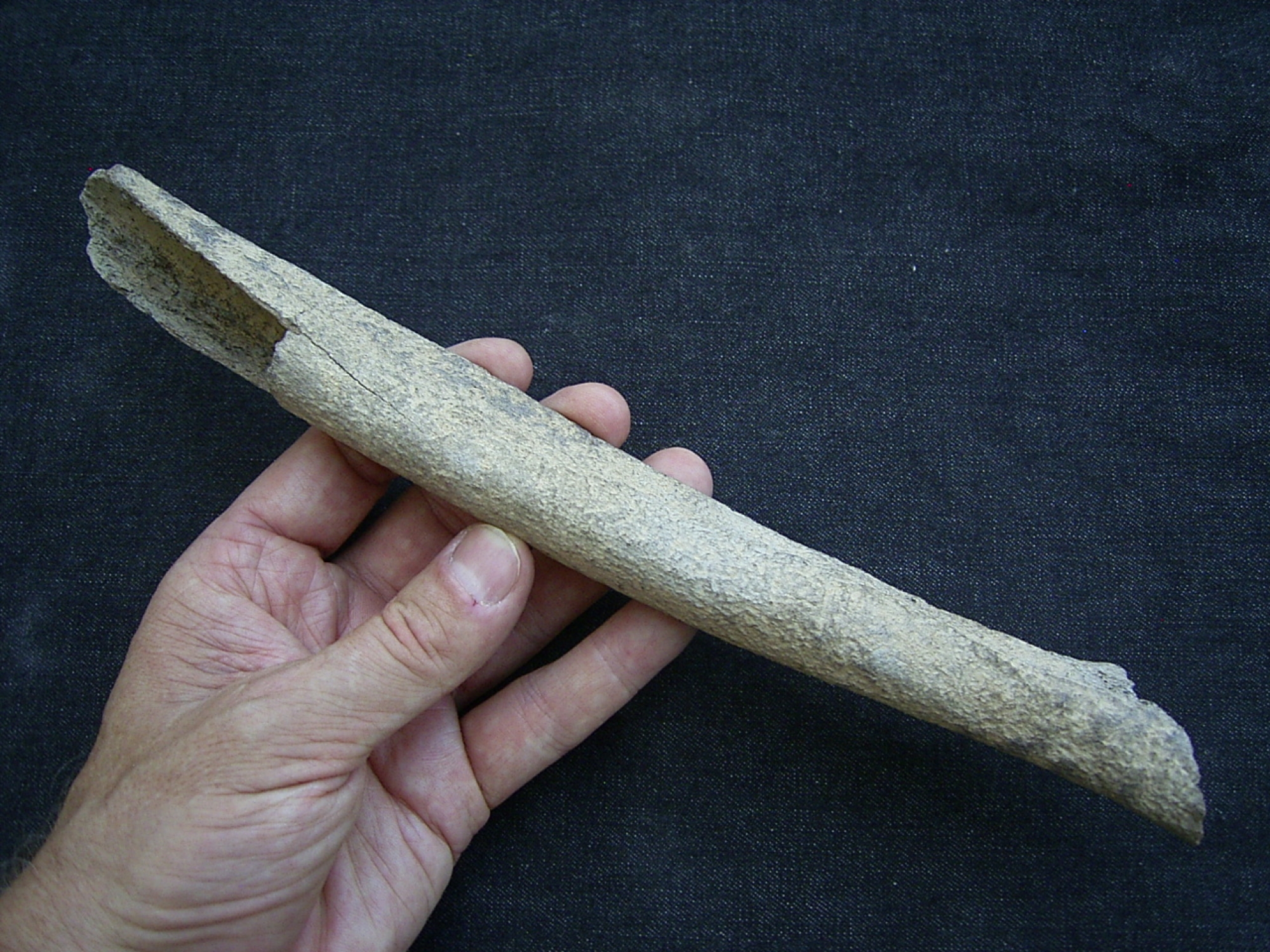
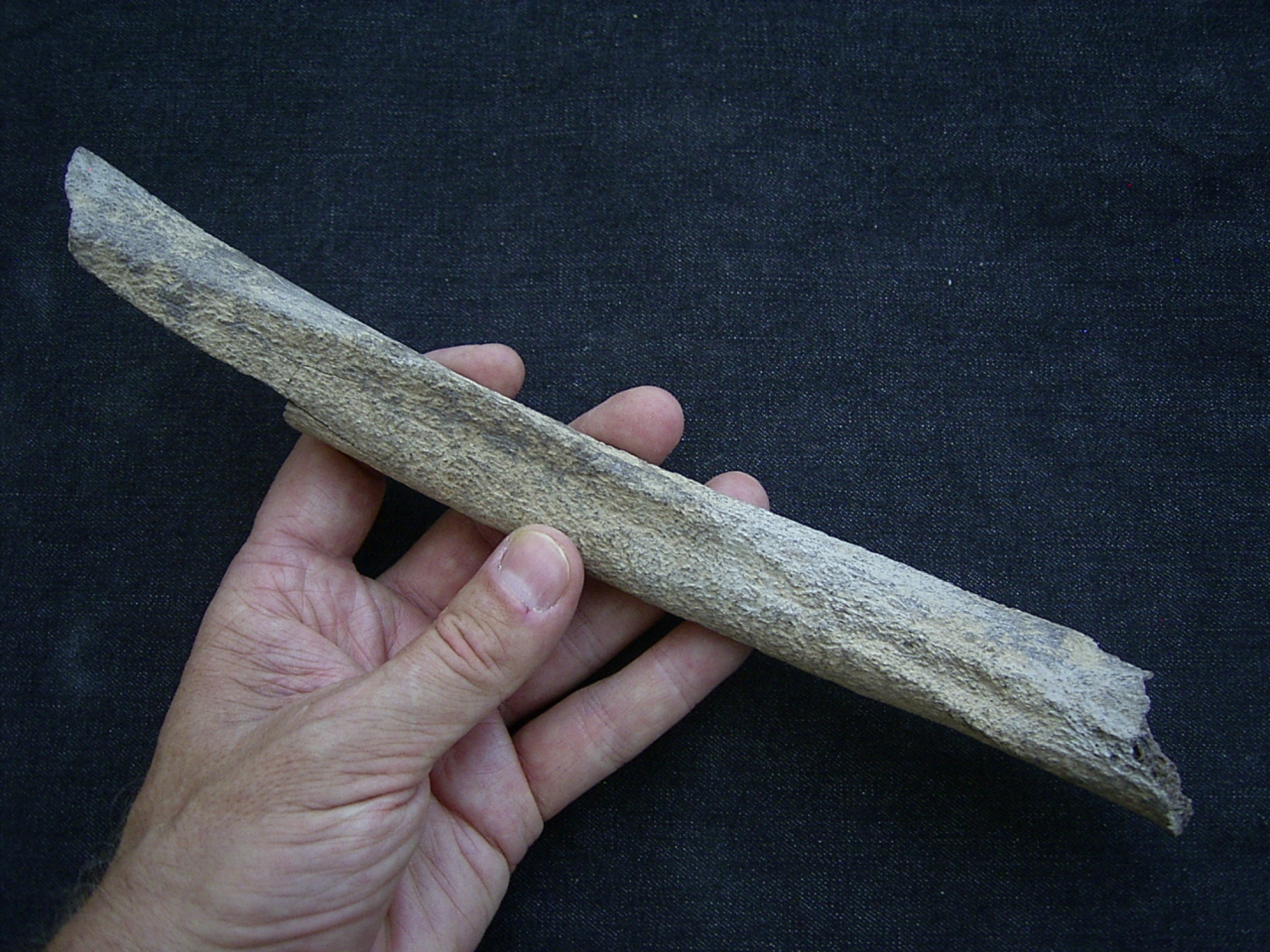
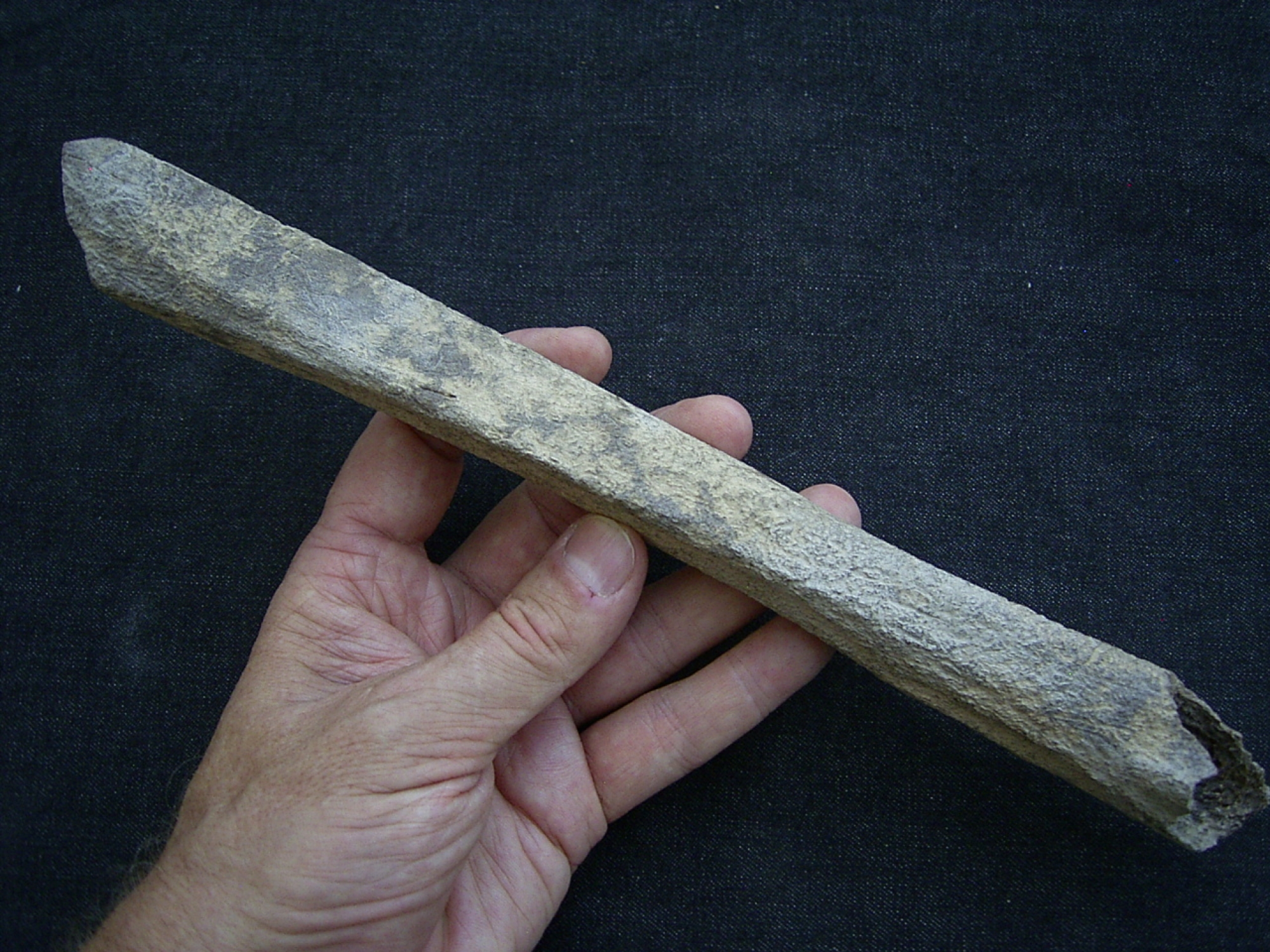
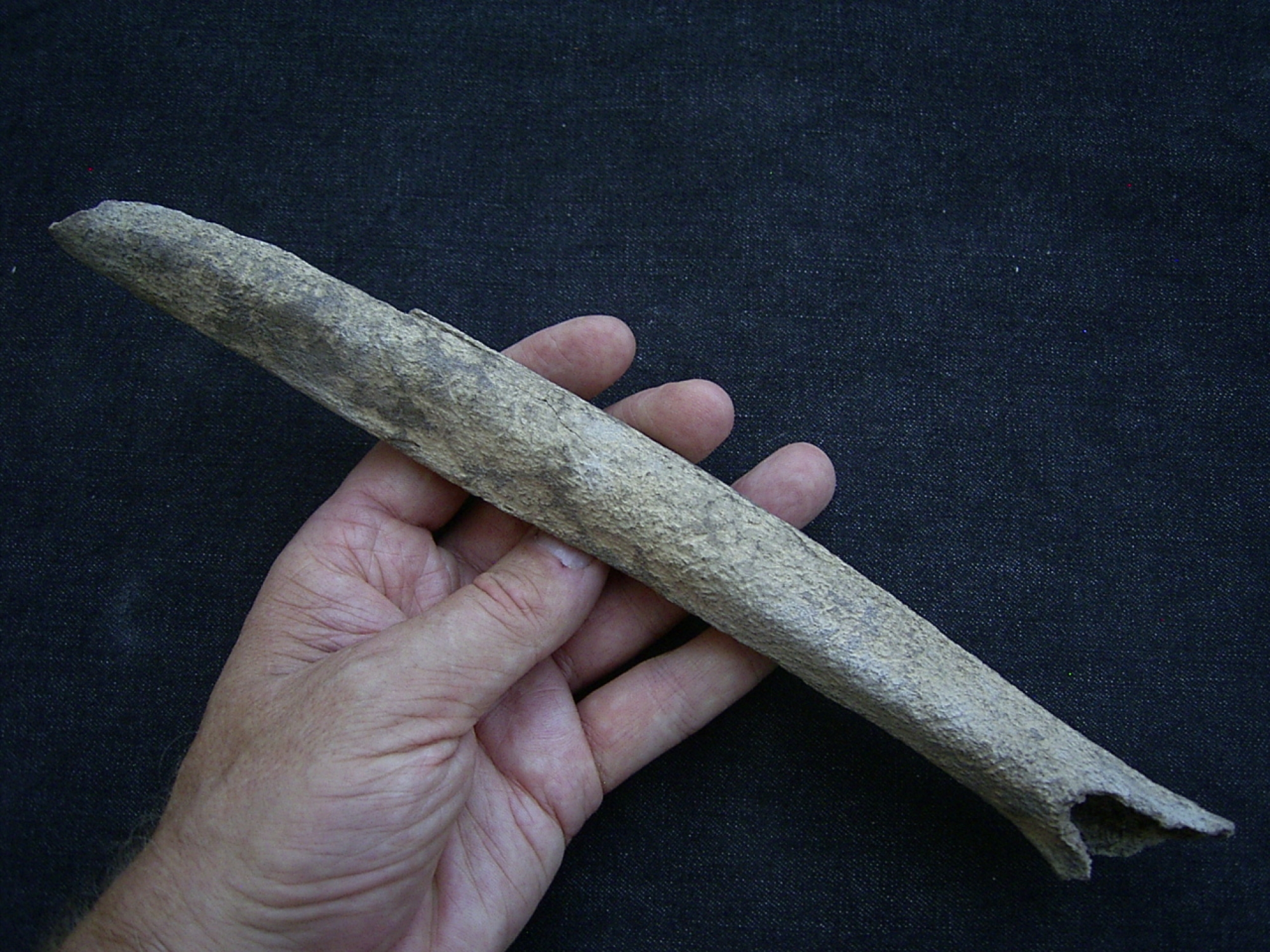
This is a right femur belonging to a Cro-Magnon, an early modern human.
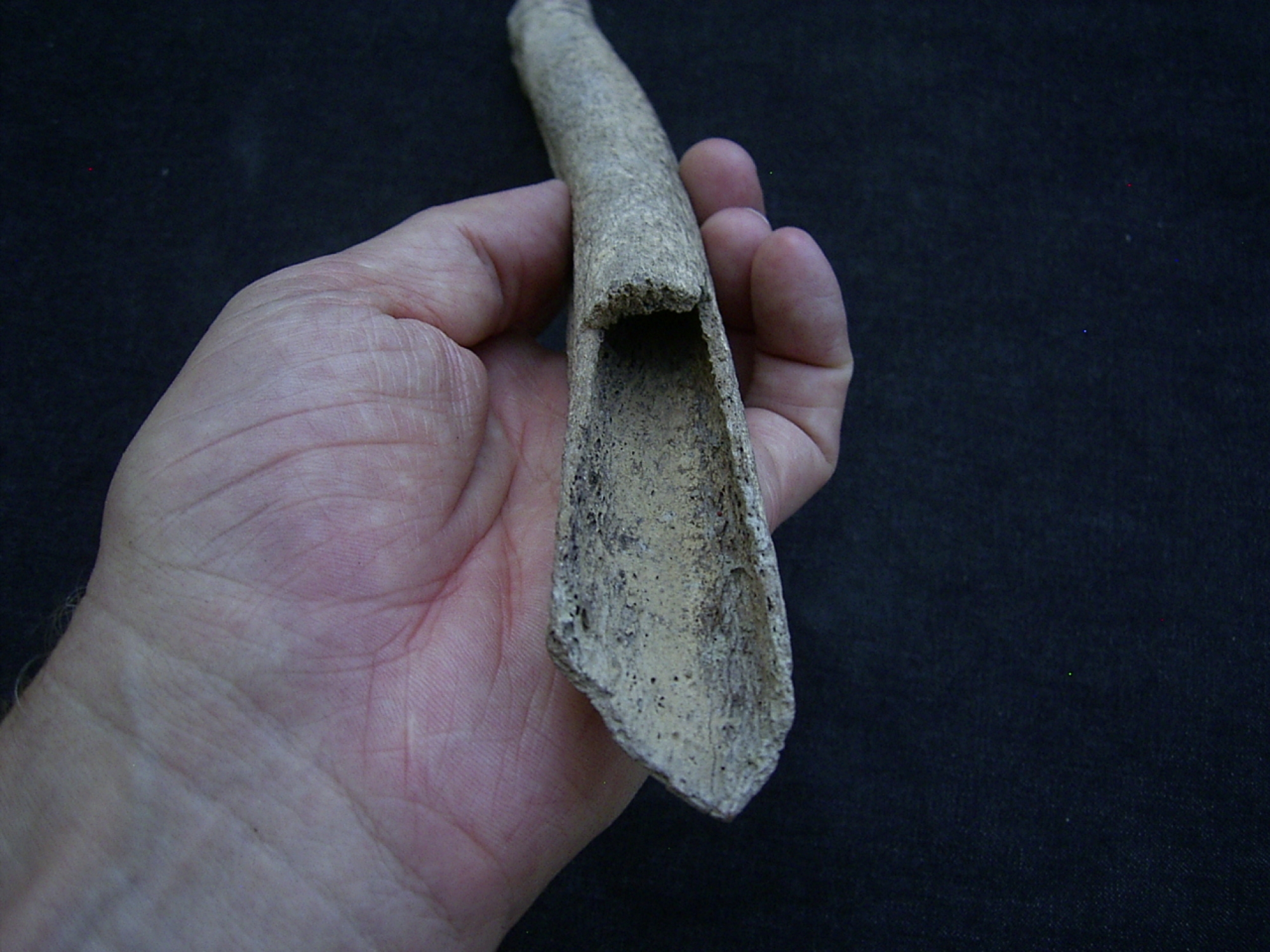
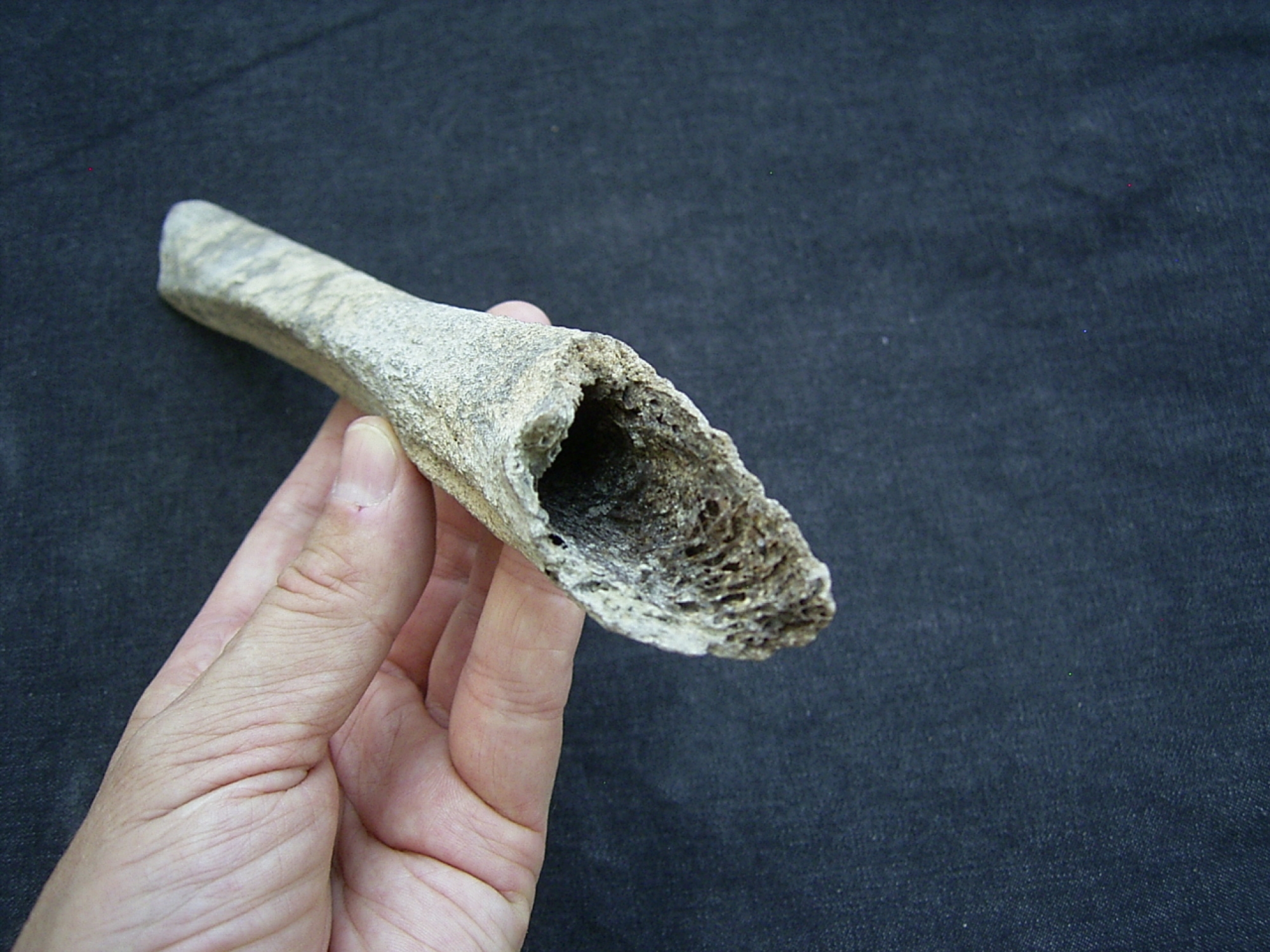
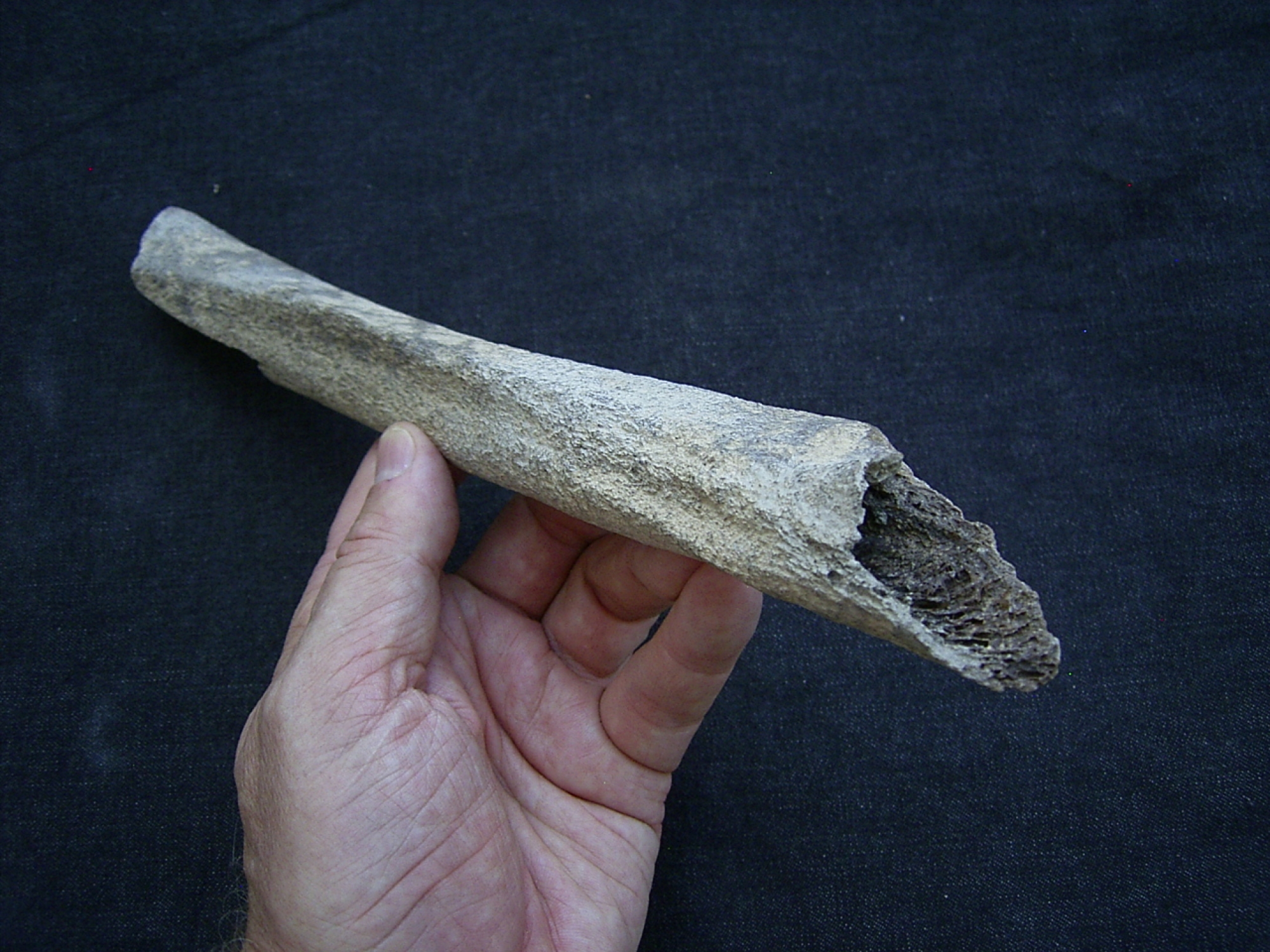
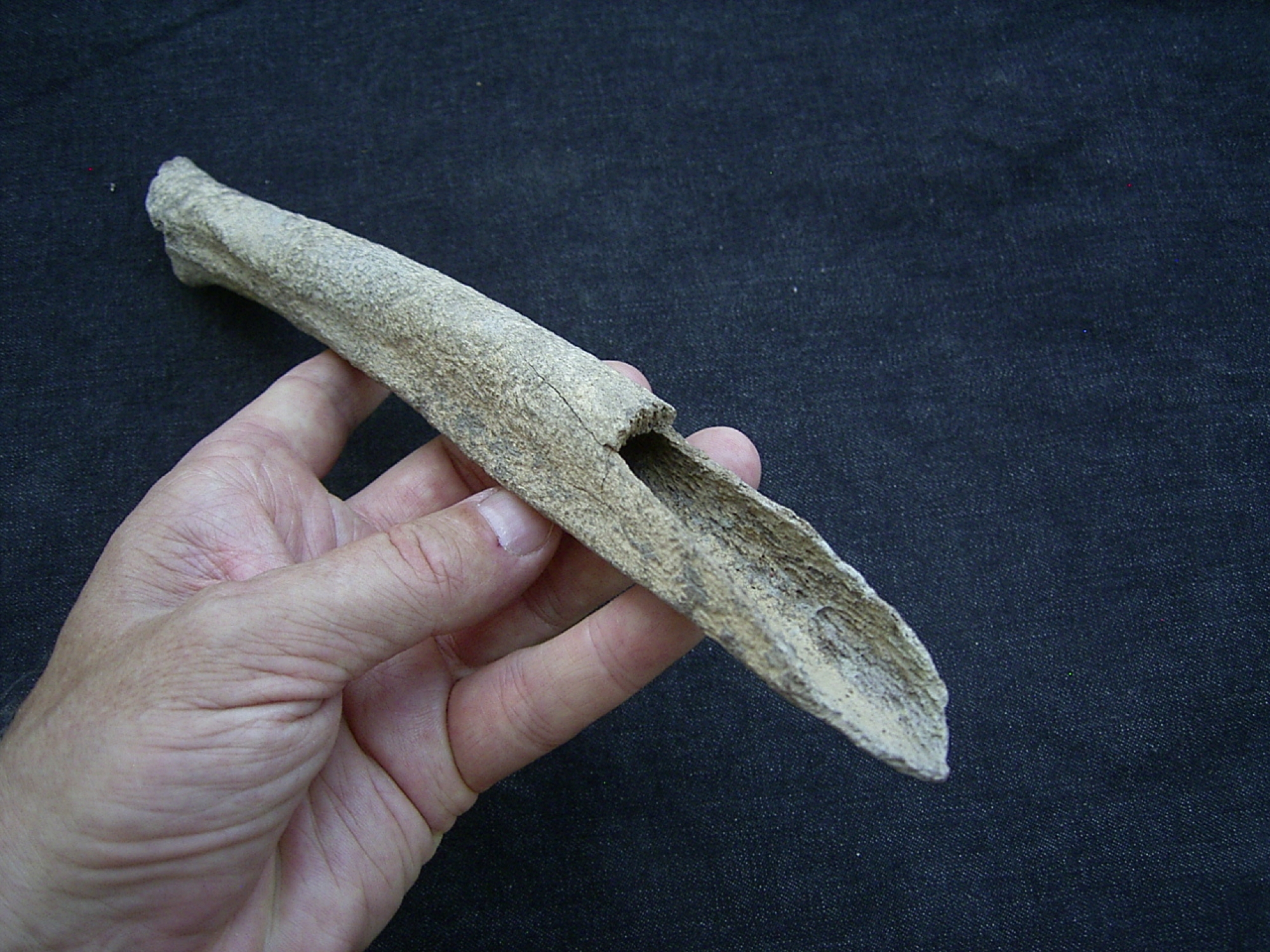
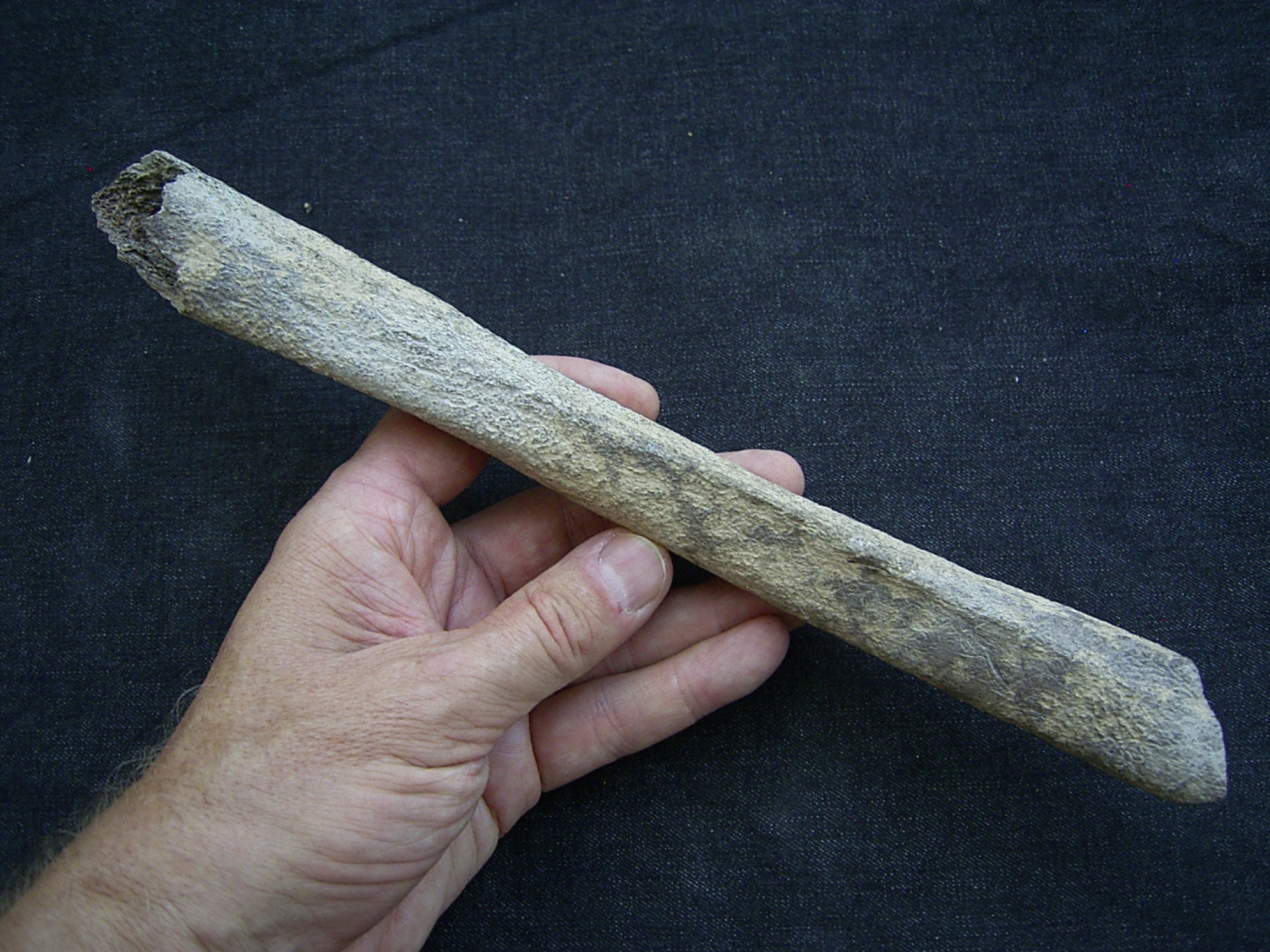
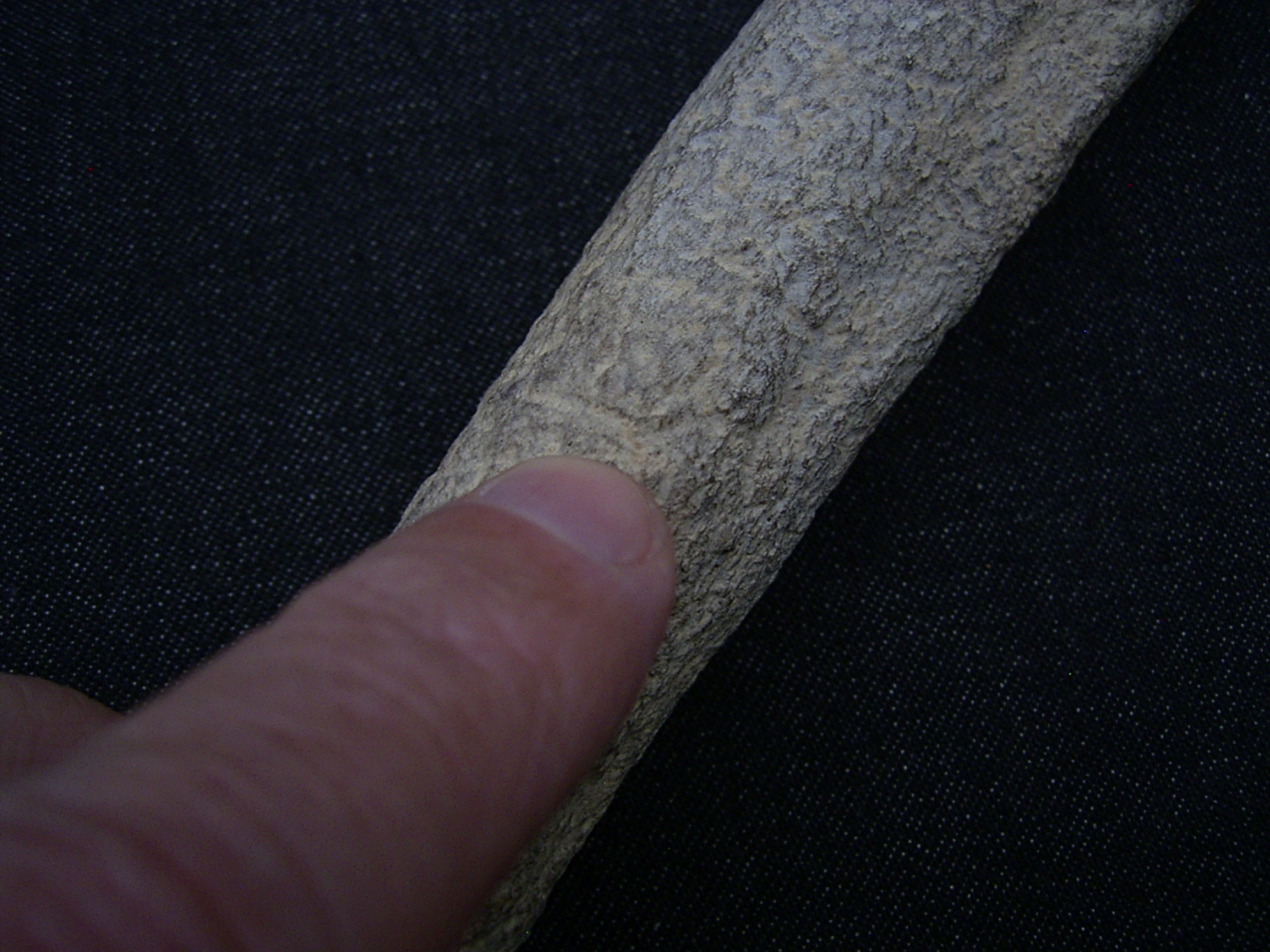
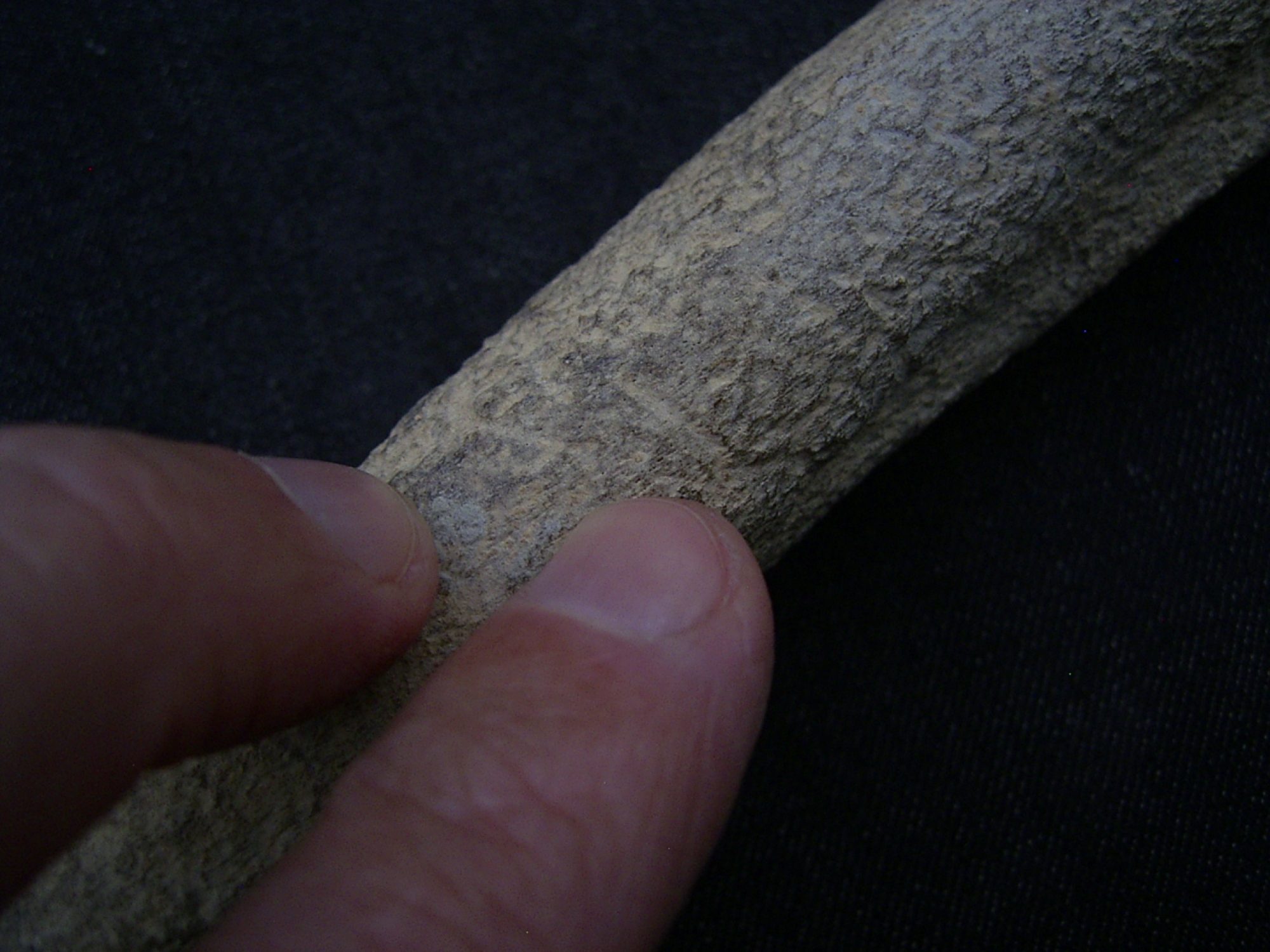
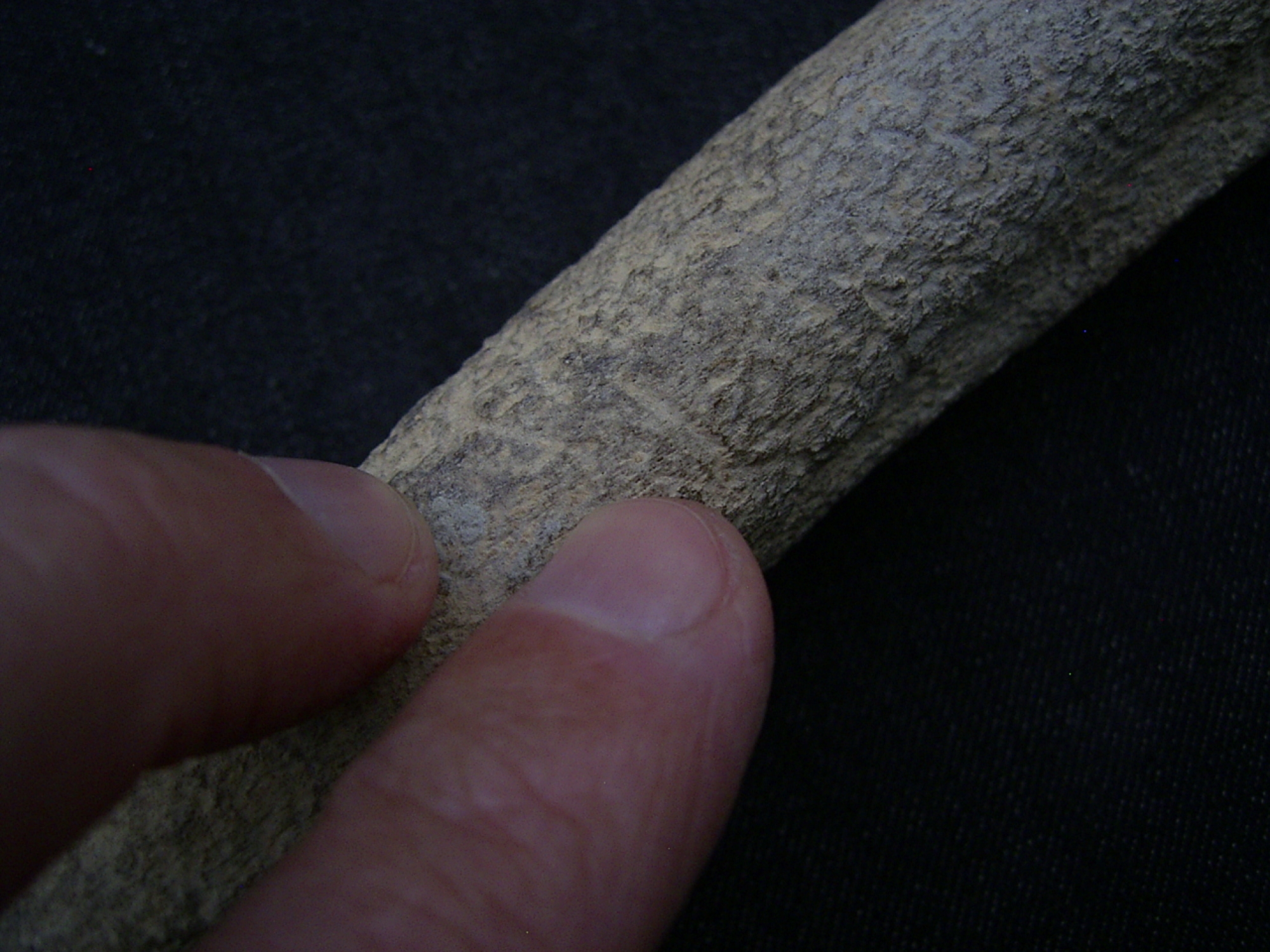
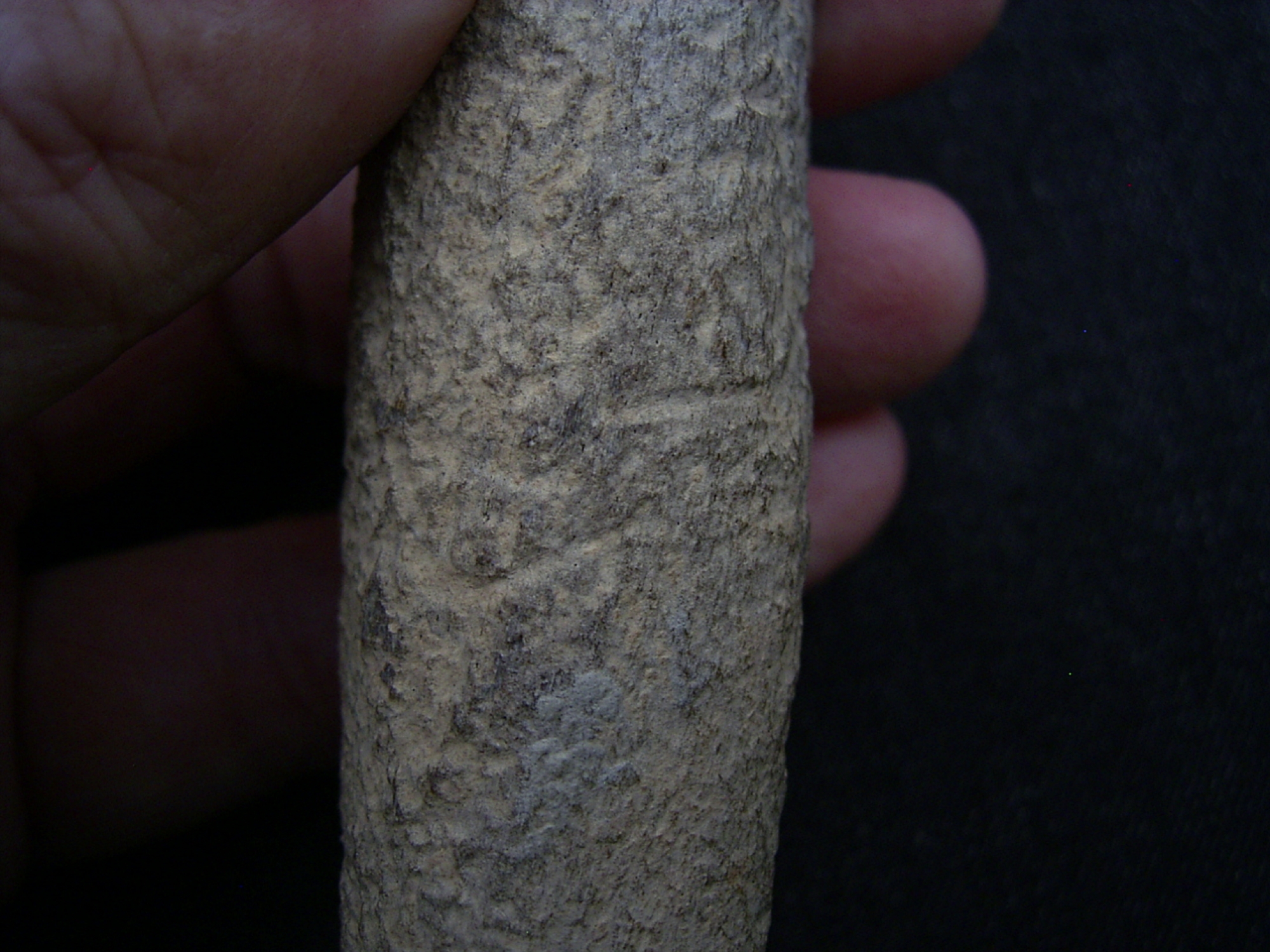
It consists primarily of the diaphysis (shaft); the epiphyseal ends broke off quite early on. Visible features include drying cracks and interesting traces of gnawing by small carnivores. There are clear signs of weathering: the outermost surface laminae have worn away, and the cancellous bone (spongiosa) has largely disappeared. These factors suggest that the individual was either not buried at all or was buried at a very shallow depth.
The bone is stable and heavily mineralized. The upper section of the shaft is relatively flattened; this condition—known as platycnemia—suggests a frequent squatting posture, which supports the theory that the find is of considerable age. It belonged to a small, slender person—likely a female subadult.
The specimen comes from a gravel pit (located along the former course of the San River) in Poland. Many Pleistocene animal fossils—including mammoth, bison, giant deer, and rhinoceros—have also been recovered from this site.
This bone was found at a depth of approximately 15 meters. The specimen is intact and measures about 29 cm in length. Its state of preservation is remarkable; such bones are very rarely found.
We wish to explicitly state that this is an artifact dating back several thousand years and NOT a modern bone. Its exact age could be determined via C-14 dating. Such dating would be straightforward, as the bone remains in its original condition as found and has not been treated with chemicals in any way.
Old find from an estate collection.
A rare specimen!
It consists primarily of the diaphysis (shaft); the epiphyseal ends broke off quite early on. Visible features include drying cracks and interesting traces of gnawing by small carnivores. There are clear signs of weathering: the outermost surface laminae have worn away, and the cancellous bone (spongiosa) has largely disappeared. These factors suggest that the individual was either not buried at all or was buried at a very shallow depth.
The bone is stable and heavily mineralized. The upper section of the shaft is relatively flattened; this condition—known as platycnemia—suggests a frequent squatting posture, which supports the theory that the find is of considerable age. It belonged to a small, slender person—likely a female subadult.
The specimen comes from a gravel pit (located along the former course of the San River) in Poland. Many Pleistocene animal fossils—including mammoth, bison, giant deer, and rhinoceros—have also been recovered from this site.
This bone was found at a depth of approximately 15 meters. The specimen is intact and measures about 29 cm in length. Its state of preservation is remarkable; such bones are very rarely found.
We wish to explicitly state that this is an artifact dating back several thousand years and NOT a modern bone. Its exact age could be determined via C-14 dating. Such dating would be straightforward, as the bone remains in its original condition as found and has not been treated with chemicals in any way.
Old find from an estate collection.
A rare specimen!
Categories
Last viewed: