- Customer group: Guest
-


- Home

- Details
- More images
Products description
Fossil Bat Palaeochiropteryx tupaiodon – Messel Pit
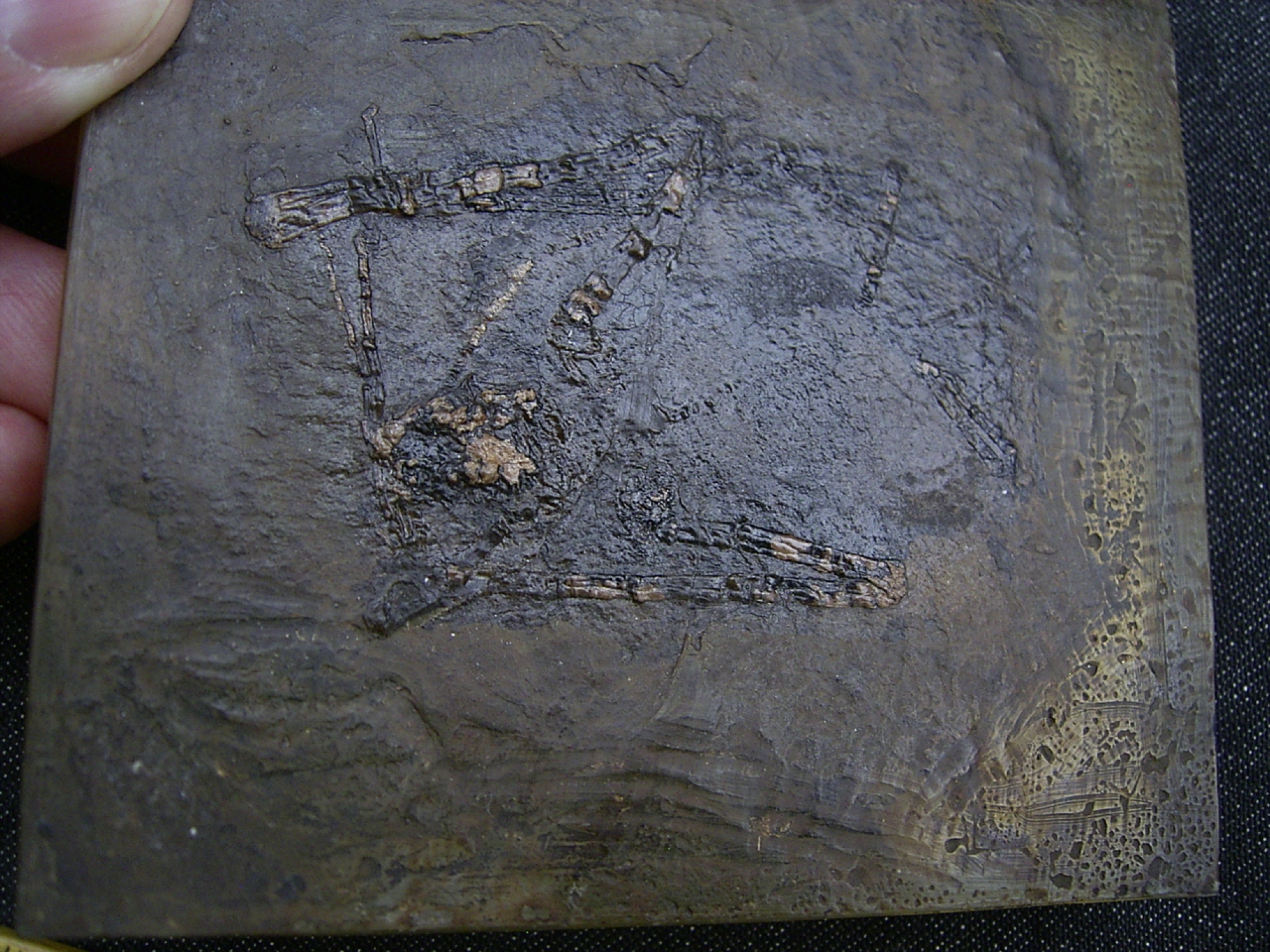
We are pleased to offer you a fossil bat of the species Palaeochiropteryx tupaiodon, one of the most famous fossils from the Messel Pit (Grube Messel) near Darmstadt, Germany.
It is one of the oldest and best-preserved primitive bats in the world.
Fact Sheet: Palaeochiropteryx tupaiodon
Finds from the Messel Pit (a UNESCO World Natural Heritage site) are world-renowned for their exceptional state of preservation:
The name is derived from Palaeo (ancient), chiro (hand), and pteryx (wing). The species name tupaiodon refers to the similarity of its teeth to those of tree shrews (Tupaia).
Details of this Specimen:
The specimen offered here is a complete individual showing fine details. The bat measures approximately 6.5 x 4 cm. The matrix is unbroken and measures approximately 9.5 x 8.5 cm.
As is standard for Messel fossils, the specimen was prepared using the plastic transfer method to ensure permanent preservation.
A rarely offered museum-grade piece without any restorations or manipulations!
We are pleased to offer you a fossil bat of the species Palaeochiropteryx tupaiodon, one of the most famous fossils from the Messel Pit (Grube Messel) near Darmstadt, Germany.
It is one of the oldest and best-preserved primitive bats in the world.
Fact Sheet: Palaeochiropteryx tupaiodon
- Age: Approximately 47 to 48 million years (Eocene).
- Size: Very small, with a wingspan of only about 25 to 30 cm.
- Lifestyle: It was a specialized insectivore that likely hunted in low flight just above the forest floor or the water’s surface.
Finds from the Messel Pit (a UNESCO World Natural Heritage site) are world-renowned for their exceptional state of preservation:
- Soft Tissue Preservation: In many specimens of Palaeochiropteryx, not only the skeleton is preserved, but also the outline of the wing membranes and even stomach contents.
- The Last Meal: Researchers have been able to identify remains of moths and beetles within the stomachs of these fossils.
- Echolocation: Based on the skull structure, it has been proven that these early bats already used echolocation to hunt in the dark.
- Color Determination: By examining fossil melanosomes (pigment structures) in the preserved hair, scientists suggest that the fur of Palaeochiropteryx was originally reddish-brown.
The name is derived from Palaeo (ancient), chiro (hand), and pteryx (wing). The species name tupaiodon refers to the similarity of its teeth to those of tree shrews (Tupaia).
Details of this Specimen:
The specimen offered here is a complete individual showing fine details. The bat measures approximately 6.5 x 4 cm. The matrix is unbroken and measures approximately 9.5 x 8.5 cm.
As is standard for Messel fossils, the specimen was prepared using the plastic transfer method to ensure permanent preservation.
A rarely offered museum-grade piece without any restorations or manipulations!




Categories
Last viewed: