- Customer group: Guest
-


- Home

- Details
- More images
Products description
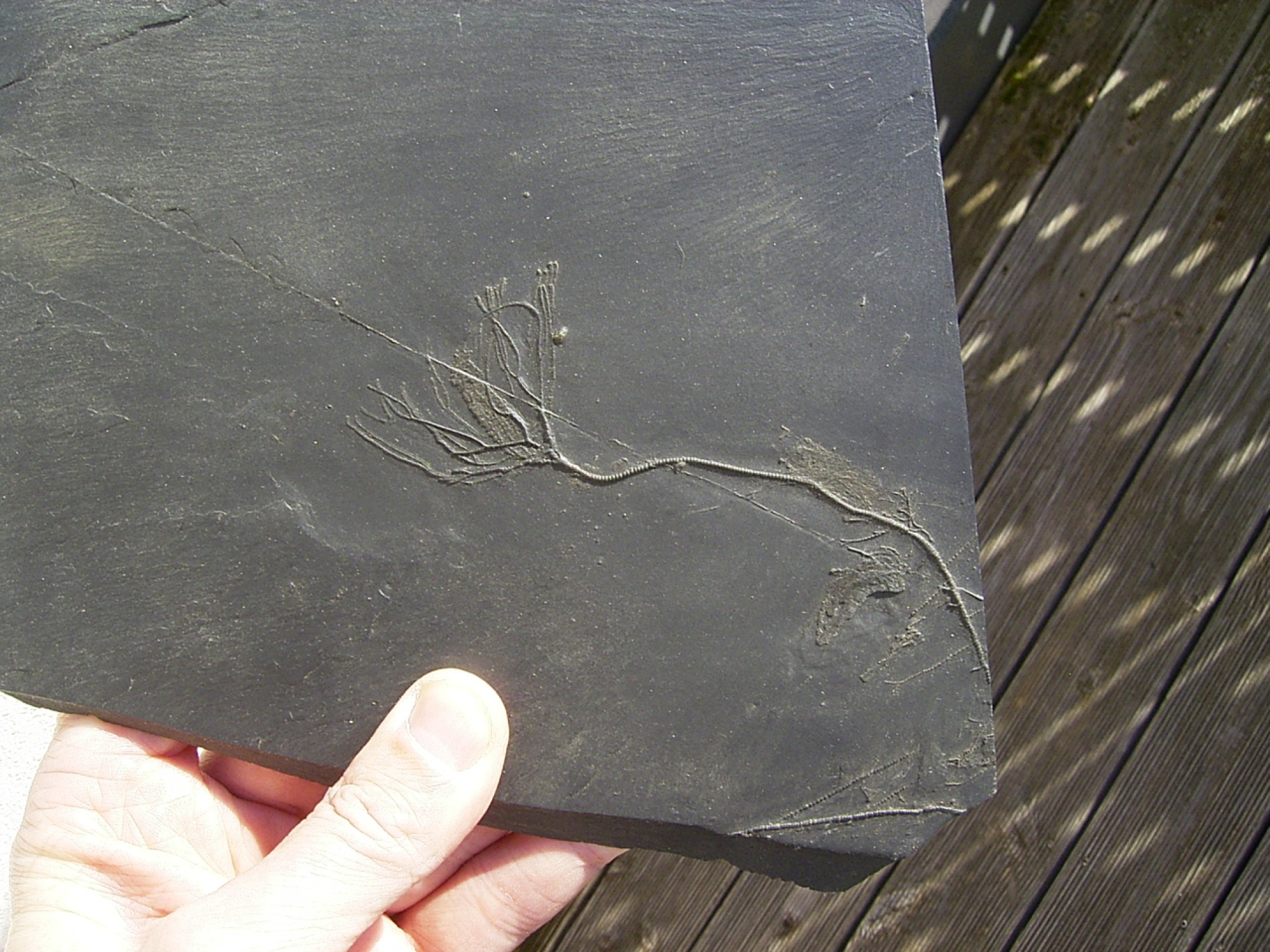
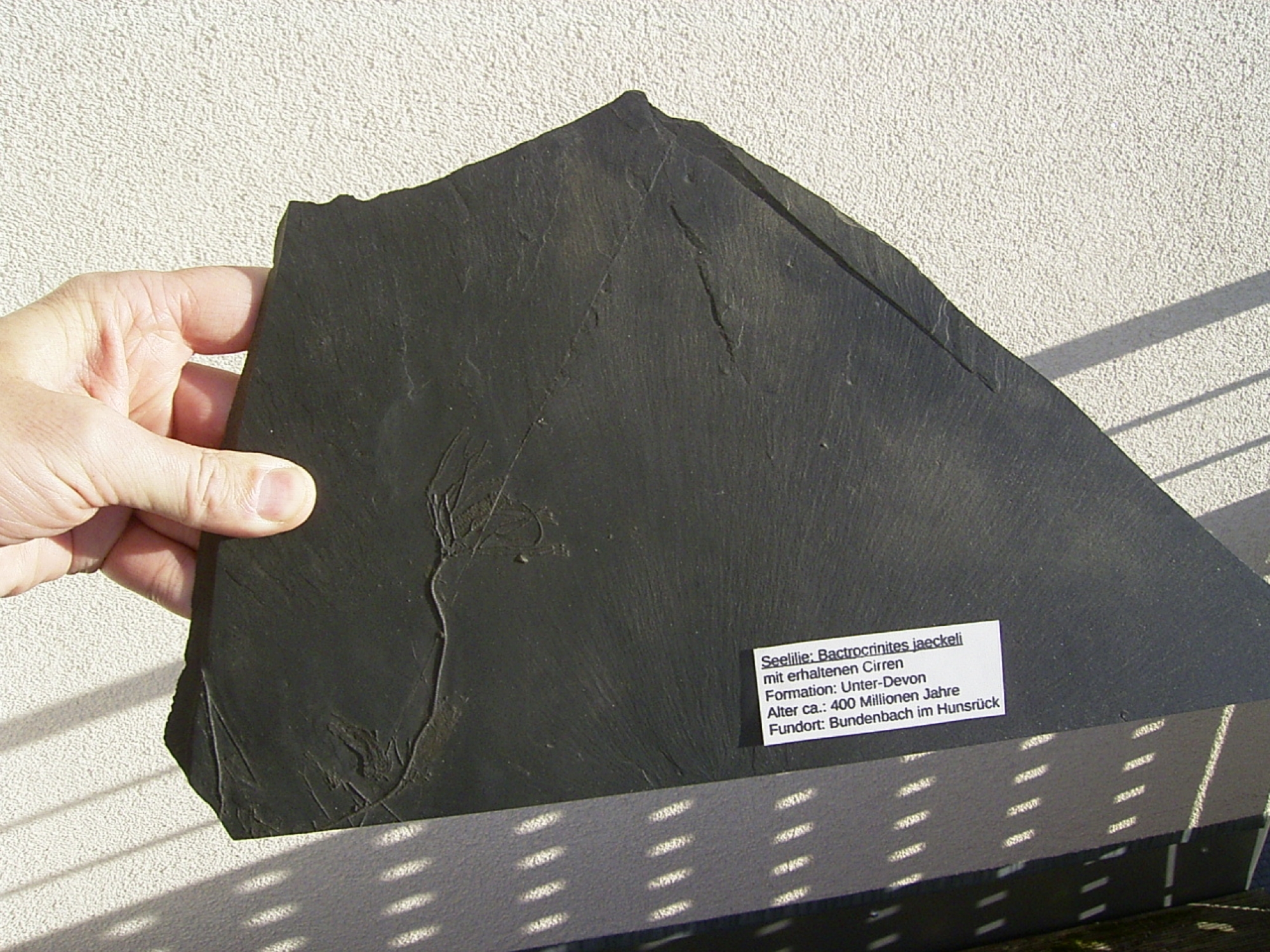
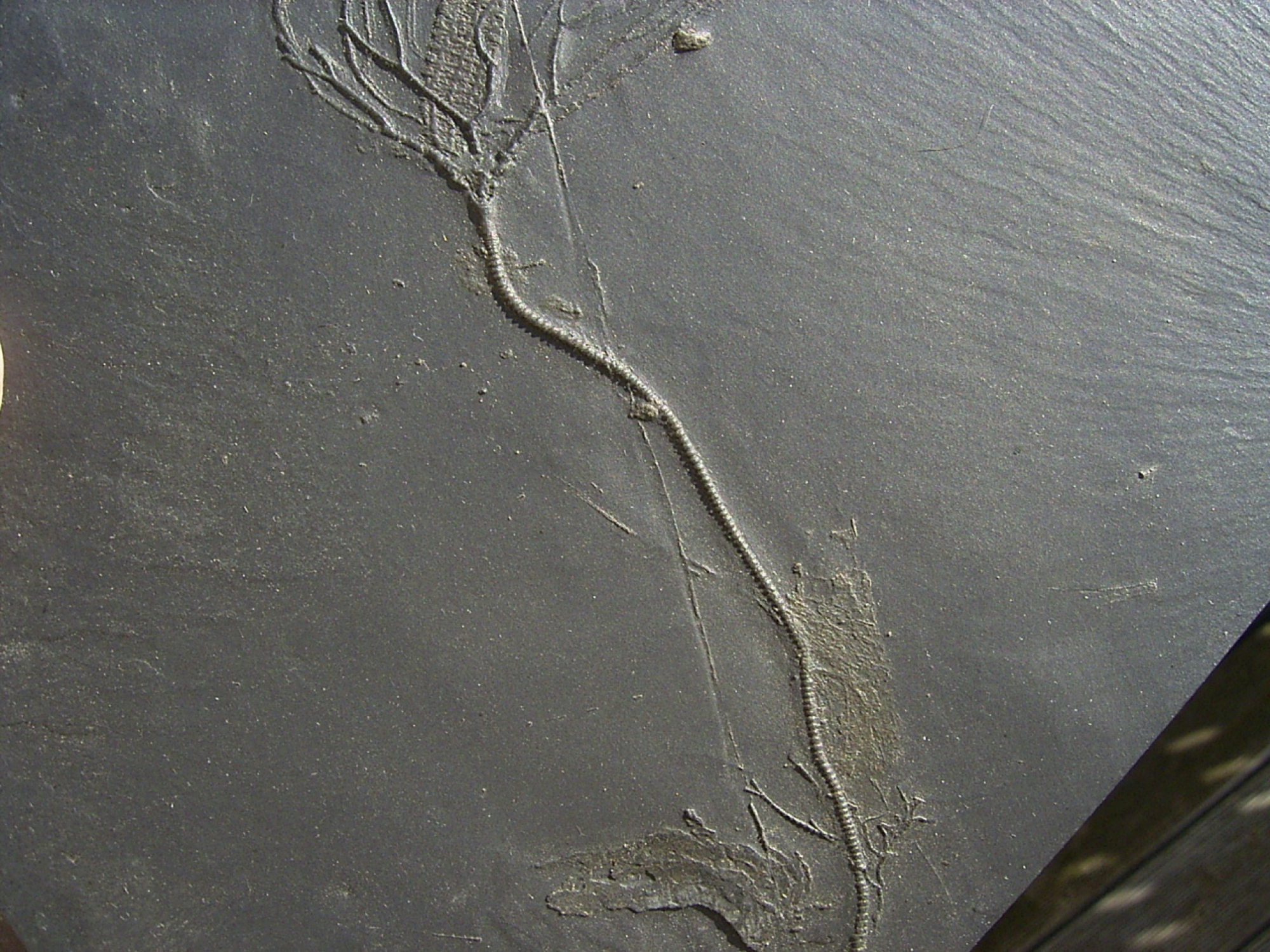
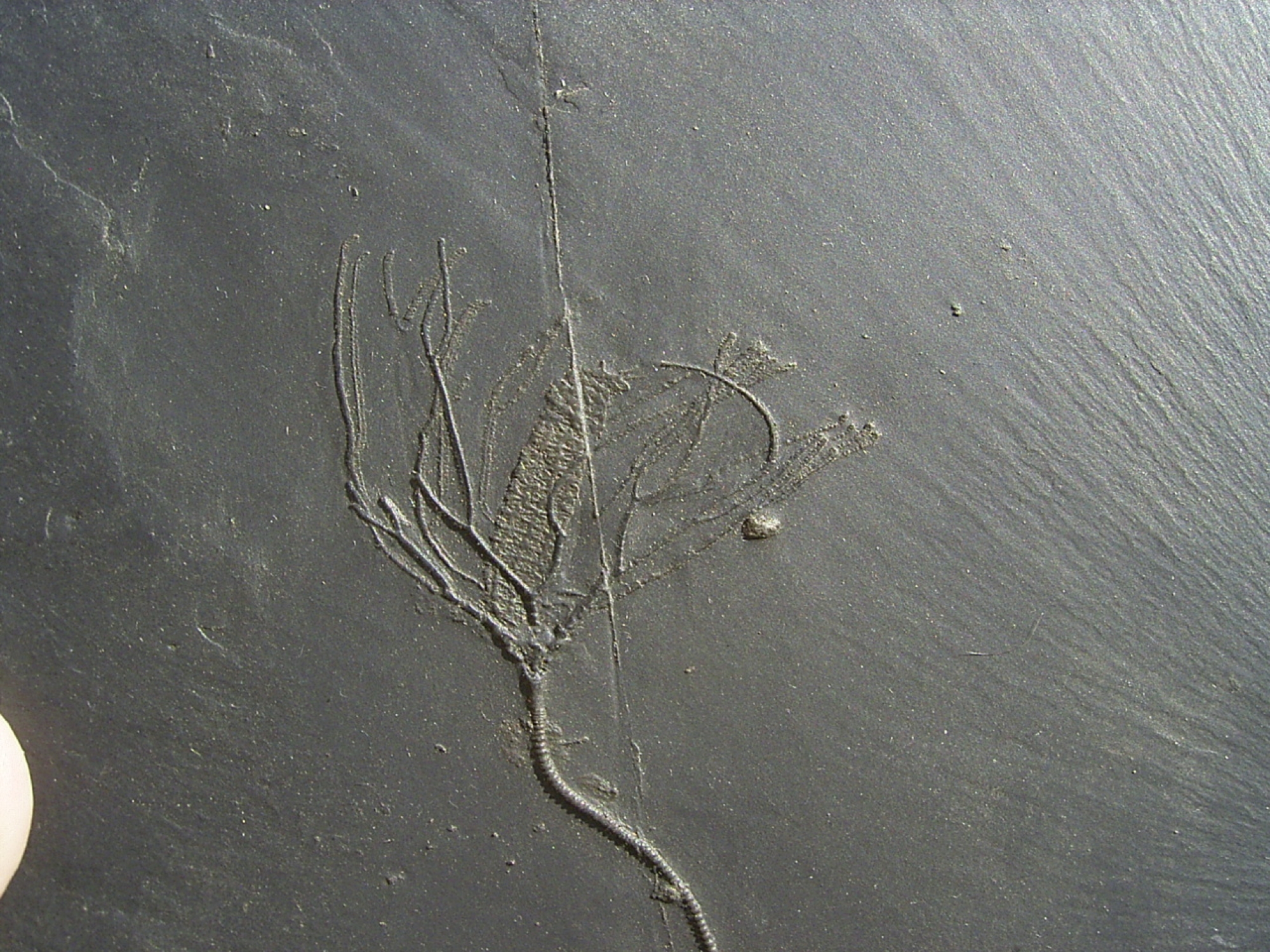
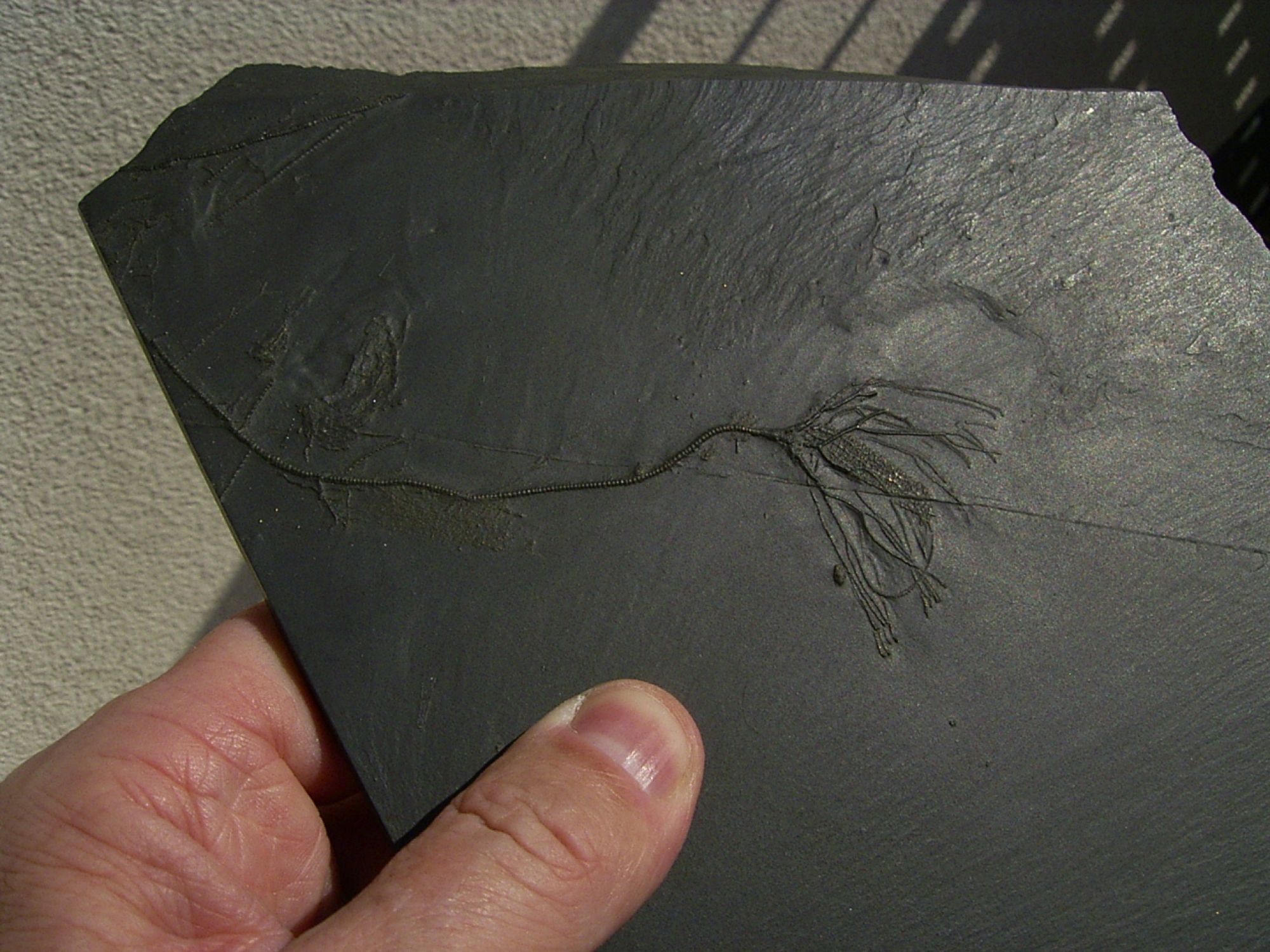
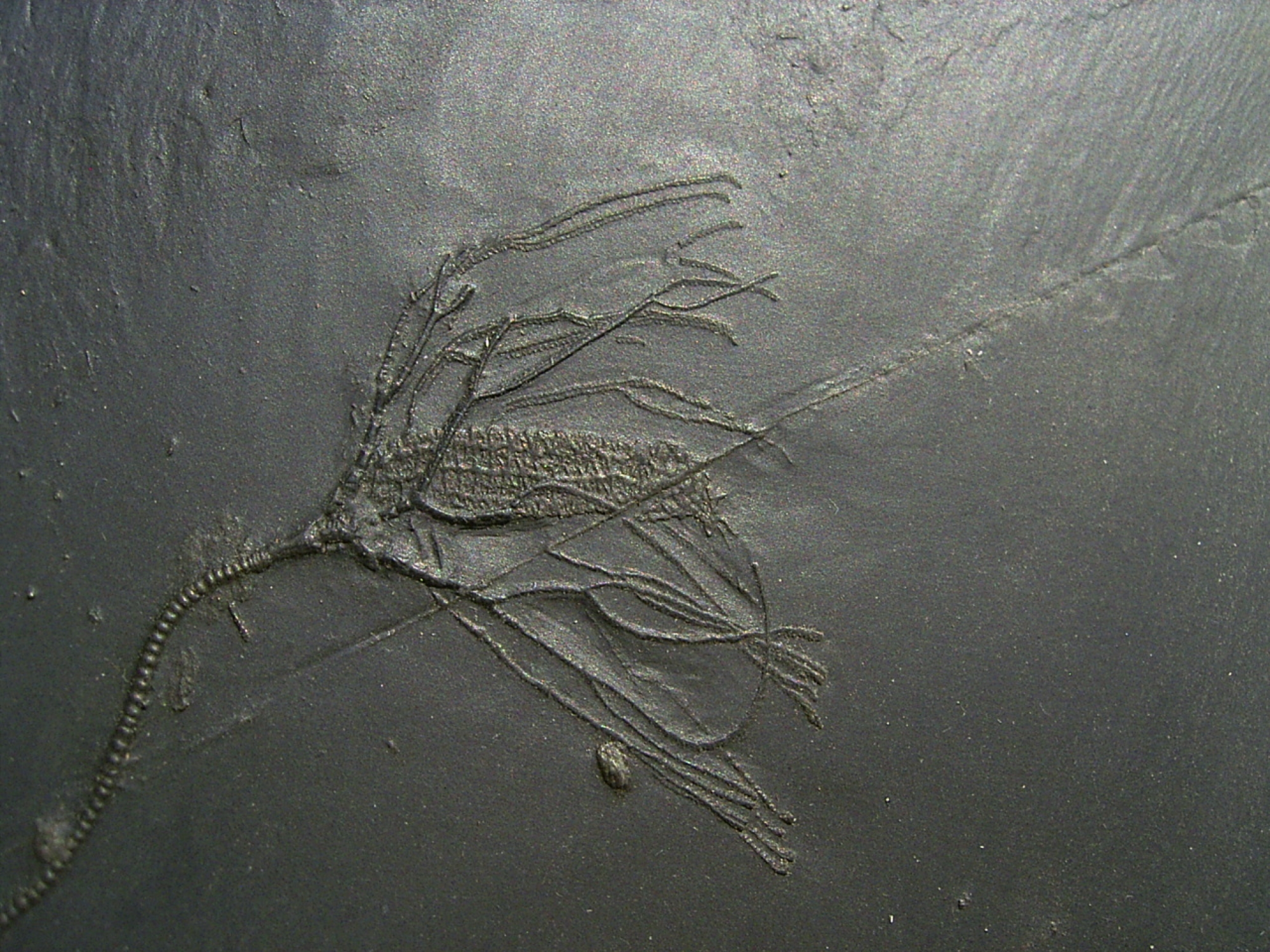
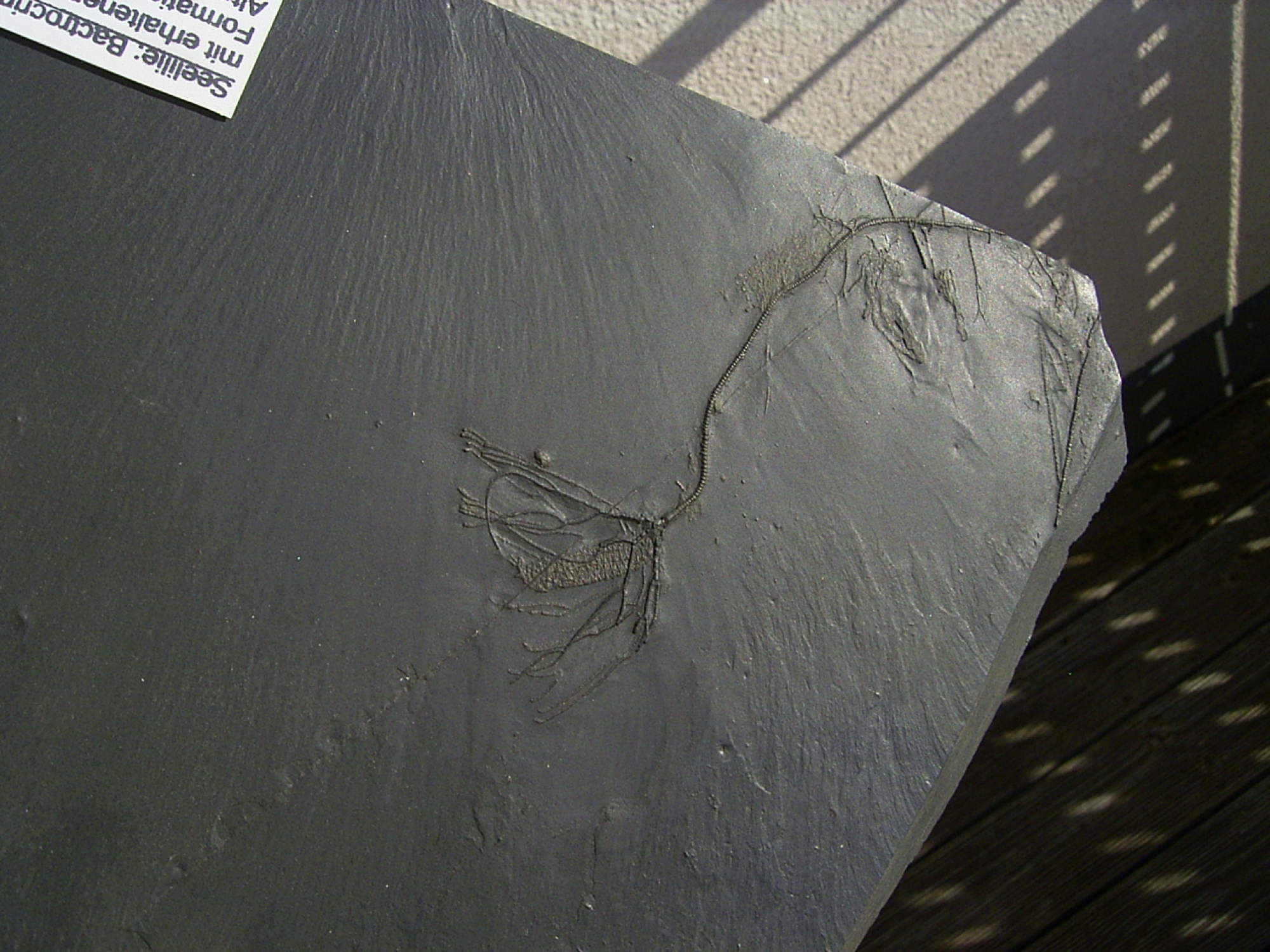
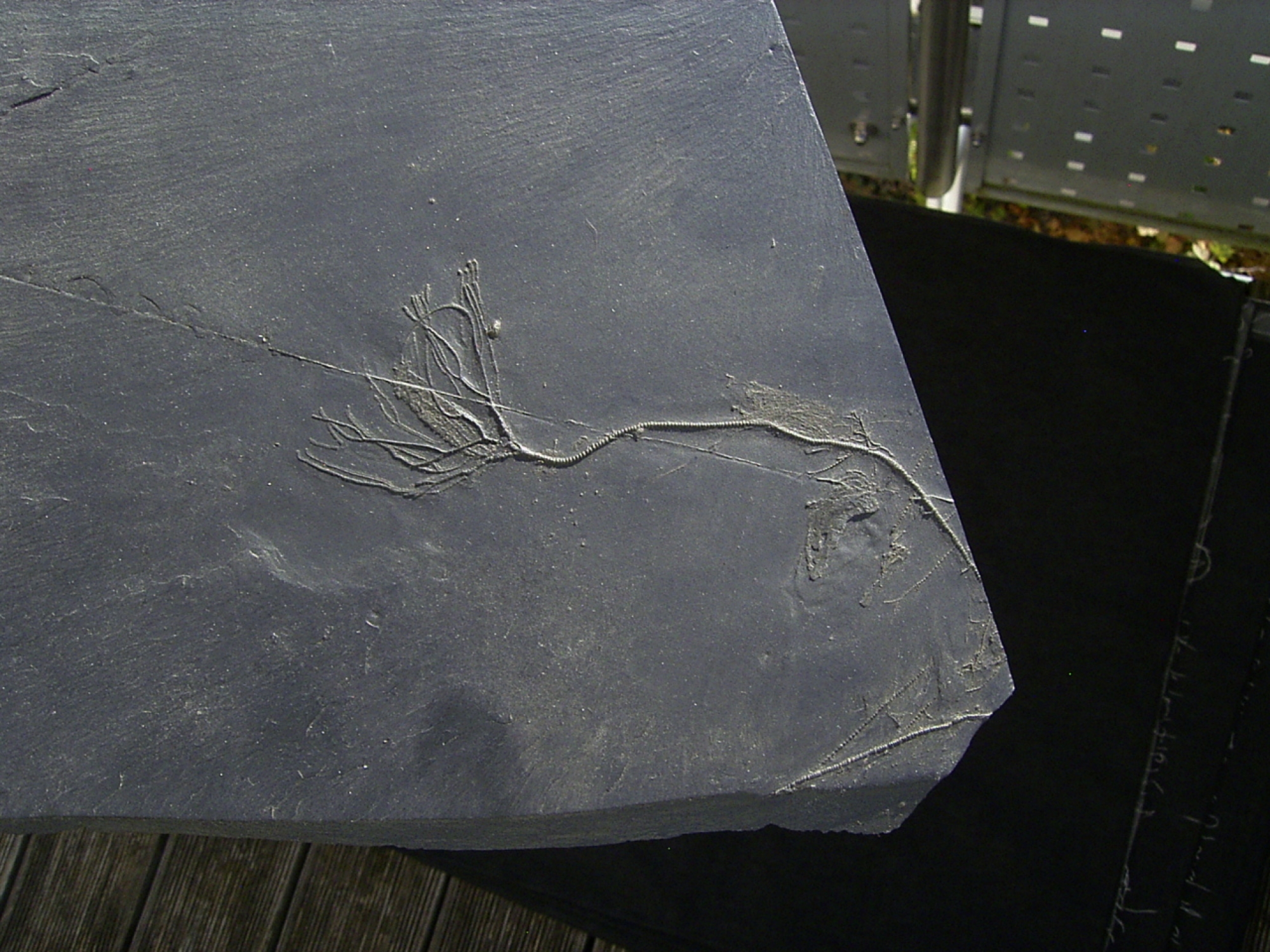
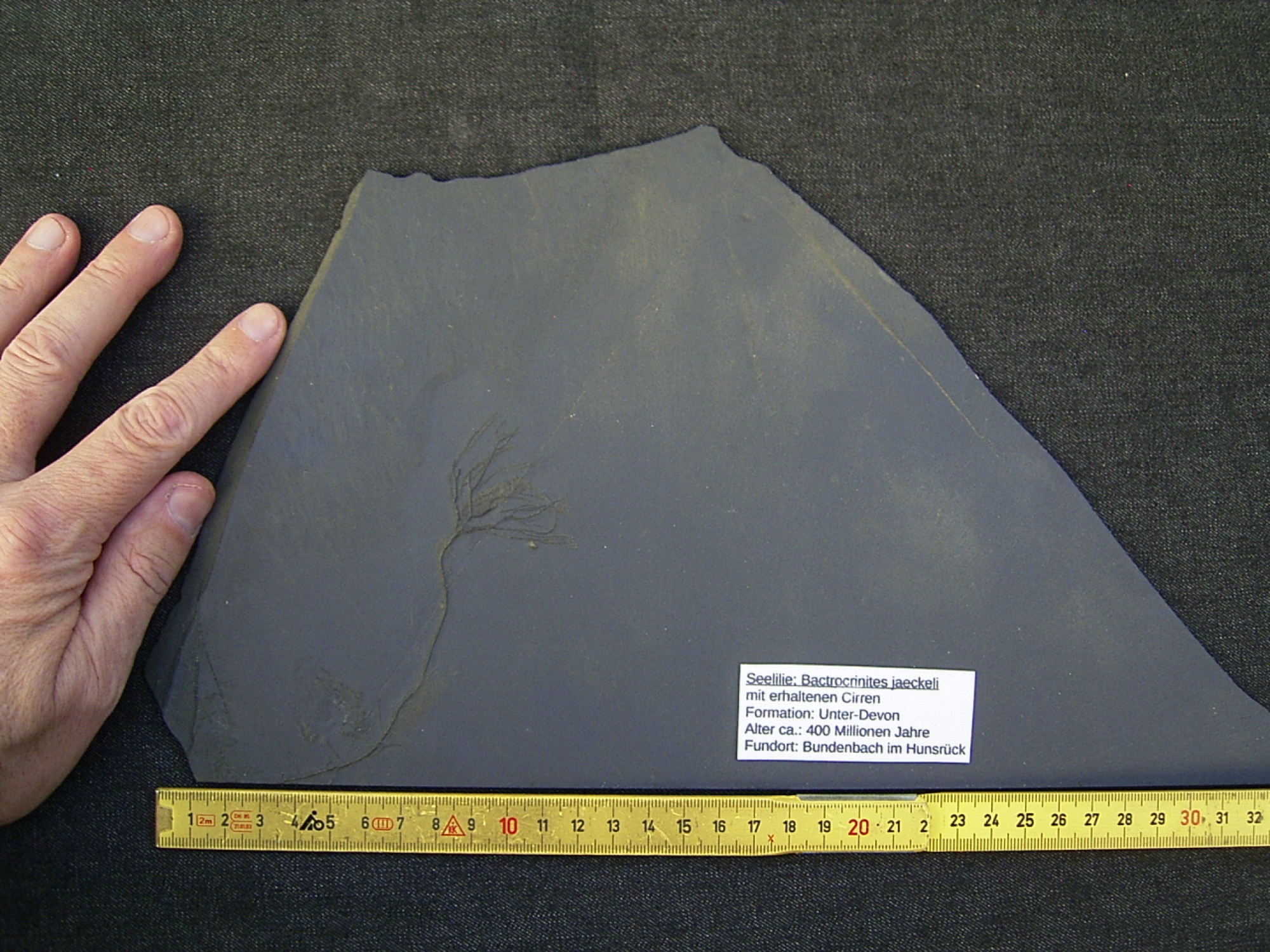
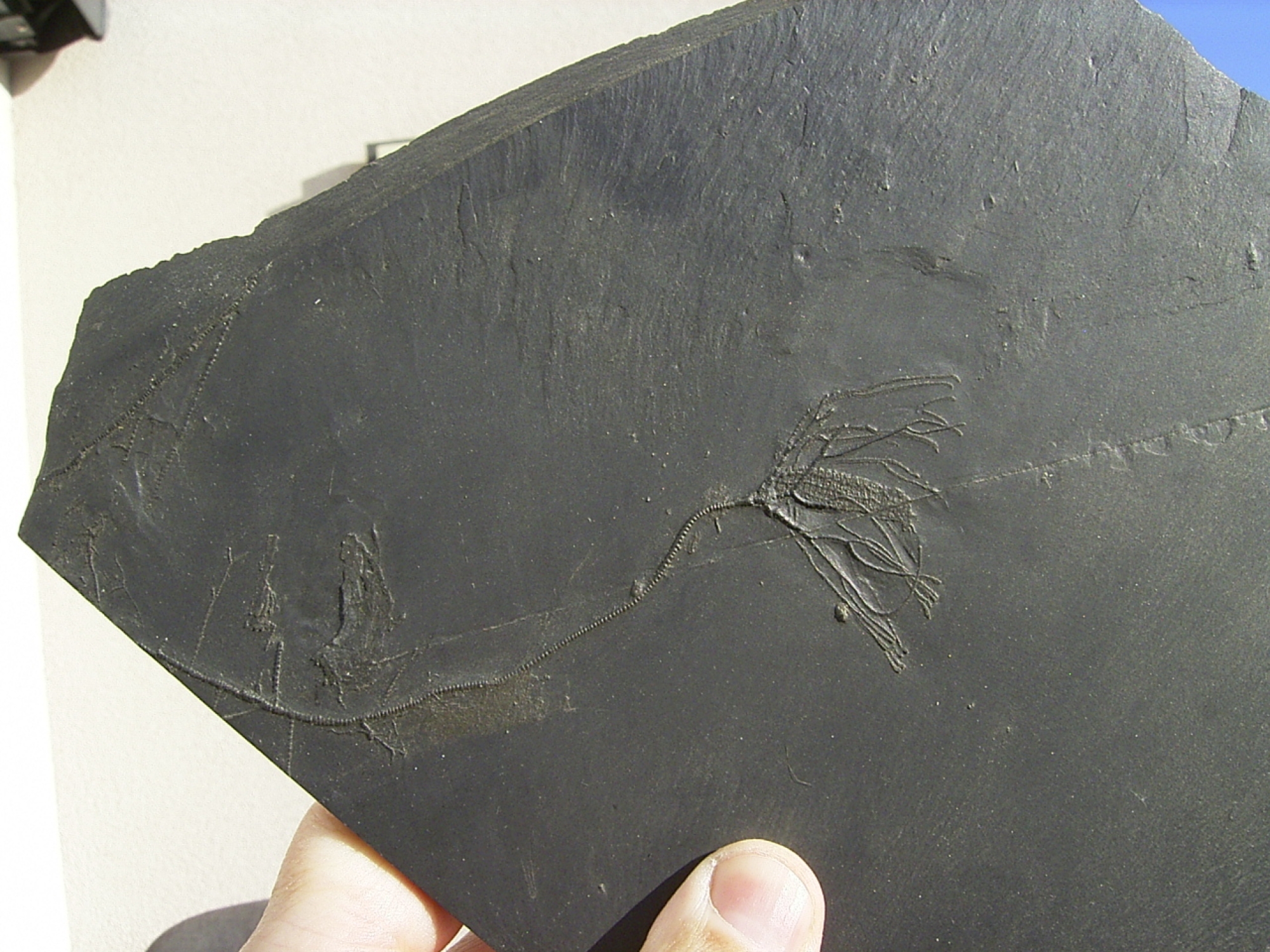
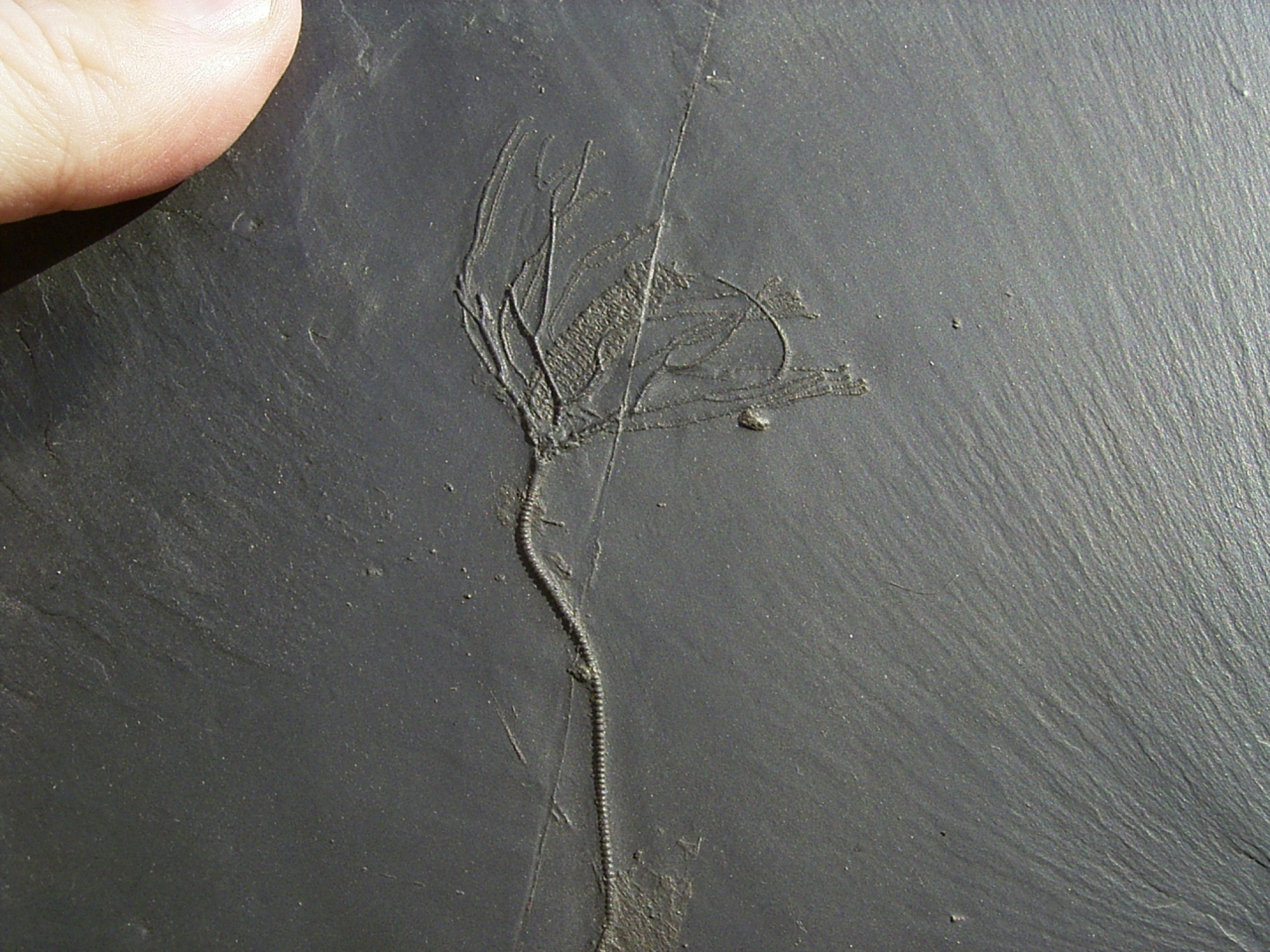
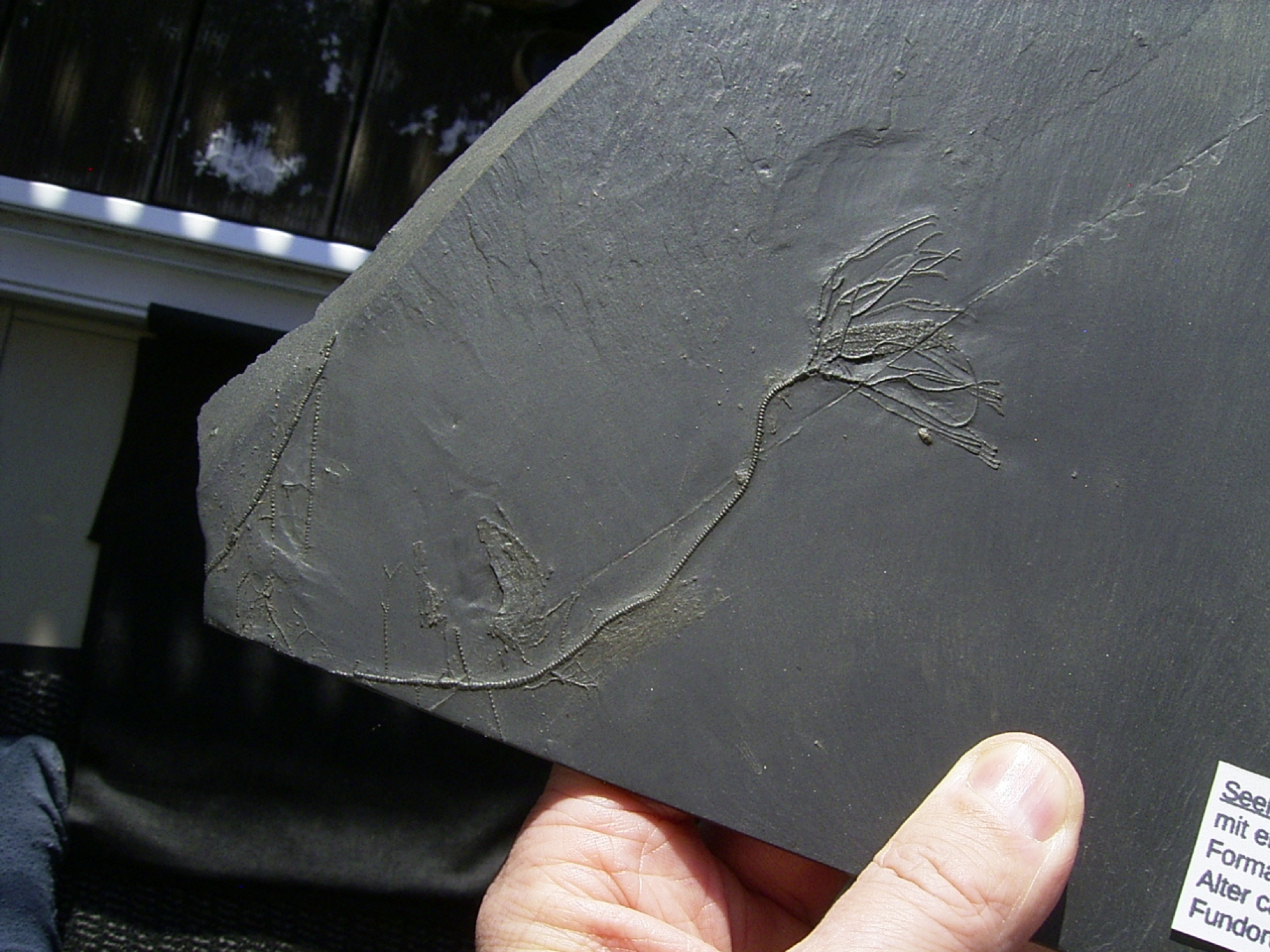
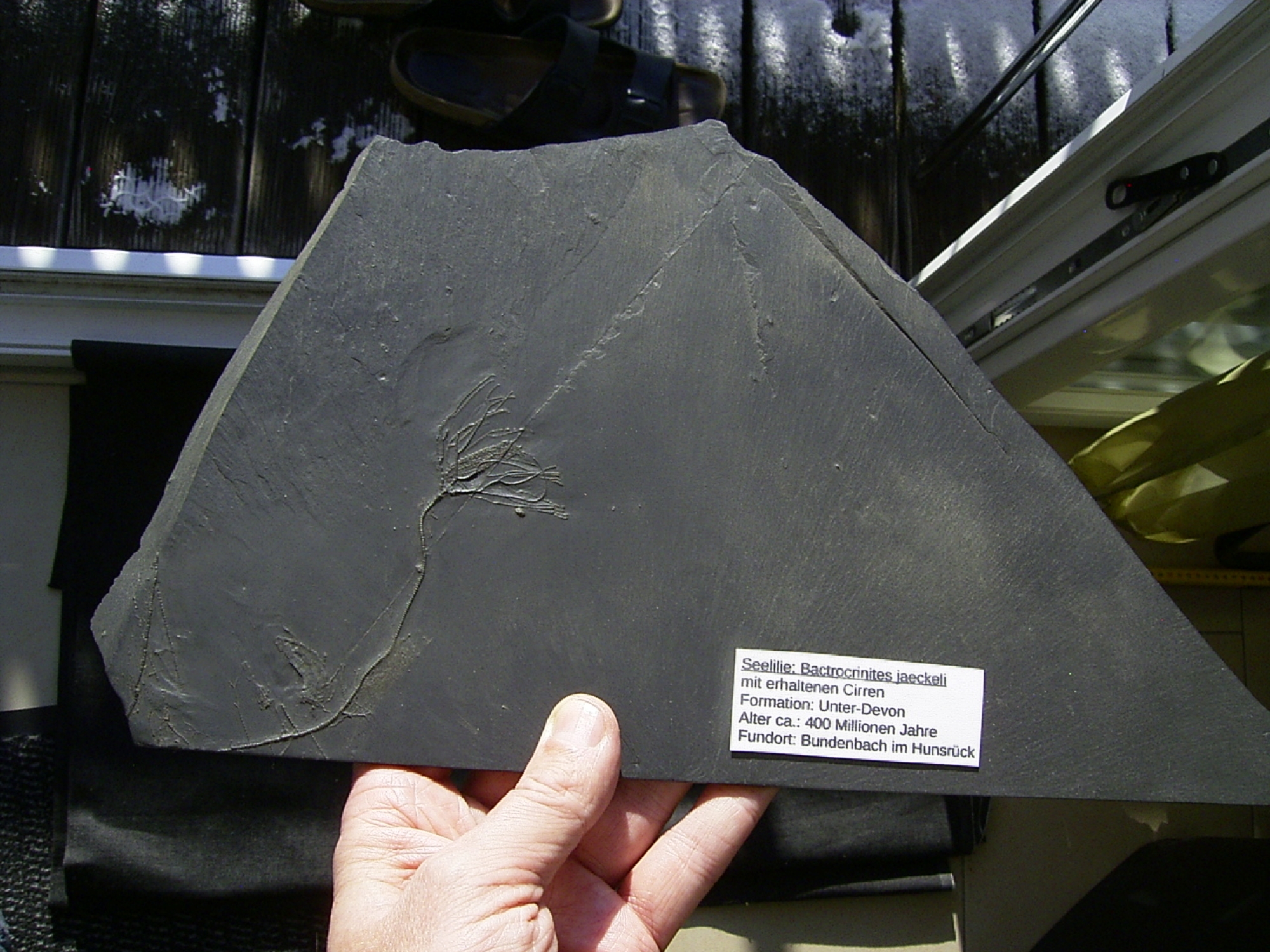
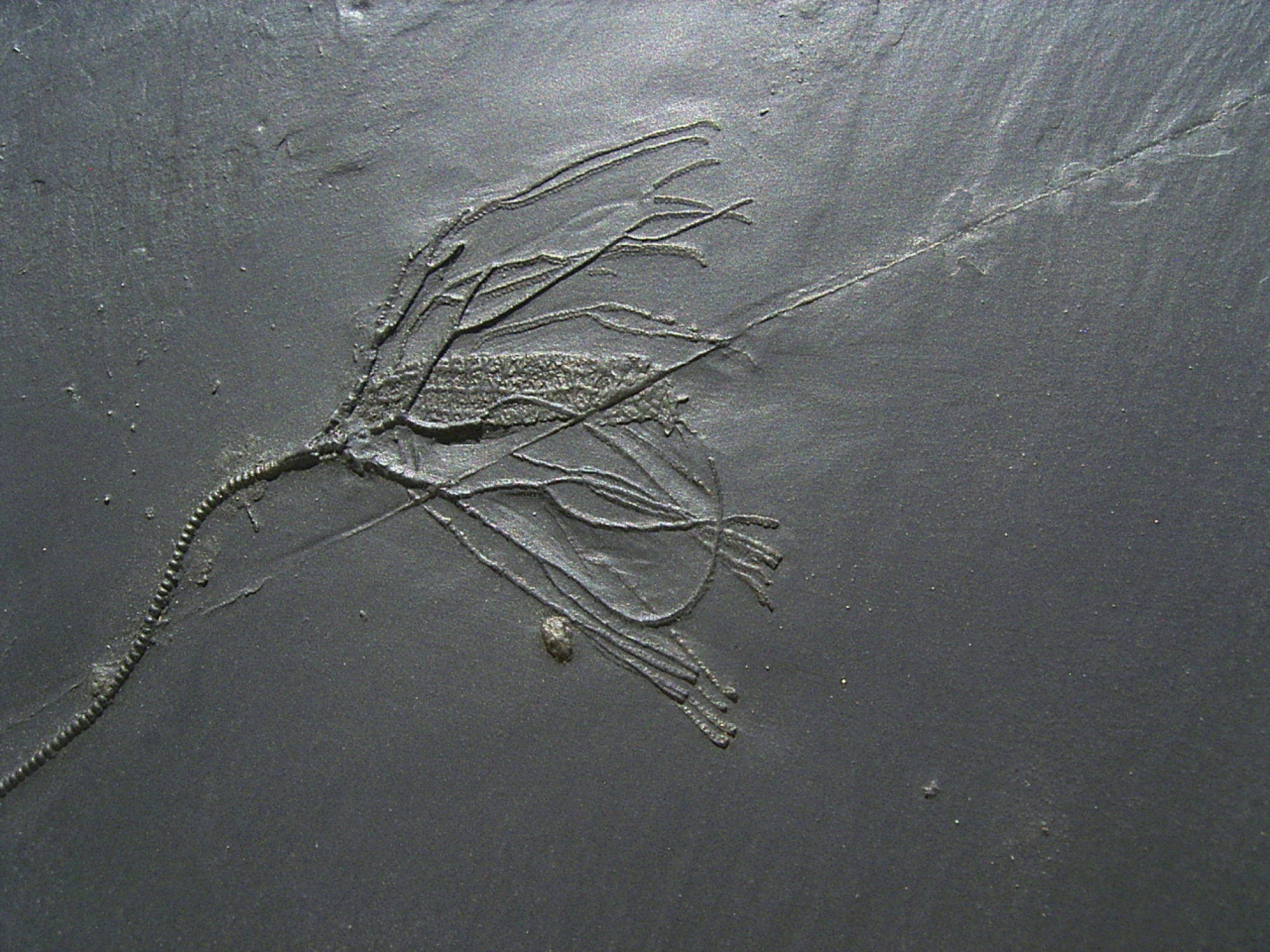
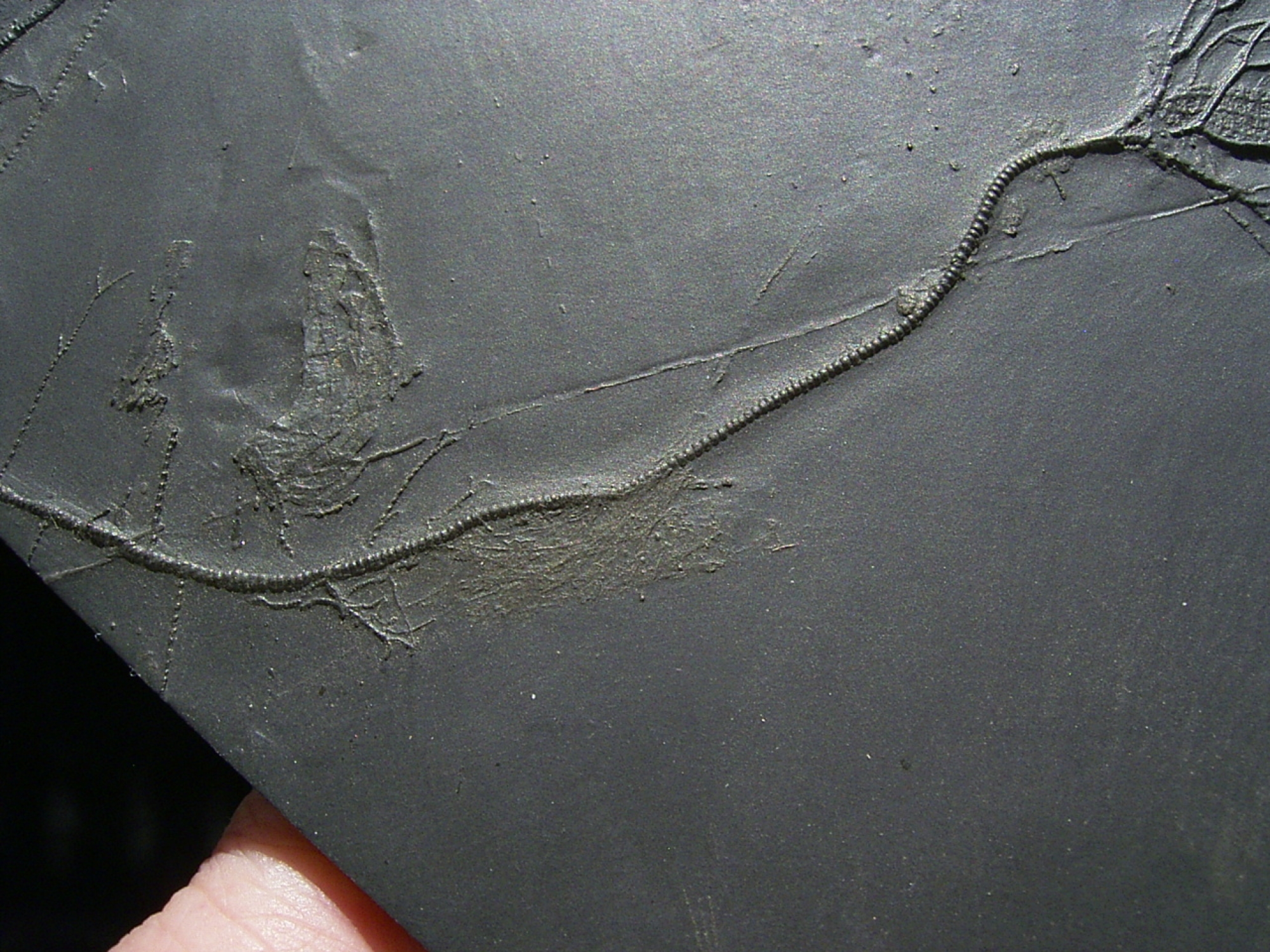
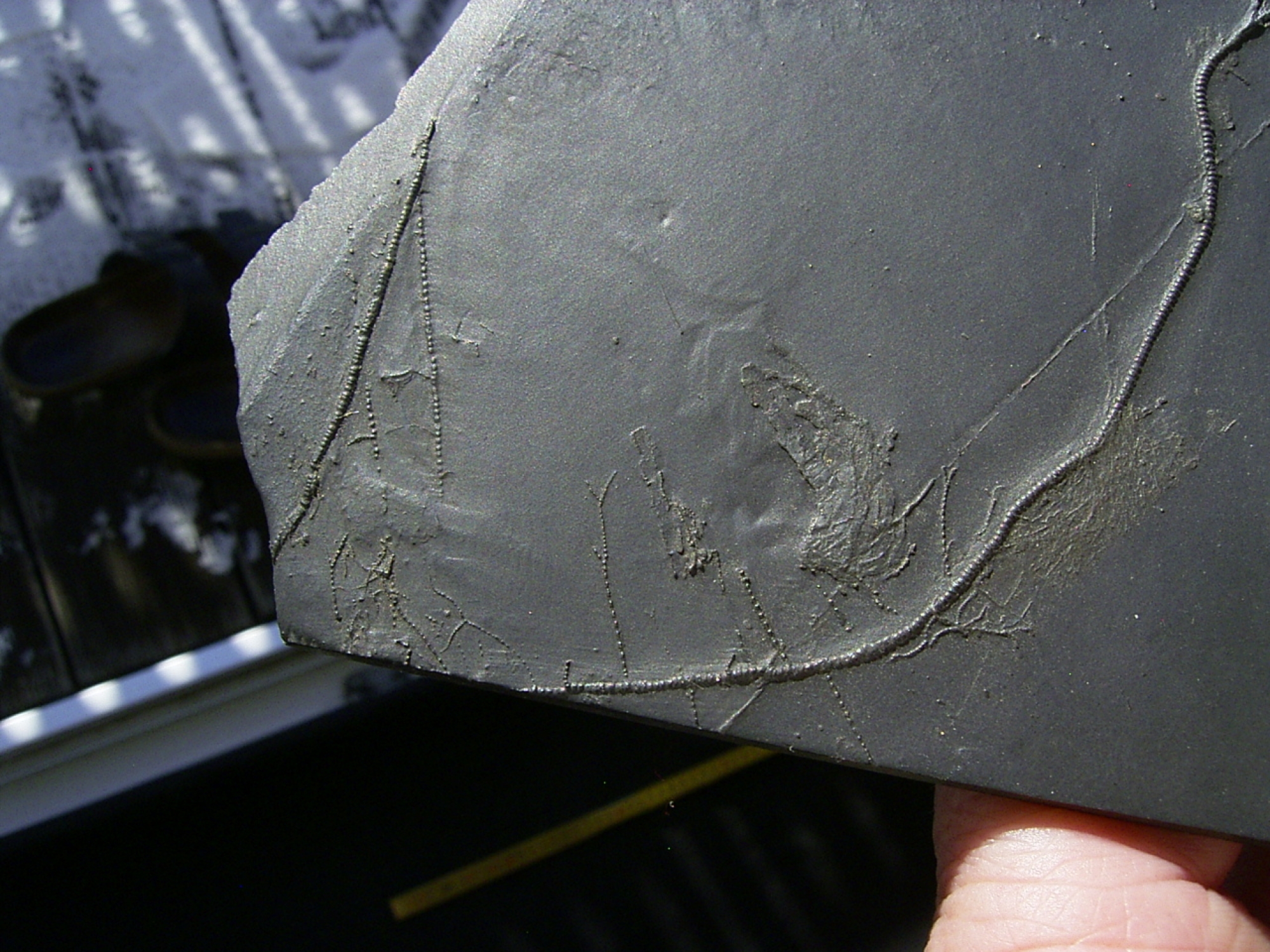
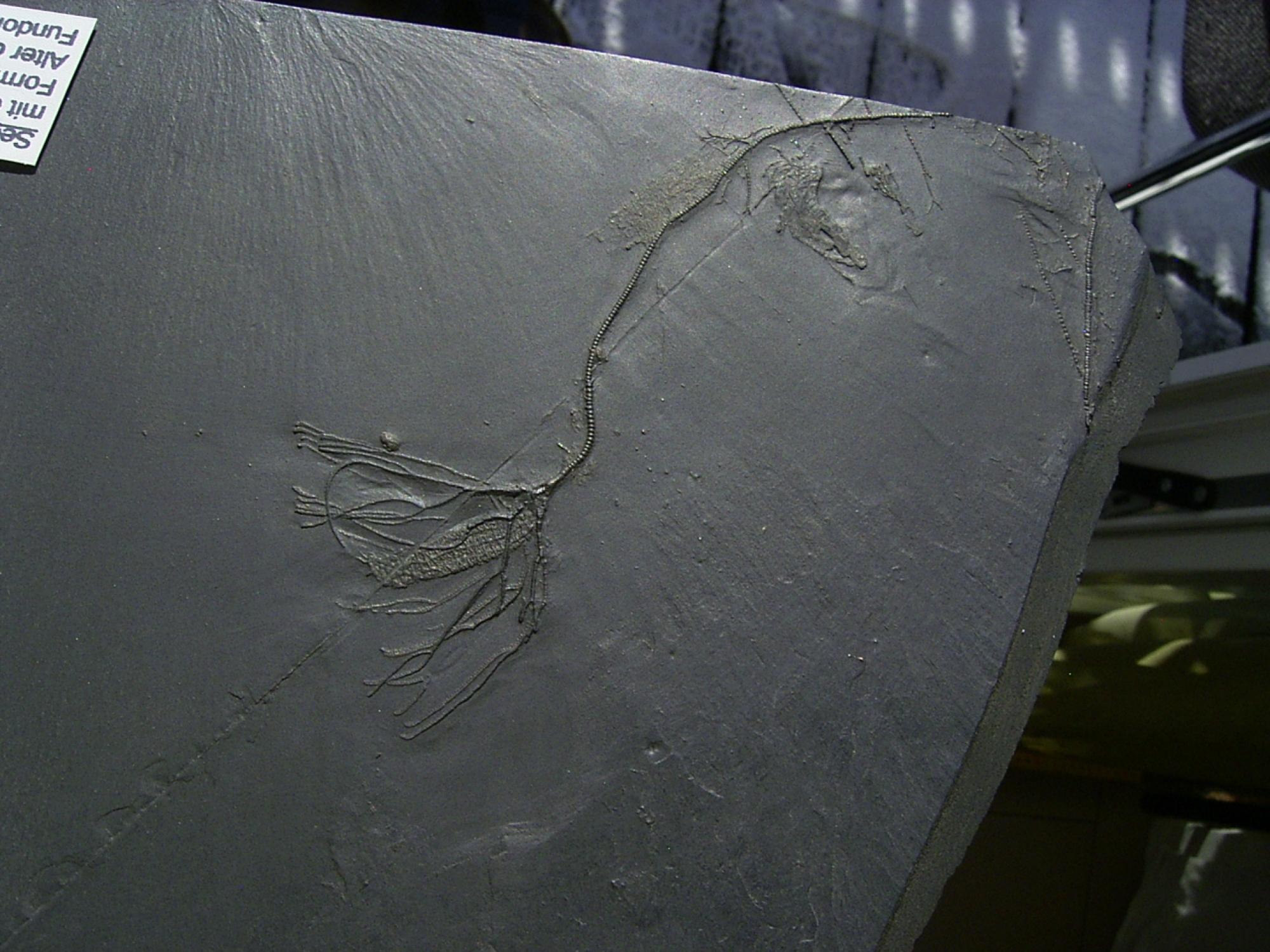
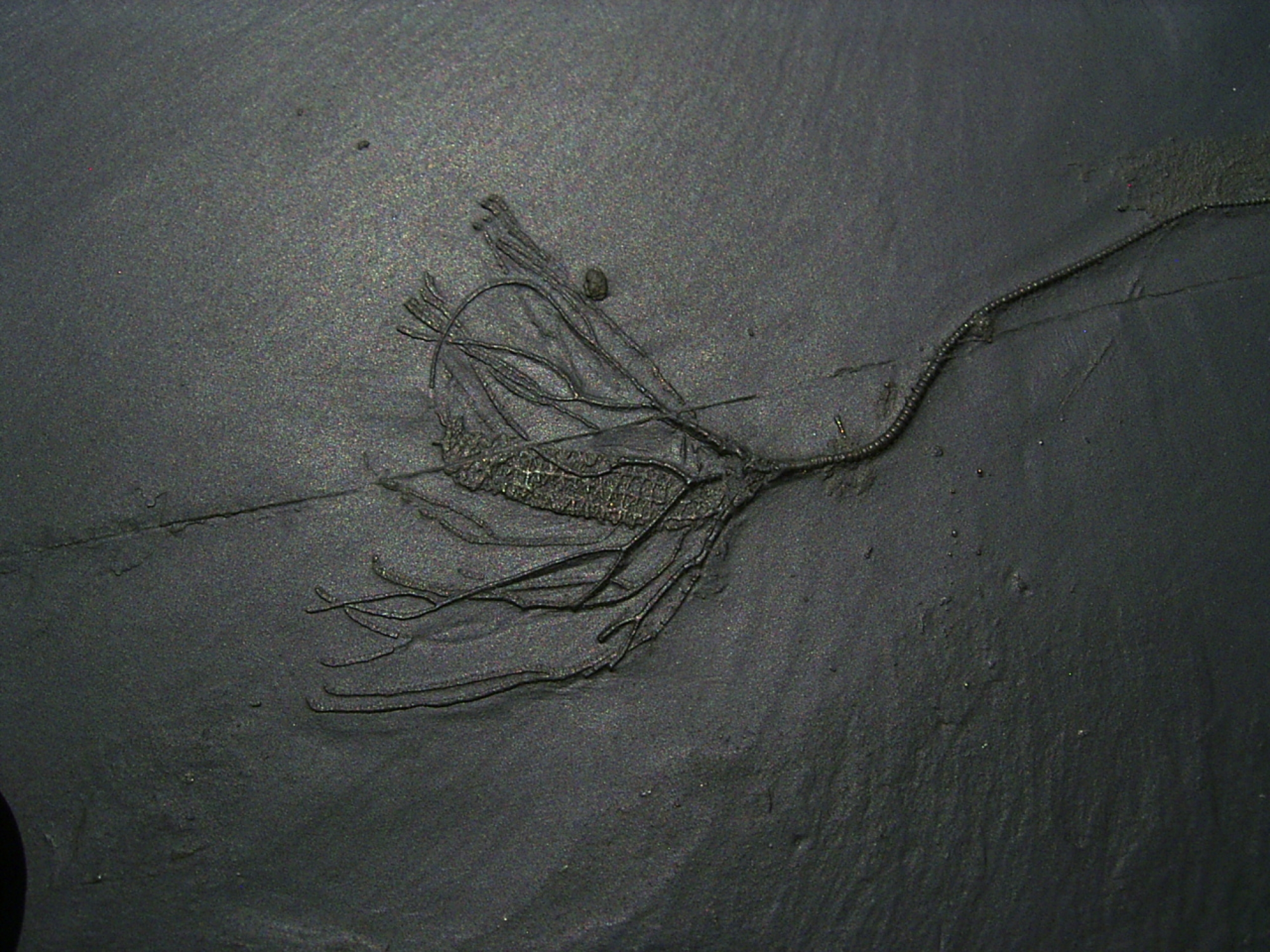
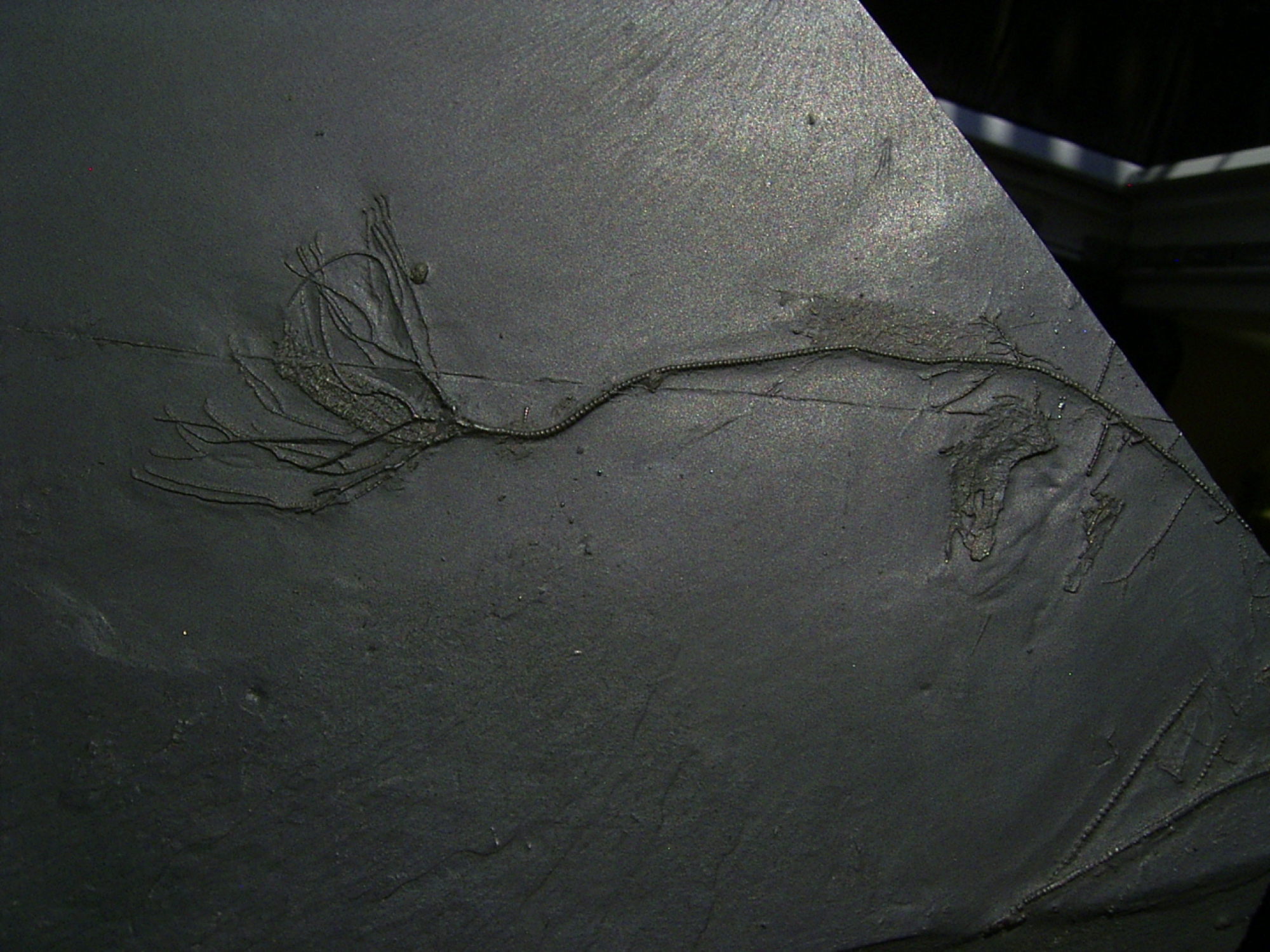
This is a fossilized crinoid, Bactrocrinites jaeckeli. The specimen was found in the Lower Devonian deposits of Bundenbach in Germany.
It is approximately 400 million years old.
Here are the key facts about this species:
Time period: It lived approximately 419 to 393 million years ago (Lower Emsian to Lower Devonian).
Location: This species is particularly well-known from the historic slate quarries of Bundenbach in the Hunsrueck region of Germany.
Closed location: Since commercial mining ceased there in 1999, new specimens are now mostly sourced from older collections.
Characteristics & Preservation:
Preservation: The fossils from Bundenbach are often replaced by pyrite (pyritization), which gives them a metallic, golden sheen after
preparation.
Morphology: These are delicate crinoids with an often very long stalk. A complete specimen can reach a length of about 135 mm, with the
calyx and arms alone often measuring only about 16 mm.
Systematics: It belongs to the group Cladida (subgroup Dendrocrinidae). The species was scientifically described by Schmidt in 1934.
Due to their excellent preservation in the Hunsrueck Slate, these fossils can often even be examined using X-ray technology to reveal
the finest details of their skeletal structure.
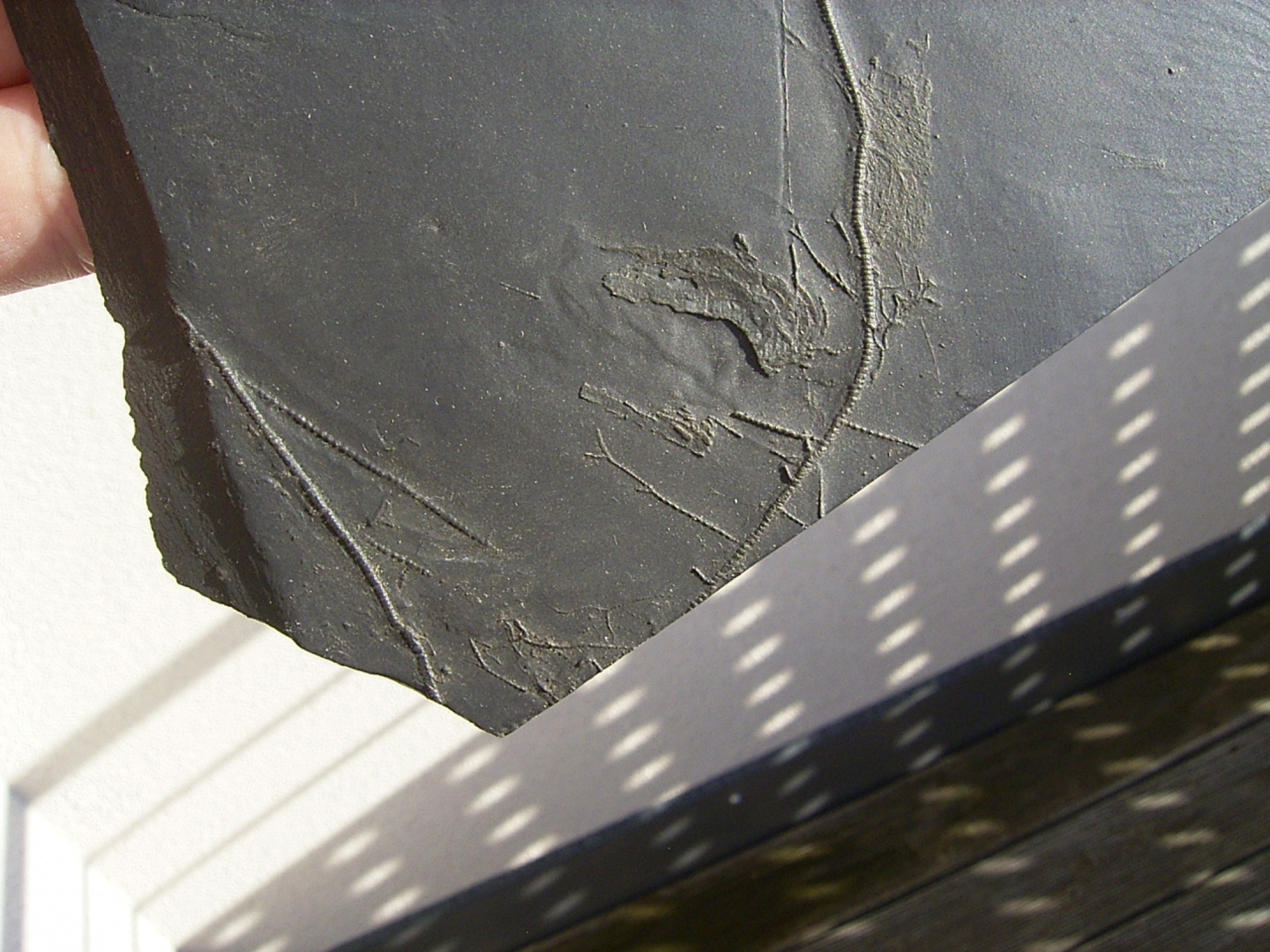
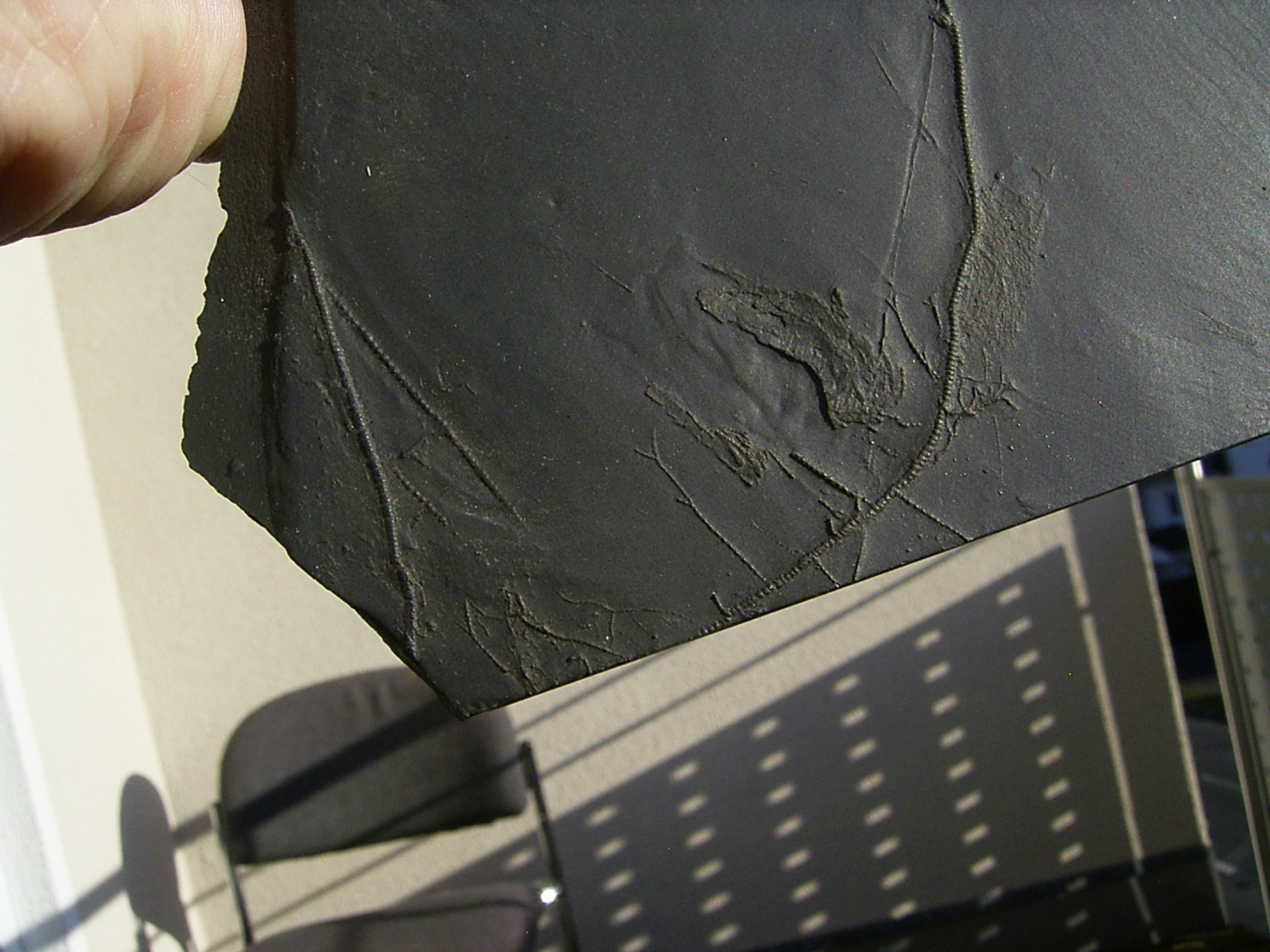
The fossil offered here has outstanding preservation. Interestingly it even shows preserved cirri! Those are specialized, segment-like
appendages on the animal's stem.
Function and structure of cirri in crinoids:
Anchoring: The main function of cirri is to anchor the crinoid to the seabed or other objects. They often act like small hooks or roots that
can anchor themselves in the sediment or cling to hard substrates.
Structure: Cirri consist of individual small segments (ciralia) that are structured similarly to the stem segments (columnalia), but are
usually smaller and often significantly longer than they are wide.
Arrangement: In many crinoids, they are arranged at regular intervals (whorls) along the stem.
Mobility: While the fossils appear rigid, living crinoids could slowly move their cirri using specialized ligaments and, in some cases,
nerve-controlled tissues to achieve optimal stability.
Special feature: In *Bactrocrinites jaeckeli*, these fine structures are often preserved in exceptional detail due to a particular method
of preservation (pyritization). Since these crinoids lived in environments with fine mud, the cirri primarily served to stabilize the long stem
in the soft sediment, allowing the crown to extend into the current for feeding.
The fossil offered here is exceptionally well-preserved and highly detailed. It has been masterfully prepared.
The largest measurement on the fossil is approximately 13 cm. This corresponds to a large, fully grown individual.
The stone is original and unbroken, measuring approximately 35 x 20 cm.
Museum quality, no manipulation whatsoever!
It is approximately 400 million years old.
Here are the key facts about this species:
Time period: It lived approximately 419 to 393 million years ago (Lower Emsian to Lower Devonian).
Location: This species is particularly well-known from the historic slate quarries of Bundenbach in the Hunsrueck region of Germany.
Closed location: Since commercial mining ceased there in 1999, new specimens are now mostly sourced from older collections.
Characteristics & Preservation:
Preservation: The fossils from Bundenbach are often replaced by pyrite (pyritization), which gives them a metallic, golden sheen after
preparation.
Morphology: These are delicate crinoids with an often very long stalk. A complete specimen can reach a length of about 135 mm, with the
calyx and arms alone often measuring only about 16 mm.
Systematics: It belongs to the group Cladida (subgroup Dendrocrinidae). The species was scientifically described by Schmidt in 1934.
Due to their excellent preservation in the Hunsrueck Slate, these fossils can often even be examined using X-ray technology to reveal
the finest details of their skeletal structure.
The fossil offered here has outstanding preservation. Interestingly it even shows preserved cirri! Those are specialized, segment-like
appendages on the animal's stem.
Function and structure of cirri in crinoids:
Anchoring: The main function of cirri is to anchor the crinoid to the seabed or other objects. They often act like small hooks or roots that
can anchor themselves in the sediment or cling to hard substrates.
Structure: Cirri consist of individual small segments (ciralia) that are structured similarly to the stem segments (columnalia), but are
usually smaller and often significantly longer than they are wide.
Arrangement: In many crinoids, they are arranged at regular intervals (whorls) along the stem.
Mobility: While the fossils appear rigid, living crinoids could slowly move their cirri using specialized ligaments and, in some cases,
nerve-controlled tissues to achieve optimal stability.
Special feature: In *Bactrocrinites jaeckeli*, these fine structures are often preserved in exceptional detail due to a particular method
of preservation (pyritization). Since these crinoids lived in environments with fine mud, the cirri primarily served to stabilize the long stem
in the soft sediment, allowing the crown to extend into the current for feeding.
The fossil offered here is exceptionally well-preserved and highly detailed. It has been masterfully prepared.
The largest measurement on the fossil is approximately 13 cm. This corresponds to a large, fully grown individual.
The stone is original and unbroken, measuring approximately 35 x 20 cm.
Museum quality, no manipulation whatsoever!
Categories