- Customer group: Guest
-


- Home

- Details
- More images
Products description
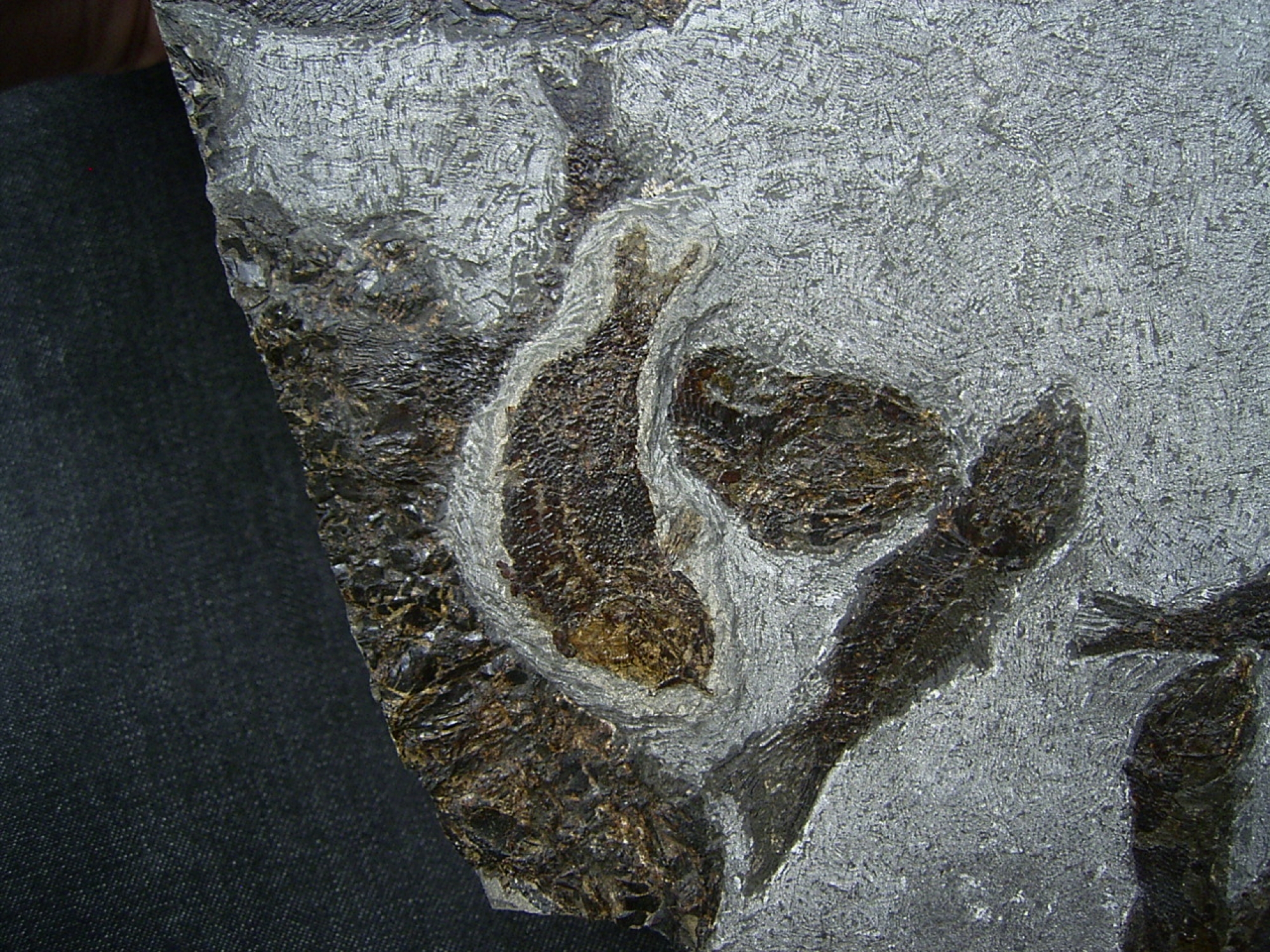
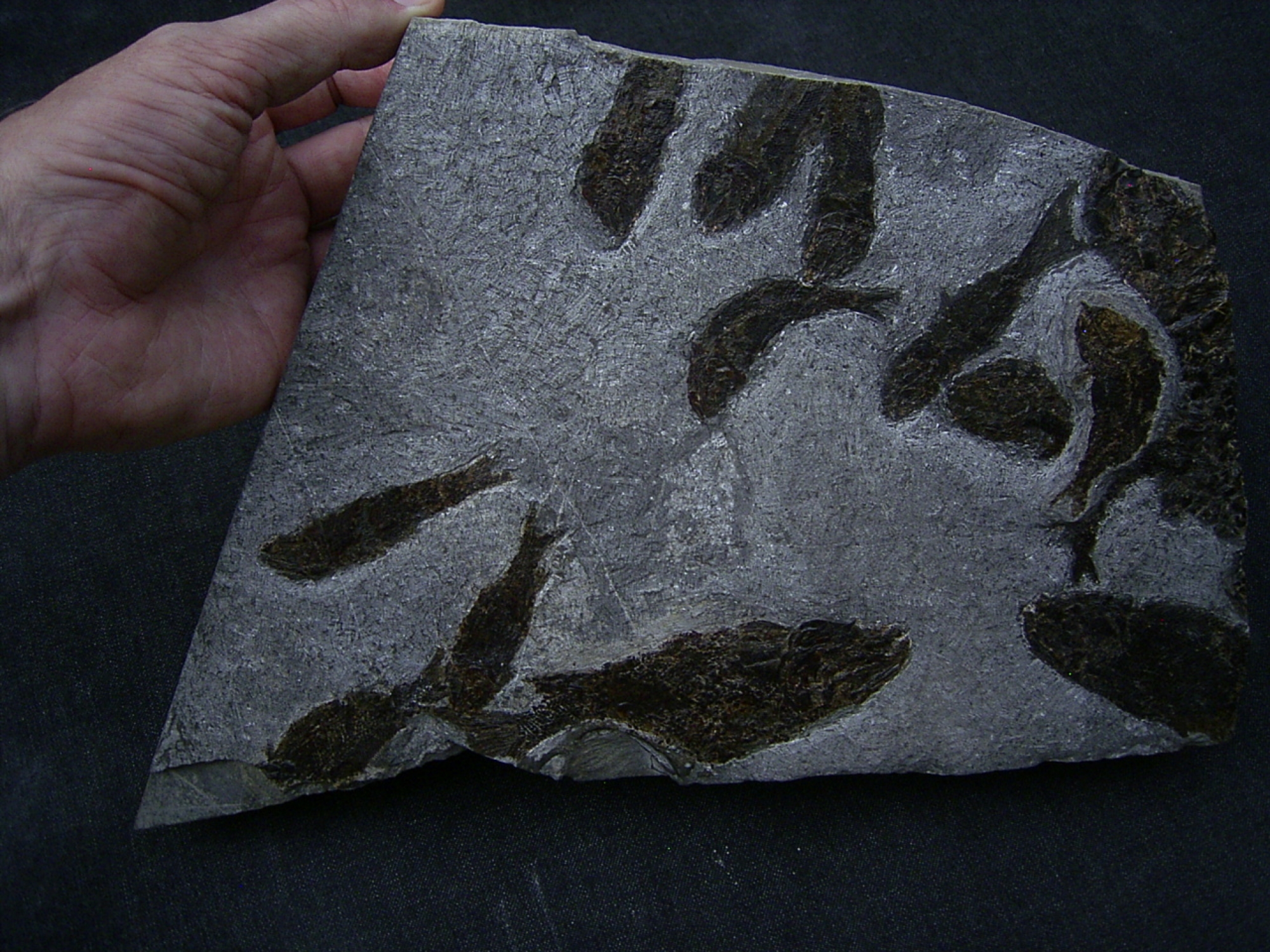
This slab containing fossils of thirteen fishes dates back to the Upper Triassic (Noric, approximately
220 million years old).
It was found in Wiestal - Hallein - near Salzburg, Austria.

Finds of fossil fish from the Triassic are extremely rare. Salzburg was fortunate enough to briefly
possess an outcrop in the Wiestal near Hallein containing the remains of melted scales. Their quality
is unique and of international importance. The fossil-bearing material was mined until a few decades
ago. Petroleum was extracted from the bituminous rock (main dolomite). The Romans already used this
stone for floor mosaics 1,500 years ago.

The fish slab for sale here is such a piece from the Wiestal.
Something this rare is rarely offered for sale.

The rock contains several species of ray-finned fishes:

- Heterolepidotus dorsalis (new Paralepidotus)

- Ophiopsis attenuata

- Colobodus ornatus
They belong to the group of bony fishes, which at that time did not yet have bones. Bones evolved
from the ganoid scales only later. These mollusc-scaled fishes were scientifically described in 1905
by Prof. Uhlig, Prof. Diener, and Privatdozent Arthaber from the Geological and Paleontological
Institute of the University of Vienna.

The stone is unbroken, measures approximately 30 x 20 x 4.5 cm, and is 4.5 cm thick.

This fossil is unique and was legally collected on private property in 1994. The search lasted only a
few weeks; the site has been closed since then.

The fishes were thinly coated with colorless varnish, which can easily be removed with acetone if desired.
No further manipulations!




Categories