- Customer group: Guest
-


- Home

- Details
- More images
Products description
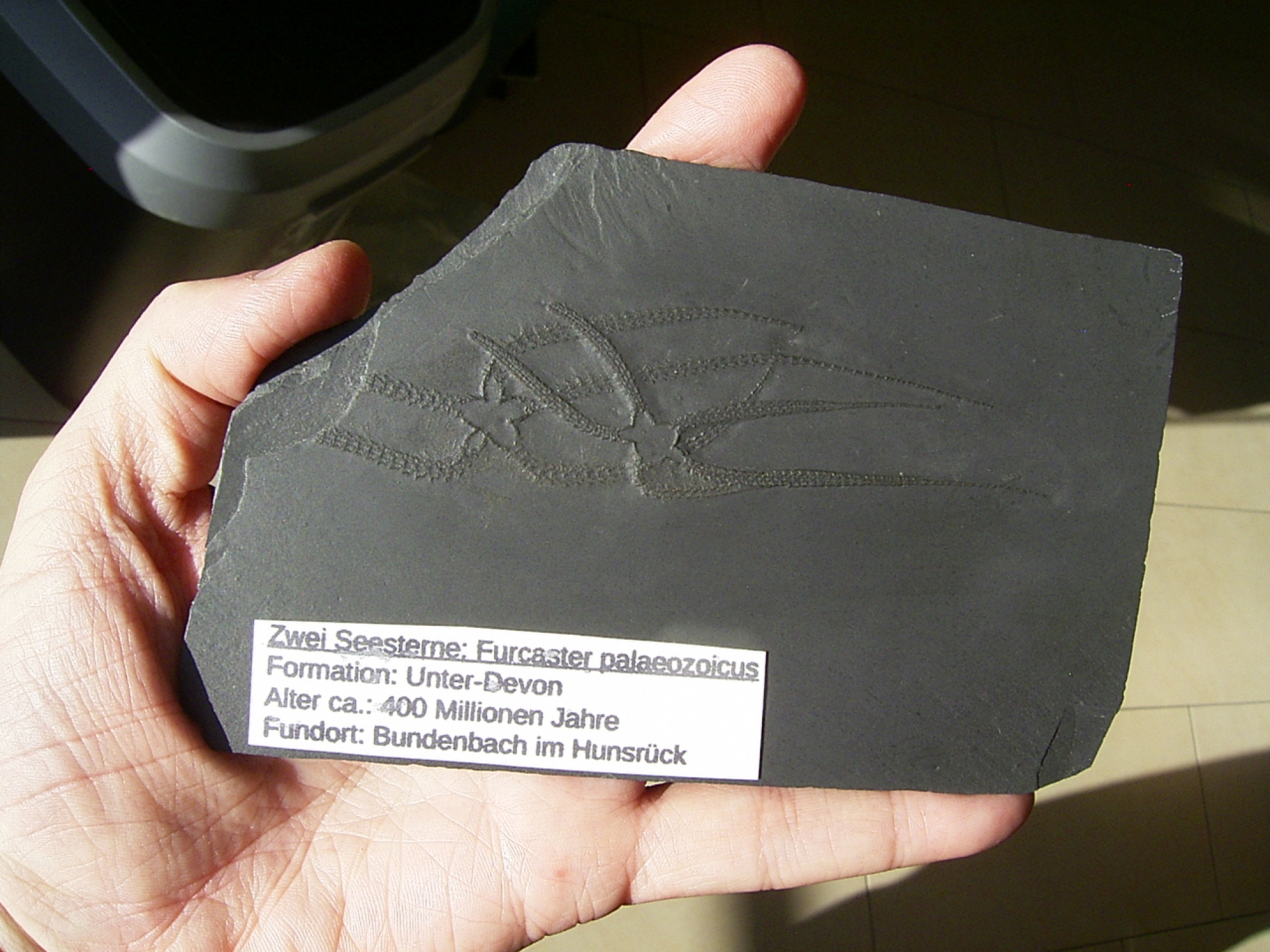
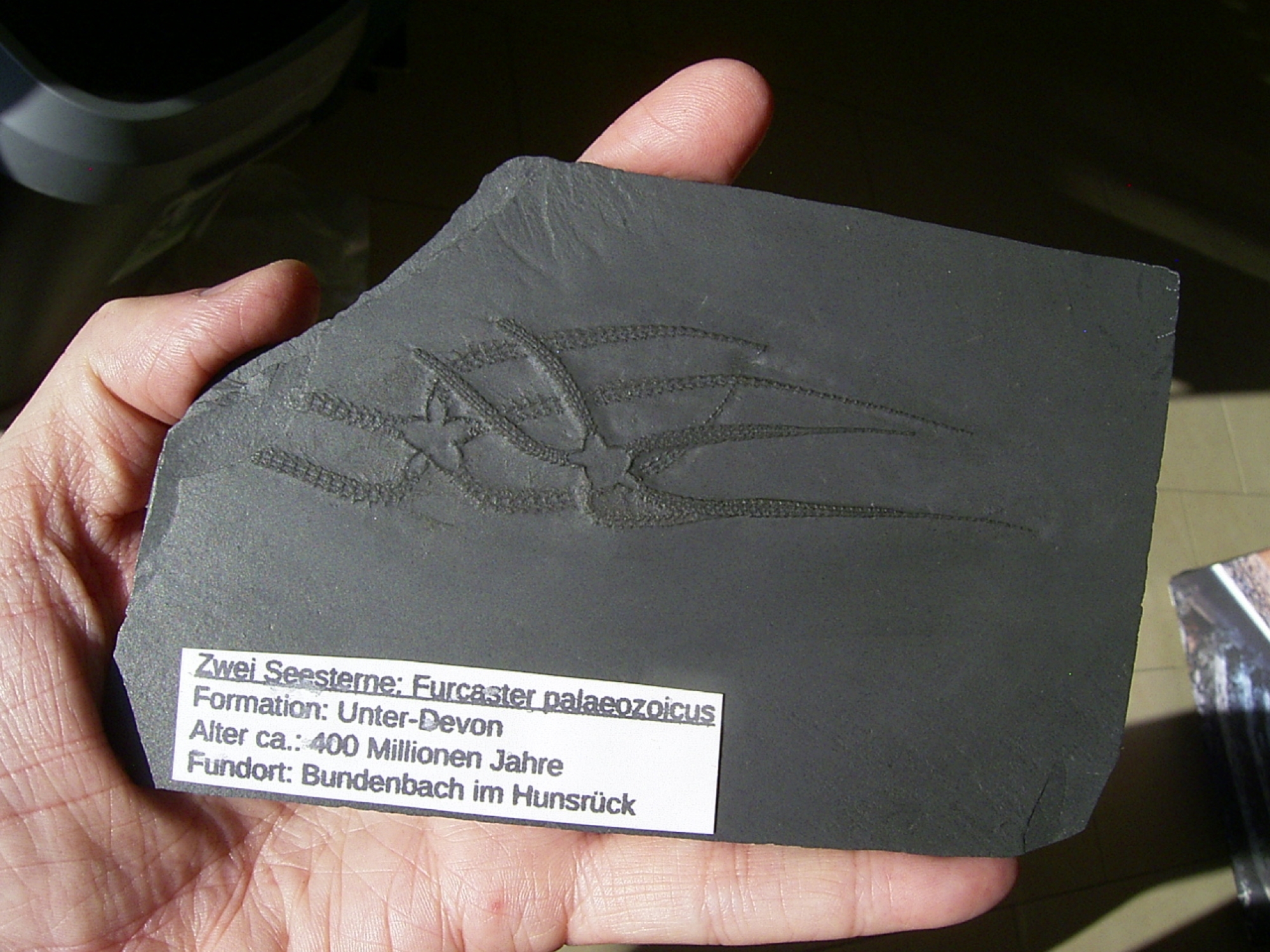
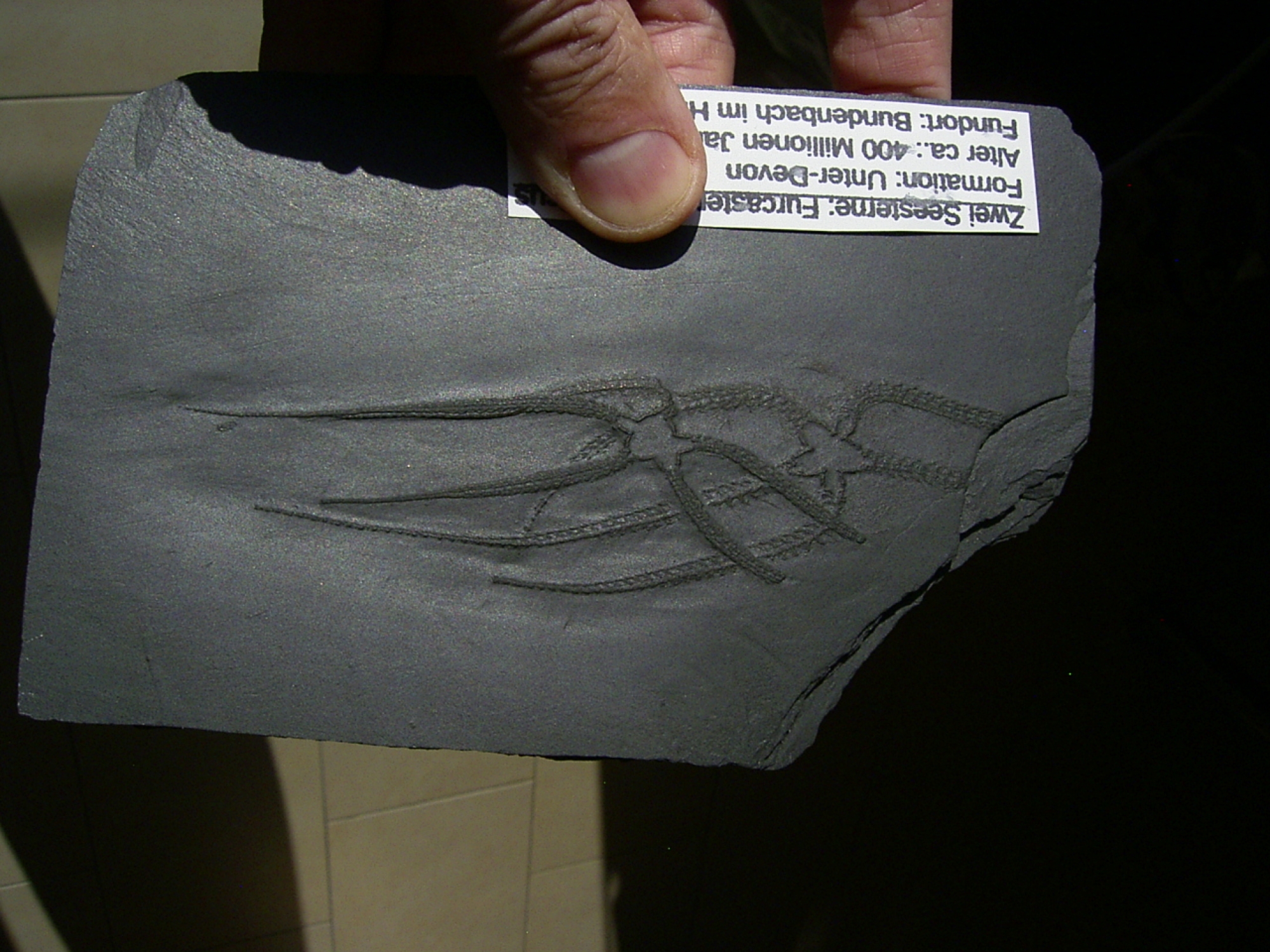
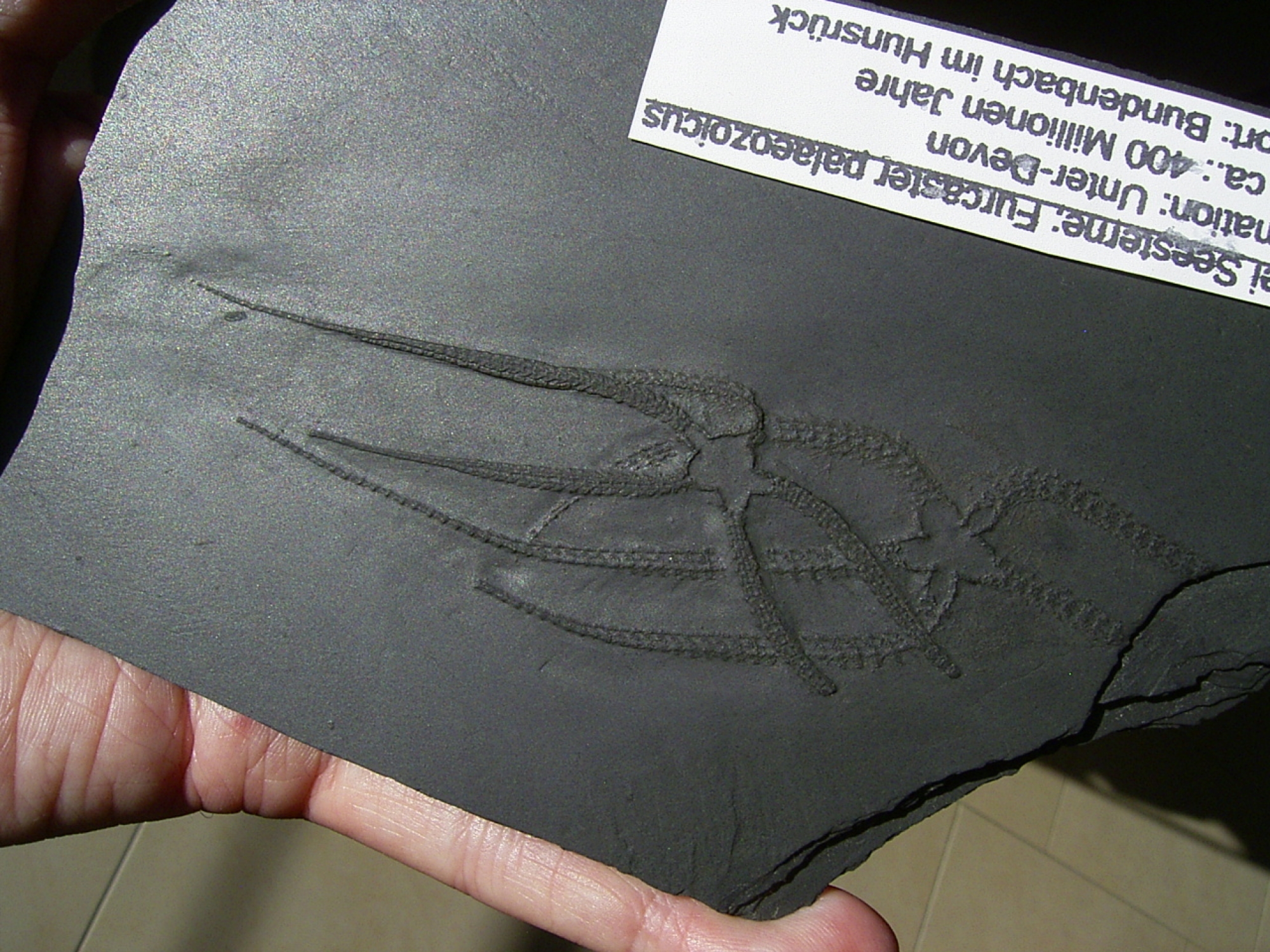
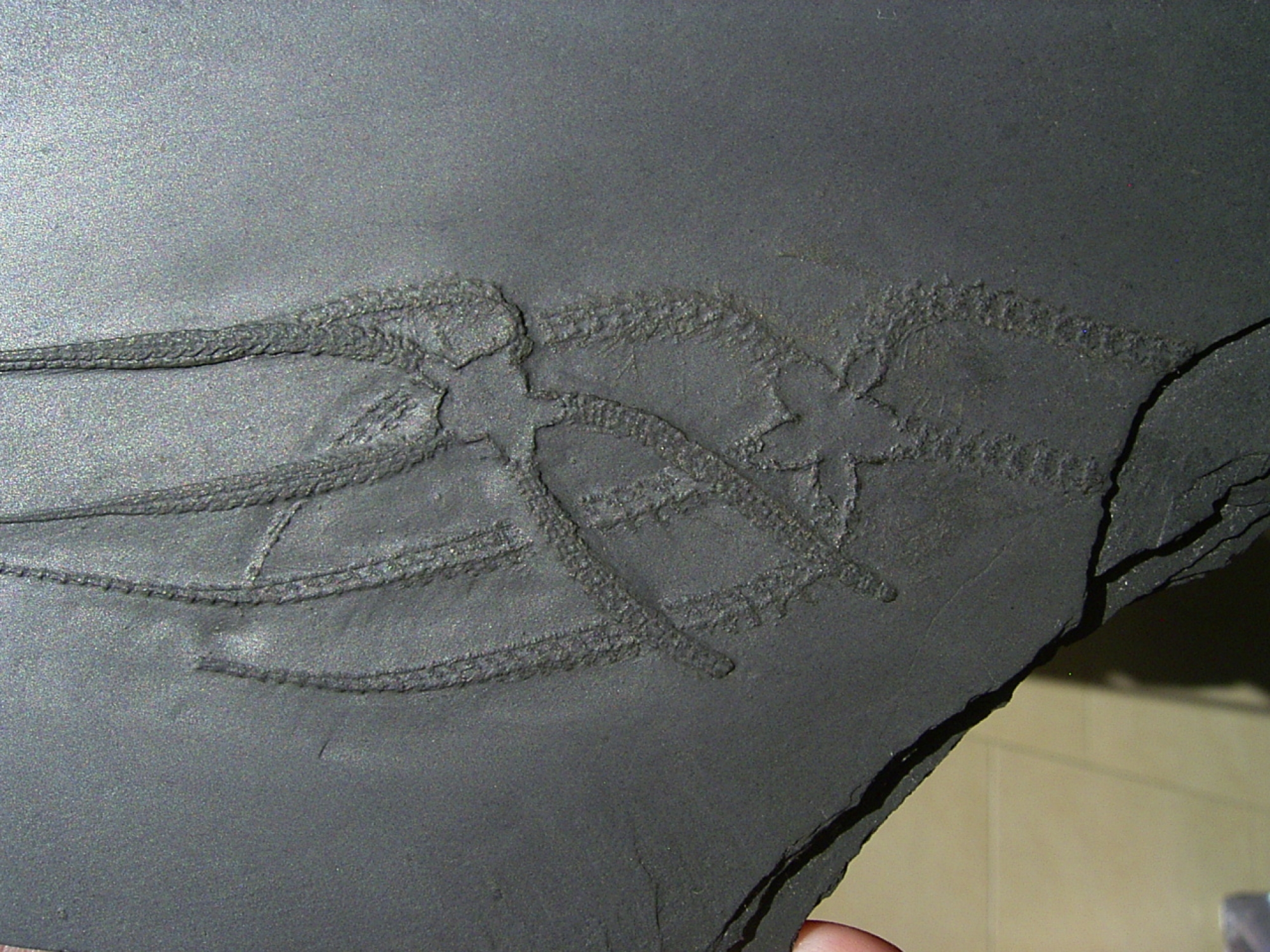
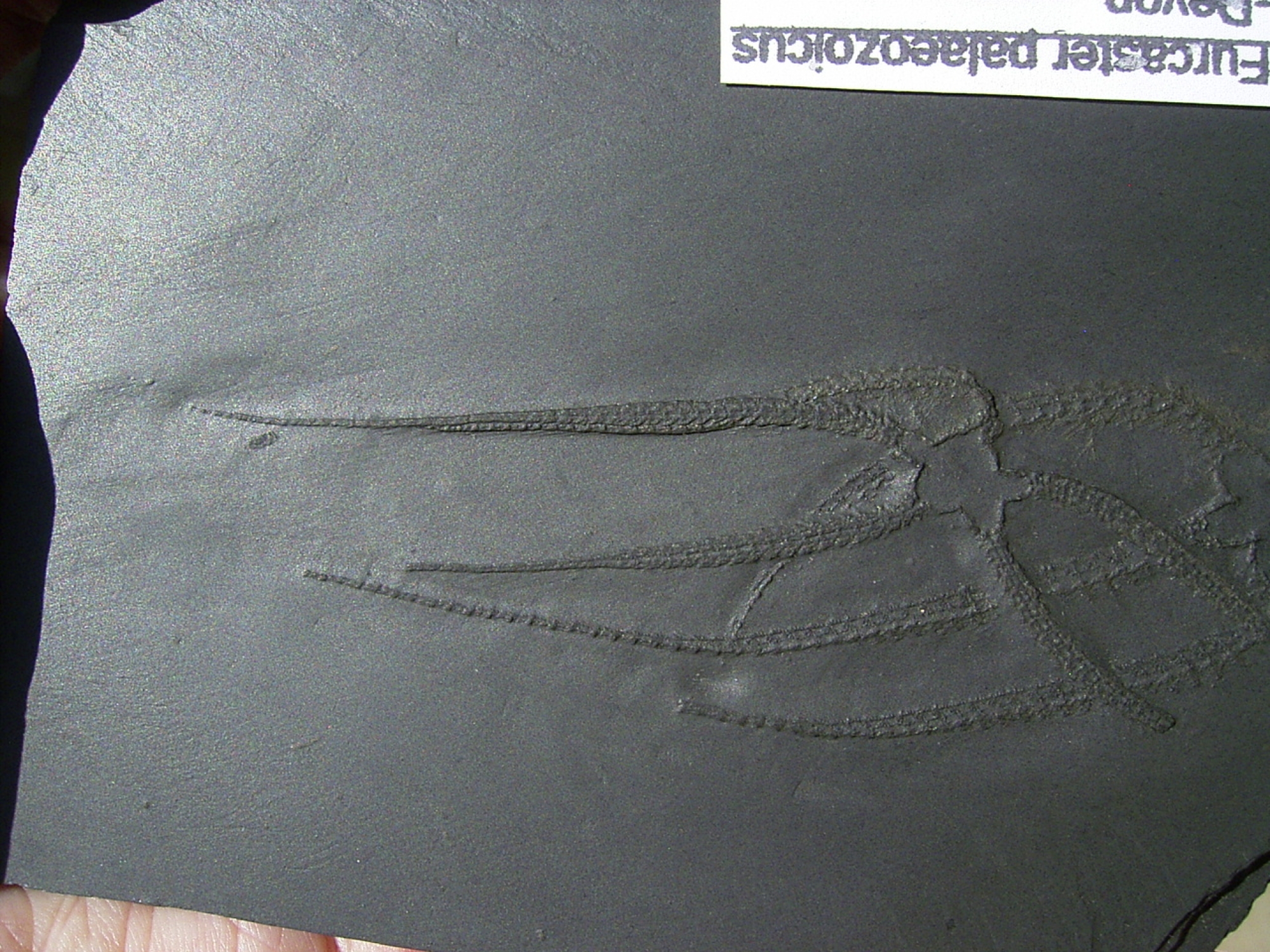
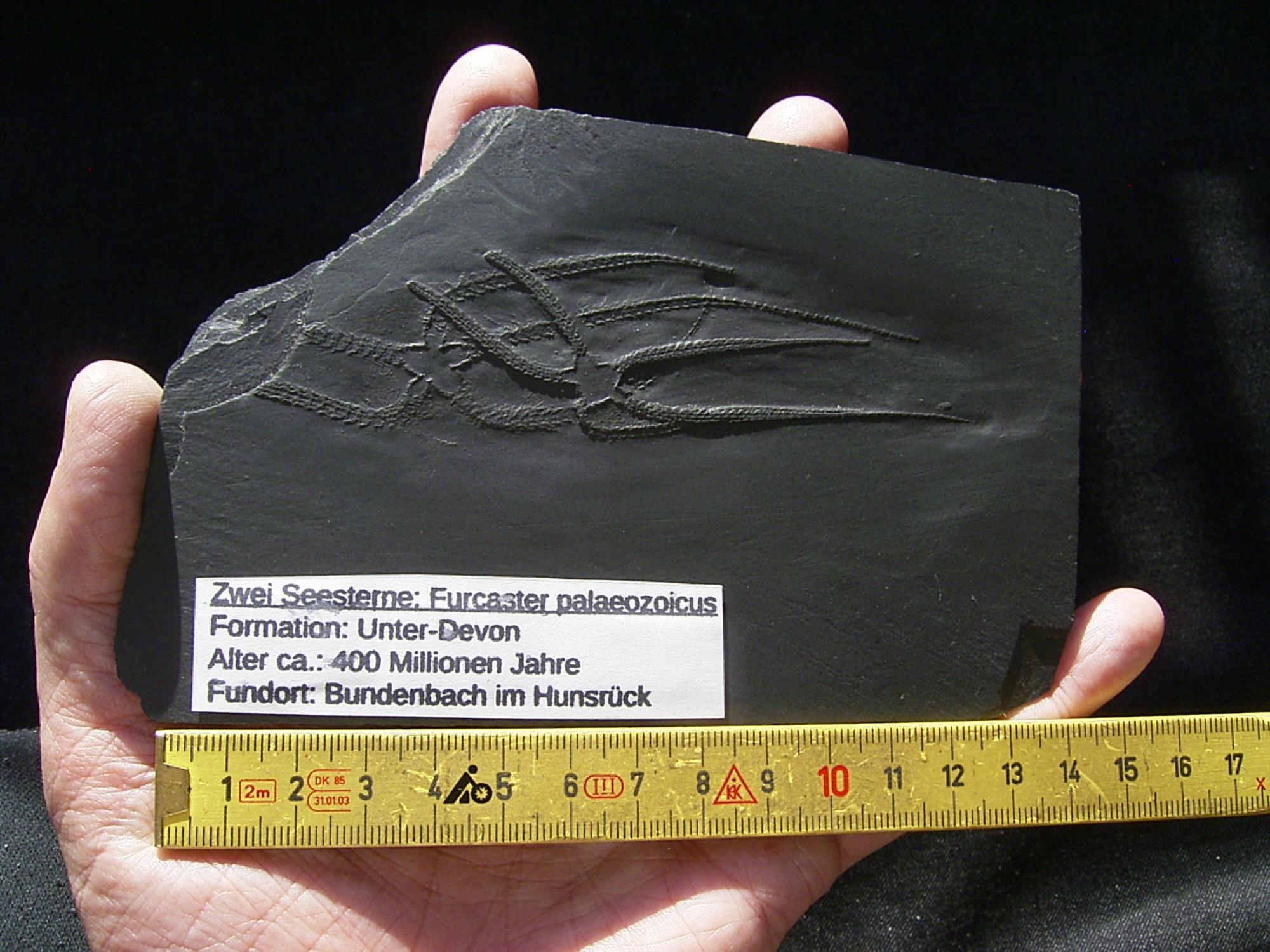
This rock contains two fossil brittle stars, Furcaster. The specimen originates from the Lower
Devonian strata of Bundenbach in Germany.

Some of the most spectacular specimens of Furcaster, an extinct brittle star from the Lower Devonian
period (approximately 400 million years ago), were found there in the world-famous Hunsrueck Slate.

What makes the Furcaster from Bundenbach so special:

Pyritization: The soft tissues and finest structures of the animals were often replaced by pyrite
(fool's gold). This occurred through rapid embedding in oxygen-poor mud, which halted decomposition.

X-ray imaging: Thanks to the metallic preservation by pyrite, the fossils in the dark slate can be
perfectly examined using X-rays, revealing details that would otherwise remain hidden to the naked eye.

Strata: The fossils originate from the Kaub strata (Hunsrueck Slate Formation), which formed during the
Lower Emsian stage.

Origin: The animals were likely buried on the seabed by sudden mudflows (so called Truebe Stroeme) and
thus preserved in their natural state.

Preparation: Due to the hardness of pyrite compared to the softer slate, experts can free the fossils
using special blasting techniques.

General characteristics of brittle stars (to which Furcaster belongs):
Closely related to starfish: Brittle stars are the closest relatives of starfish.
Movable arms: They move using their movable arms, without tube feet (podia) like starfish.
Tooth plates: They have skeletal plates in their mouths that act like jaws and teeth to grind food.
No anus: The digestive tract is sac-like and lacks an anus; food is expelled.

In summary, Furcaster is a famous fossil that provides insights into the extinct marine life of the
Devonian period, particularly the fascinating group of brittle stars.

Extinct locality: The species is especially well-known from the historic slate quarries of Bundenbach in
the Hunsrueck region of Germany. Since commercial mining ceased there in 1999, such specimens now only
from old collections.
The specimen offered here:
It was professionally and carefully exposed using modern sandblasting techniques.
This allowed for the preservation of wonderful details. A special feature is that the stone contains two
individuals of the extinct brittle star.

The largest dimension of the fossil is approximately 12 cm.

The stone is original and unbroken, measuring approximately 15 x 10 cm.

An authentic piece without any manipulation - dont miss it!
Categories
Last viewed: